Author Archives: ZYLAB Solution

Case Study: Delivering a Pilot-Scale Rotary Calcination Furnace to a Norwegian Client

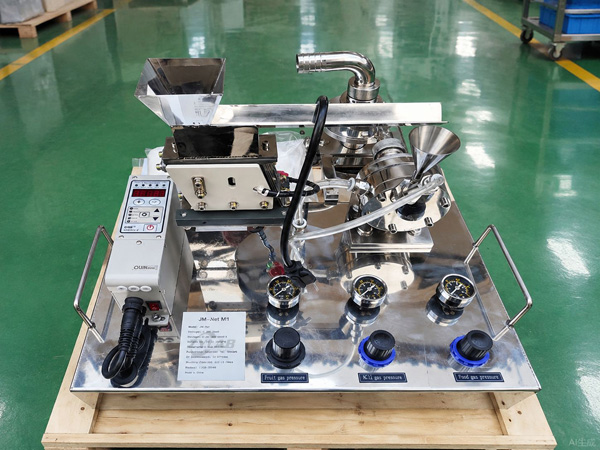
Lab Pilot-Scale Rotary Calcination Furnace with Preheater and Afterburner

By combining rotary calcination technology, gas preheating, and advanced exhaust gas treatment, ZYLAB successfully provided a high-performance, environmentally compliant pilot-scale furnace to a Norwegian customer.

Why Three-Zone Tube Furnaces Are Ideal for Three-Stage Catalyst Preparation

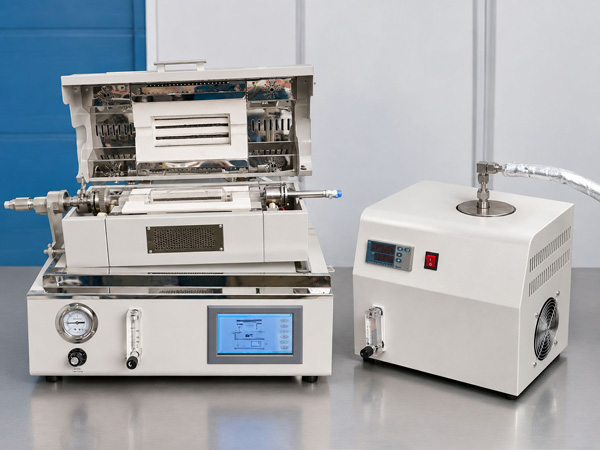
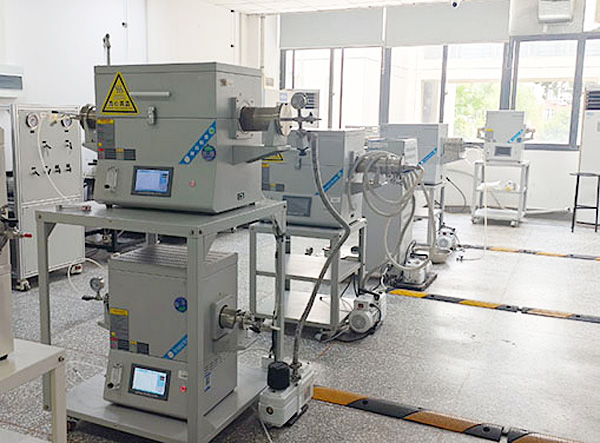
Large-Diameter Three-Zone Tube Furnace Catalyst Preparation Solution

Among available thermal processing equipment, the three-zone tube furnace has become a preferred solution for researchers working on advanced catalyst systems. Its ability to independently control multiple heating zones makes it particularly well-suited for three-stage catalyst preparation processes, typically involving drying, calcination, and activation.

Case Study: Small Laboratory Centrifuge Solution for a Norwegian Battery R&D Company

Customized 10L Laboratory Centrifuge

ZYLAB successfully delivered a customized 10L laboratory centrifuge to a Norwegian client specializing in advanced battery component research.

This case study highlights how we provided a corrosion-resistant, high-efficiency centrifuge solution tailored to demanding chemical conditions and strict particle separation requirements.

Can a Muffle Furnace Run Under Inert Gas Atmosphere? Understanding Gas Inlet Systems, Oxidation Control, and Vacuum Alternatives

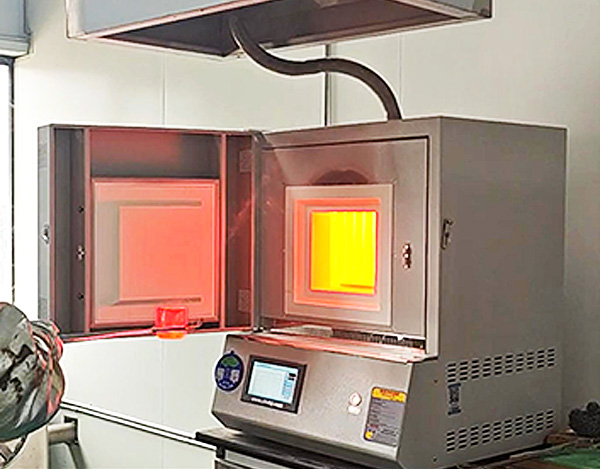
Muffle Furnace With Gas Inlet System Can Operate Under An Inert Gas Atmosphere

A muffle furnace with gas inlet system is a widely used solution for controlled atmosphere heat treatment at temperatures up to 1200°C. This article explains how it works, what gases can be used, and how it differs from vacuum furnace technology.

Case Study: 1200°C Muffle Furnace with Gas Inlet System for High-Performance Metal Powder Development in Additive Manufacturing

1200°C Muffle Furnace with Gas Inlet System

A well-known additive manufacturing company based in Luxembourg required a reliable and customizable thermal processing solution to develop high-performance metal powders for metal 3D printing.

ZYLAB successfully delivered a 1200°C Muffle Furnace with Gas Inlet System, tailored to meet the customer’s demanding process requirements.

How to Solve Common Problems in High-Temperature Modification of Lithium Battery Cathode Materials

1200℃ Mini Rotary Oscillating Tube Furnace

High-temperature modification is a critical step in improving the performance of lithium-ion battery cathode materials such as LFP, NMC, and LCO. However, many researchers and engineers face challenges related to phase stability, lithium loss, atmosphere control, and material uniformity.

How To Avoid Powder Agglomeration And Segregation During Additive Manufacturing Material Preparation

Additive Manufacturing Material Preparation

Powder agglomeration and segregation are two of the most critical challenges in additive manufacturing material preparation. By optimizing particle properties, controlling environmental conditions, and using advanced 3D motion mixing technology, these issues can be significantly reduced.

Case Study: Supplies 5L High-Speed 3D Shaker Mixer To European Additive Manufacturing Company

Supplies 5L High-Speed 3D Shaker Mixer To European Additive Manufacturing Company

ZYLAB successfully delivered a 5L High-Speed 3D Shaker Mixer to a leading additive manufacturing company based in Luxembourg.
The 5L High-Speed 3D Shaker Mixer provides an ideal solution for laboratories and companies seeking efficient, precise, and scalable mixing technology.

Case Study: Provides Handheld Thermocouples to Worcester Polytechnic Institute

Handheld K-Type Armored Thermocouples

ZYLAB has established a long-term partnership with Worcester Polytechnic Institute (WPI), a leading research university in advanced materials and engineering.

After successfully delivering two FBCVD furnaces, ZYLAB further supported WPI by providing 3 sets of Handheld K-Type Armored Thermocouples for precise temperature measurement.

Why Do Powders Sinter During Reduction and How to Avoid It?

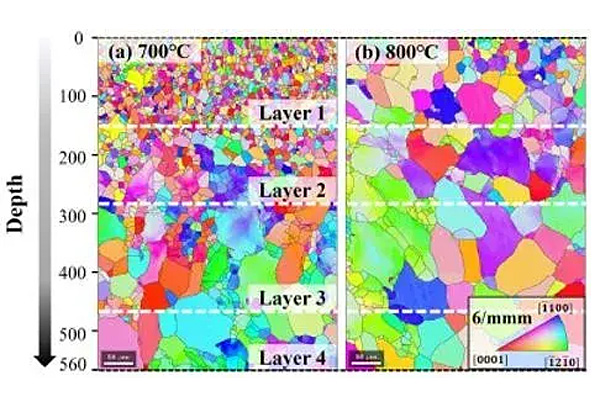
Why Do Powders Sinter During Reduction and How to Avoid It

So, why do powders sinter during reduction, and how can this be effectively avoided? In this article, we explore the mechanisms behind powder sintering and provide practical solutions for researchers and engineers.