Table of Contents
Hydrogen reduction is an important process in materials science, powder metallurgy, catalyst development, and advanced materials research. It uses hydrogen as a reducing agent to remove oxygen from suitable metal oxides, enabling researchers to investigate the formation of metals, lower oxides, and other reduced materials.
Unlike conventional heat treatment under an inert atmosphere, hydrogen reduction involves a chemical reaction between the reducing gas and the material. The outcome depends on temperature, gas composition, reaction time, and the physical properties of the starting material.
Understanding how hydrogen reduction works helps researchers select appropriate processing conditions, interpret experimental results, and choose a suitable hydrogen reduction furnace for laboratory research.
This guide explains the basic reaction mechanism, the role of temperature and gas atmosphere, common research applications, and the equipment considerations involved in laboratory-scale hydrogen reduction.
What Is Hydrogen Reduction?
Hydrogen reduction is a chemical process in which hydrogen reacts with a reducible compound, commonly a metal oxide, to remove oxygen and form a reduced product.
For many metal oxides, hydrogen reacts with the oxygen in the oxide to produce water vapor. Depending on the material and reaction conditions, the solid product may be a metal, a lower oxide, or another reduced phase.
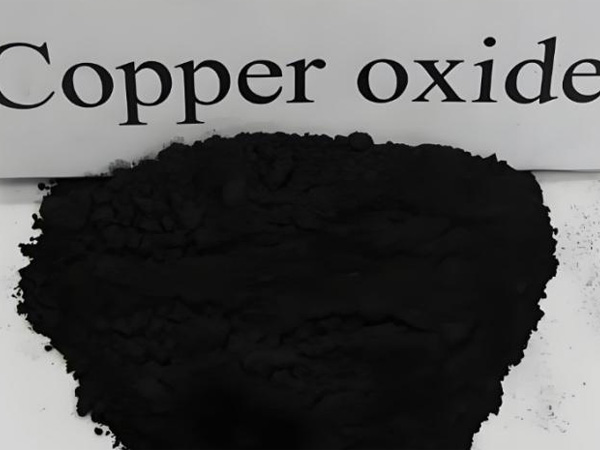
A simplified example is the reduction of copper oxide:
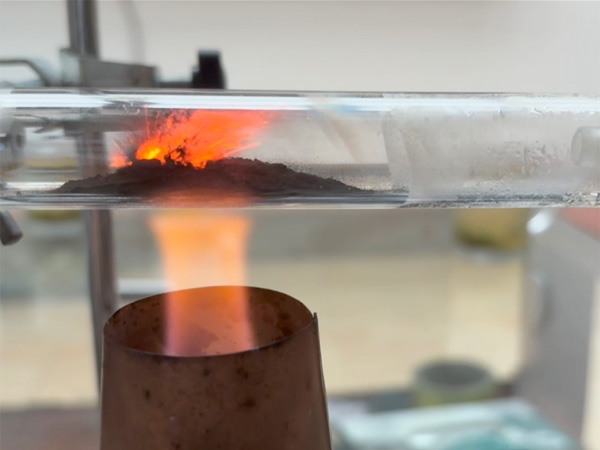
CuO + H2 → Cu + H2O
In this reaction, copper oxide (CuO) reacts with hydrogen (H₂) to form metallic copper (Cu) and water vapor (H₂O).
However, not all metal oxides can be reduced to their corresponding metals under the same conditions. The feasibility and extent of reduction depend on thermodynamic stability, temperature, gas composition, and reaction kinetics.
For researchers, hydrogen reduction provides a way to investigate how processing conditions influence chemical composition, phase structure, morphology, and other material properties.
How Does the Hydrogen Reduction Reaction Work?
Hydrogen reduction is generally a gas–solid reaction. Hydrogen must reach the surface of the solid material, react with the oxide, and allow the resulting water vapor to leave the reaction zone.
Depending on the material, the process may involve several interconnected stages.
Step 1: Hydrogen transport to the sample
Hydrogen flows through the furnace tube and reaches the surface of the oxide particles. Gas flow and sample geometry can influence the supply of hydrogen to the reaction zone.
Step 2: Surface reaction and oxygen removal
Hydrogen interacts with the oxide surface. Under suitable conditions, oxygen is removed from the solid through the formation of water vapor.
Step 3: Reaction progresses into the material
Depending on the reaction mechanism, hydrogen or other species may need to diffuse through pores or a developing product layer before additional oxide can react.
Step 4: Product formation and water vapor removal
The reduced phase develops as the reaction proceeds. Water vapor is transported away by the gas stream, helping maintain the required reaction environment.
These stages are a simplified conceptual model rather than a universal sequence. The actual mechanism varies with the oxide, particle structure, temperature, and reaction conditions. Some materials undergo multiple intermediate phases, while others exhibit different rate-limiting steps.
Why Is Temperature Important in Hydrogen Reduction?
Temperature affects both the thermodynamic feasibility and the kinetics of hydrogen reduction.
For a particular oxide, the equilibrium between the oxide, the reduced product, hydrogen, and water vapor changes with temperature. Meanwhile, reaction rates and diffusion processes generally become faster as temperature increases within a relevant operating range.
Thermodynamic effects
Temperature influences whether a reduction reaction is favorable under a given gas composition.
For a simplified reaction:
MO + H2 → M + H2O
the reaction equilibrium depends on temperature and the partial pressures of hydrogen and water vapor, as well as the thermodynamic properties of the solid phases.
A temperature that enables reduction of one metal oxide may be insufficient for another.
Kinetic effects
Even when a reaction is thermodynamically favorable, it may proceed too slowly to achieve the desired conversion within the available experimental time.
Higher temperatures may accelerate surface reactions and diffusion, helping the material reach the target degree of reduction more quickly.
However, excessive temperatures can also promote particle growth, sintering, agglomeration, or unwanted phase transformations.
How Does Hydrogen Concentration Affect Reduction?
Hydrogen concentration determines part of the chemical environment in which the reaction takes place.
In many oxide reduction systems, the hydrogen-to-water-vapor relationship is particularly important because it affects the reaction equilibrium.
A higher hydrogen concentration may favor reduction under otherwise comparable conditions. However, hydrogen concentration alone does not determine the reaction rate or final conversion.
Other factors include:
-
The thermodynamic stability of the starting oxide.
-
The operating temperature.
-
The partial pressure of water vapor.
-
The availability of hydrogen at the reaction surface.
-
Diffusion through the material or product layer.
-
The presence of intermediate oxide phases.
For example, an oxide may remain difficult to reduce under certain conditions even when hydrogen is readily available. In other cases, the reaction may be limited by internal diffusion rather than the hydrogen supply.
Researchers investigating the effect of hydrogen concentration should therefore control other experimental variables and evaluate the resulting phases or residual oxygen content using appropriate analytical methods.
What Materials Can Be Processed Using Hydrogen Reduction?
Hydrogen reduction is used in several areas of materials research, although suitability depends on the chemistry of the specific material.
Metal Oxide Reduction
Researchers investigate the conversion of suitable oxides into metals or lower oxidation-state compounds. Copper oxide is one example of a system that can be studied through controlled hydrogen reduction.
Powder Metallurgy
Hydrogen reduction can be used to prepare or treat certain metal powders. The resulting powder characteristics depend on the starting material and processing conditions.
Catalyst Preparation and Activation
Some catalyst precursors contain metal oxides that can be reduced to form active metal phases. The required conditions depend on the catalyst composition and intended application.
Advanced Functional Materials
Controlled reduction can modify the oxidation state, defect chemistry, or electrical properties of selected functional materials, provided the material is compatible with the treatment conditions.
Hydrogen reduction is also investigated in metallurgical research, including the reduction of iron oxides. Different materials may follow different reaction pathways, so experimental conditions should be selected based on material-specific literature and characterization results.
What Equipment Is Needed for Laboratory Hydrogen Reduction?
A laboratory hydrogen reduction setup typically requires more than a heating unit. The complete system must provide a suitable thermal environment, controlled gas delivery, compatible process components, and appropriate safety protection.
Key considerations include:
-
Furnace temperature range: The equipment must meet the required operating temperature and holding conditions.
-
Furnace tube and sealing: Materials and connections must be compatible with the process atmosphere and operating conditions.
-
Gas delivery: The system must provide the required gas composition and flow control.
-
Temperature programming: Programmable heating and holding stages can support repeatable experiments.
-
Safety protection: Hydrogen operation requires an appropriately designed system with suitable monitoring, protective functions, and exhaust arrangements.
A conventional laboratory furnace should not be assumed suitable for hydrogen reduction unless the complete configuration is specifically designed for that application.
ZYLAB Mini Hydrogen Reduction Furnace
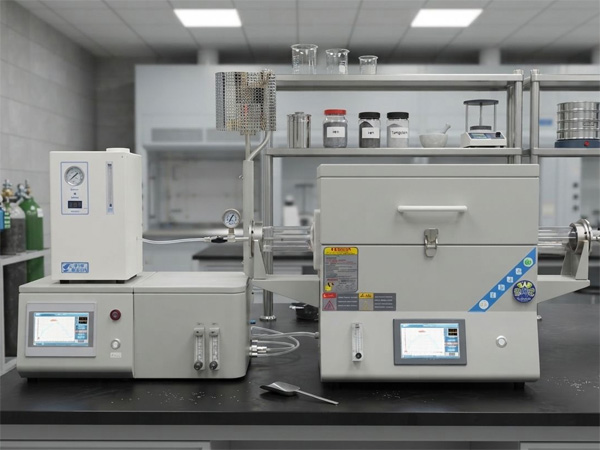
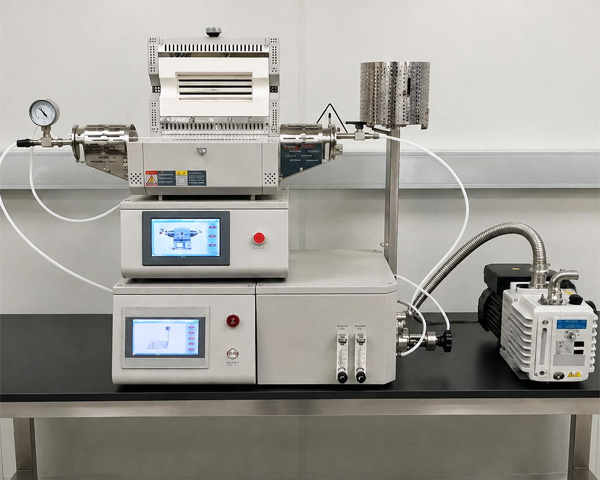
For laboratory-scale materials research, ZYLAB offers a Mini Hydrogen Reduction Furnace that combines a 1200°C Mini Tube Furnace with a Tube Furnace Gas Safety Protection Device.
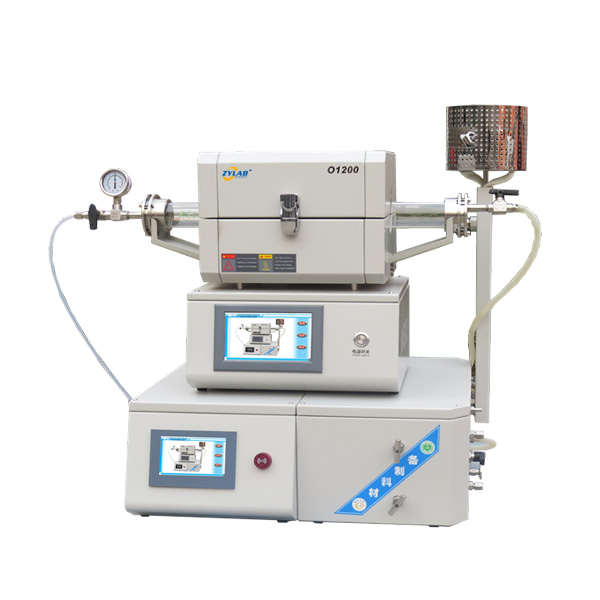
The system incorporates features such as furnace-tube pressure monitoring, gas cutoff and temperature reduction functions, automatic gas replacement when configured with a compatible tube furnace, and a dual-ignition arrangement for treating combustible exhaust gases. Actual functions and operating limits should be confirmed against the selected configuration.
This type of system may be considered for laboratory research involving suitable metal oxides, metal powders, catalysts, and other materials that require controlled hydrogen reduction.
Researchers should confirm the target temperature, sample quantity, gas composition, tube compatibility, and required safety provisions before selecting the equipment.
Frequently Asked Questions About Hydrogen Reduction
What is the main purpose of hydrogen reduction?
Hydrogen reduction uses hydrogen as a reducing agent to remove oxygen from suitable compounds, commonly metal oxides. The objective may be to produce a metal, form a lower oxide, modify a material’s chemical state, or investigate a reduction reaction.
Why is hydrogen used instead of an inert gas?
Hydrogen can participate in a chemical reduction reaction, whereas inert gases such as argon are generally used to provide a protective atmosphere rather than act as the reducing agent. The appropriate gas depends on whether the experiment requires reduction or simply protection against unwanted reactions.
Can all metal oxides be reduced by hydrogen?
No. Reducibility depends on thermodynamic stability, temperature, hydrogen and water vapor partial pressures, and reaction kinetics. Some oxides are readily reduced under suitable conditions, while others require specialized conditions or cannot be reduced to the desired product within the available operating range.
Is hydrogen reduction the same as heat treatment under nitrogen or argon?
No. Nitrogen and argon are commonly used as protective gases, while hydrogen can chemically reduce suitable materials. Hydrogen-containing mixtures require equipment and operating procedures specifically appropriate for hydrogen service.
Conclusion
Hydrogen reduction is a gas–solid reaction in which hydrogen reacts with suitable compounds, often metal oxides, to remove oxygen and form reduced products.
The reaction depends on the interplay between thermodynamics, chemical kinetics, gas transport, and material properties. Temperature, hydrogen concentration, water vapor, gas flow, and sample characteristics can all influence the reduction pathway and final product.
For materials researchers, understanding these mechanisms provides a foundation for designing experiments, selecting characterization methods, and establishing reproducible processing conditions.
A suitable hydrogen reduction furnace provides the controlled heating environment, gas-handling configuration, and safety functions needed to carry out such experiments. By matching the equipment to the material and process requirements, researchers can investigate reduction reactions more systematically.
Looking for a hydrogen reduction furnace for your laboratory research? Explore the ZYLAB Hydrogen Reduction Furnace or contact our team to discuss your material, target temperature, sample quantity, and atmosphere requirements.
Get In Touch
Fill out the form below — free quote and professional suggestion will be sent for reference very soon!
Share this entry
You might also like