Powder agglomeration and segregation are two of the most critical challenges in additive manufacturing material preparation. By optimizing particle properties, controlling environmental conditions, and using advanced 3D motion mixing technology, these issues can be significantly reduced.
Author Archives: ZYLAB Solution
ZYLAB successfully delivered a 5L High-Speed 3D Shaker Mixer to a leading additive manufacturing company based in Luxembourg.
The 5L High-Speed 3D Shaker Mixer provides an ideal solution for laboratories and companies seeking efficient, precise, and scalable mixing technology.
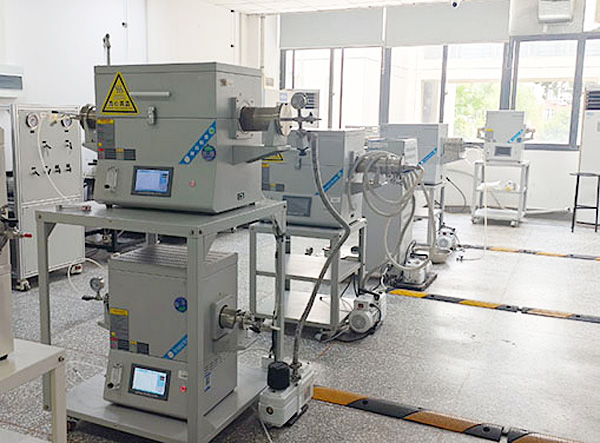
ZYLAB has established a long-term partnership with Worcester Polytechnic Institute (WPI), a leading research university in advanced materials and engineering.
After successfully delivering two FBCVD furnaces, ZYLAB further supported WPI by providing 3 sets of Handheld K-Type Armored Thermocouples for precise temperature measurement.
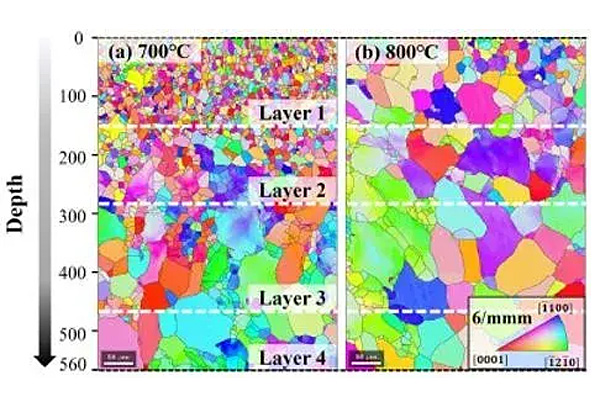
So, why do powders sinter during reduction, and how can this be effectively avoided? In this article, we explore the mechanisms behind powder sintering and provide practical solutions for researchers and engineers.
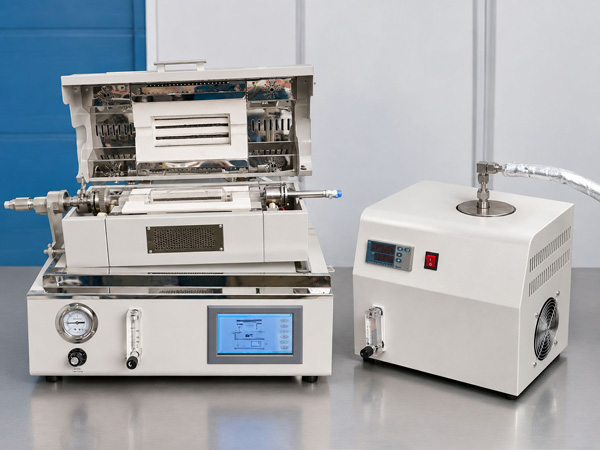
ZYLAB supplied a Mini Hydrogen Reduction Furnace to the Department of Mechanical Engineering at the University of British Columbia (UBC). The system is designed for laboratory-scale hydrogen reduction experiments and advanced materials research.
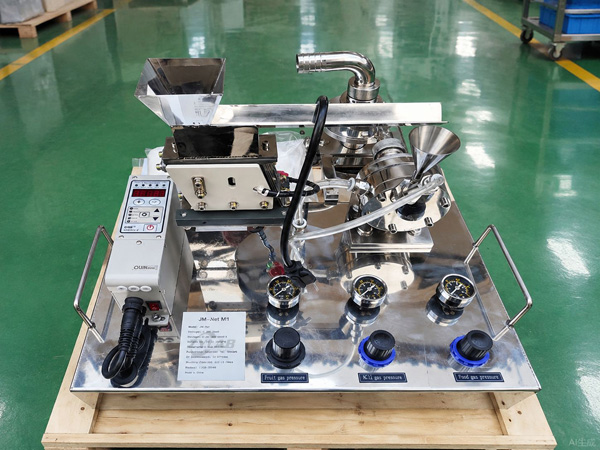
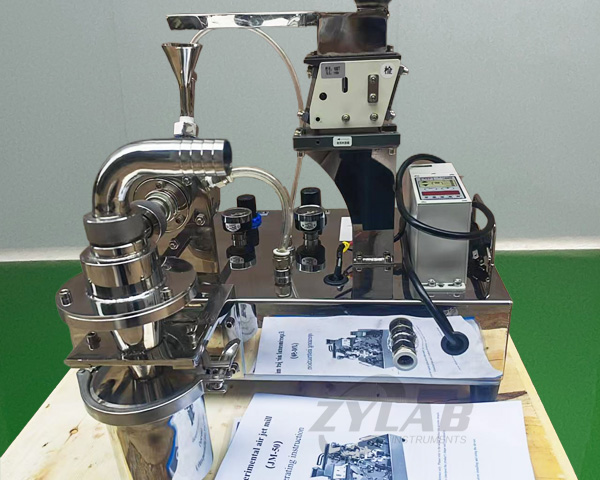
In laboratory research and pilot-scale material development, Lab Scale Jet Mills developed by ZYLAB provide an effective solution for processing LFP powders with high purity and reliable micron-scale particle size reduction.
ZYLAB recently supplied a 50–500 g/h high-efficiency lab scale jet mill to the National Research Council Canada to support battery material development at its Clean Energy Innovation Research Centre.
ZYLAB recently supplied a laboratory tube furnace for biomass pyrolysis to researchers from the University of Ottawa in Canada. The system was designed to support controlled biomass pyrolysis experiments under a continuous nitrogen atmosphere.
Biomass pyrolysis is widely studied in universities and research institutes as a method for converting organic materials into biochar, bio-oil, and syngas. A laboratory tube furnace is one of the most commonly used systems for small-scale pyrolysis experiments because it allows precise temperature control and stable inert atmosphere conditions.
Traditional powder mixers such as V-blenders or drum mixers can struggle to maintain homogeneity when working with fine powders, low-dose APIs, or cohesive particles. For research laboratories and formulation scientists, a 3D Shaker Mixer has become an increasingly preferred solution due to its unique three-dimensional motion and high mixing efficiency.