Table of Contents
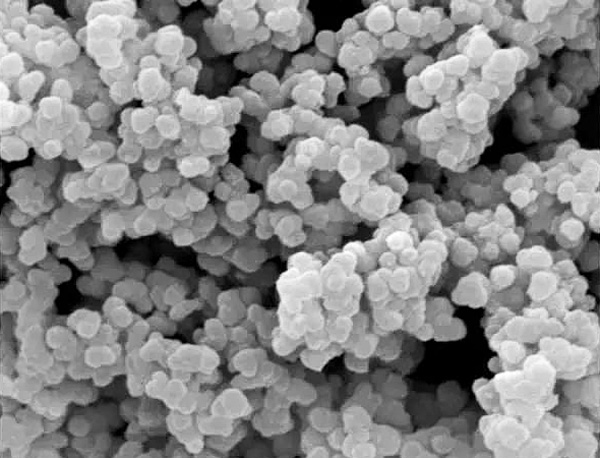
Powder agglomeration is a common challenge in high-temperature calcination and thermal processing. When fine powders are exposed to elevated temperatures, particles can form soft or hard agglomerates, reducing powder flowability, increasing particle size, and affecting the properties and reproducibility of the final material.
For researchers working with battery materials, ceramic powders, catalysts, magnetic materials, rare-earth compounds, and other advanced functional powders, controlling agglomeration is often essential for obtaining consistent experimental results.
So, how can powder agglomeration be reduced during high-temperature calcination?
The solution usually involves controlling several process variables, including calcination temperature, heating rate, holding time, powder loading, atmosphere, and powder movement.
A rotary or rocking tube furnace can provide an additional advantage by continuously redistributing the powder during thermal processing, helping reduce prolonged localized contact and improve exposure to heat and process gases.
Optimize the Calcination Temperature
Temperature is one of the most important variables affecting powder agglomeration.
A higher temperature does not necessarily produce a better calcination result. Excessive temperature can accelerate particle growth, sintering, and solid-state diffusion, increasing the tendency of particles to bond together.
Therefore, researchers should identify the minimum temperature required to achieve the desired phase transformation or chemical reaction rather than simply selecting the highest available furnace temperature.
Important parameters to evaluate include:
- Target phase
- Decomposition temperature
- Reaction temperature
- Sintering onset
- Melting or softening temperature
- Desired particle size
- Required crystallinity
For material development, a series of experiments at different temperatures can help identify the appropriate calcination window.
Higher calcination temperature ≠ better powder.
The optimum temperature should balance reaction completion and particle growth control.
Control the Heating Rate
The heating rate can also influence powder behavior during calcination.
A very rapid temperature increase may create large thermal gradients or accelerate decomposition and gas release before the powder has sufficient time to redistribute.
Depending on the material, a controlled heating profile may help improve process stability.
Researchers can consider:
- Slow or moderate heating during decomposition stages
- Intermediate temperature holds
- Controlled heating through phase-transition regions
- Faster heating only after critical stages have been passed
The appropriate heating profile depends strongly on the precursor material and the intended reaction.
For example, powders containing moisture, organic binders, solvents, or volatile components may require a more gradual heating stage to avoid rapid gas evolution and localized powder movement.
Avoid Excessive Holding Time
Longer is not always better.
Once the desired calcination reaction has been completed, continued exposure to high temperature can increase:
- Grain growth
- Particle coarsening
- Sintering
- Neck formation between particles
- Hard agglomeration
Therefore, the holding time should be optimized according to the actual reaction kinetics of the material.
A practical approach is to evaluate the relationship between:
Temperature × Holding Time × Phase Formation × Particle Size
This allows researchers to identify the shortest practical dwell time that achieves the desired material properties.
Control Powder Loading and Bed Thickness
Powder loading can have a significant effect on thermal processing.
When too much powder is loaded into a tube, the material may form a thick or compact powder bed.
This can lead to differences in:
- Heat exposure
- Gas penetration
- Gas-solid contact
- Temperature distribution within the powder
- Reaction progress
For small-scale laboratory experiments, it is often preferable to avoid unnecessarily deep powder beds.
Instead, researchers should consider:
Appropriate powder loading + sufficient powder movement + adequate gas exposure
rather than simply maximizing the amount of material processed in each batch.
Select an Appropriate Process Atmosphere
The atmosphere inside the furnace tube can directly affect the calcination reaction and particle surface chemistry.
Depending on the material, researchers may use:
- Air
- Oxygen
- Nitrogen
- Argon
- Vacuum
- Reducing atmospheres
An inappropriate atmosphere can promote unwanted reactions, surface changes, or formation of secondary phases, which may indirectly affect particle growth and agglomeration.
For oxygen-sensitive or atmosphere-sensitive materials, controlled inert or reducing atmospheres can provide better control of the thermal process.
The gas flow rate should also be appropriate for the furnace configuration and material. Excessive gas flow may disturb fine powders, while insufficient flow may limit gas exchange.
Keep the Powder Moving During Calcination
For some powder systems, continuous powder movement can be an effective way to improve thermal processing.
In a conventional static tube furnace, the powder remains relatively stationary throughout the calcination cycle.
As a result, the same particles may remain in contact with each other and with the heated tube surface for extended periods.
A rotary or rocking tube furnace introduces controlled powder movement during heating.
The motion can help:
- Redistribute the powder
- Renew particle-to-gas contact
- Improve exposure to the heated environment
- Reduce prolonged localized contact
- Promote more consistent treatment of the powder bed
This principle is particularly relevant to fine powders and granular materials where gas-solid contact and powder redistribution are important.
Rotating particulate beds are also used to enhance particle mixing and gas-solid heat and mass transfer in thermal processing systems.
Which Powder Materials May Benefit from Rotary Calcination?
Rotary rocking tube furnaces are particularly relevant to research involving powders and granular materials such as:
Battery Materials
- LiFePO₄
- NCM materials
- Lithium-based cathode materials
- Graphite
- Solid-state battery materials
Ceramic Materials
- Alumina
- Zirconia
- Kaolin
- Advanced ceramic powders
- Functional ceramic materials
Catalyst Materials
- Catalyst precursors
- Metal oxides
- Catalyst supports
- Functional chemical powders
Magnetic and Rare-Earth Materials
- Ferrite powders
- Magnetic materials
- Rare-earth compounds
- Functional magnetic powders
Powder Metallurgy Materials
- Metal powders
- Alloy powders
- Metal oxides
- Non-ferrous metal powders
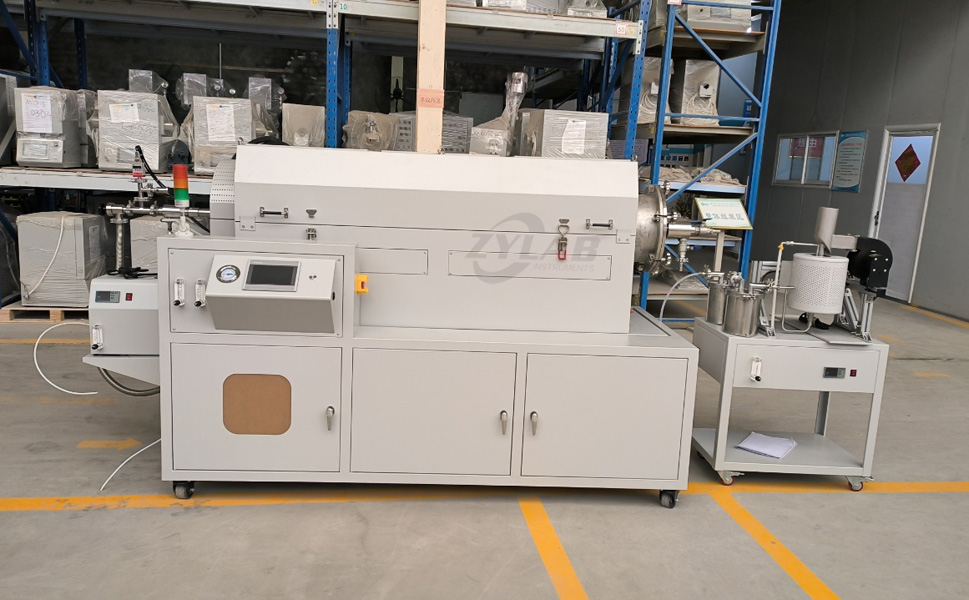
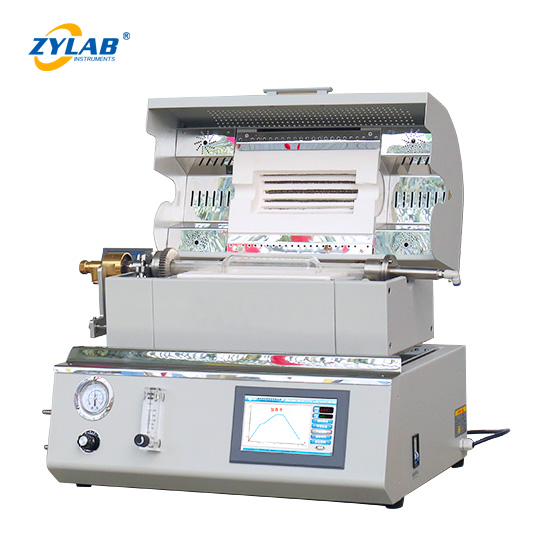
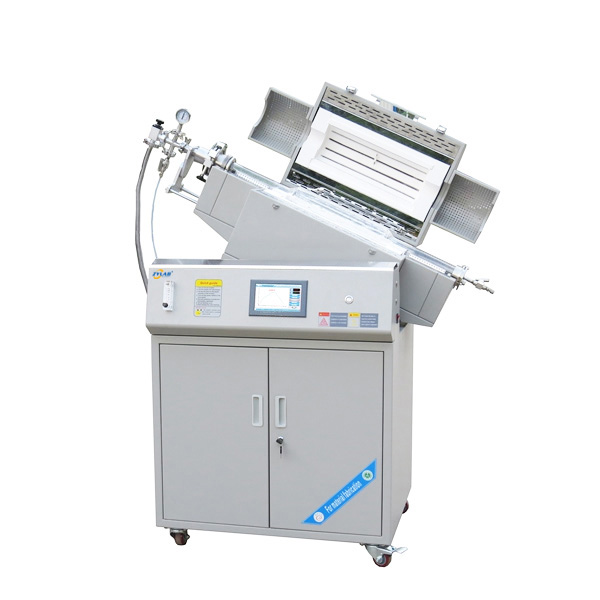
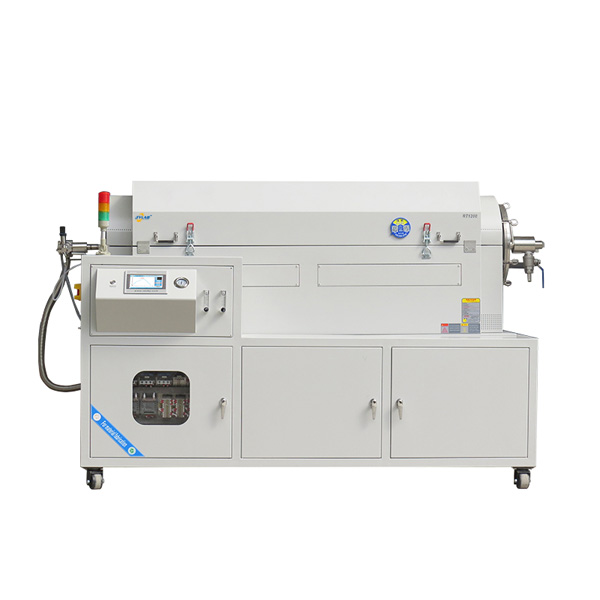
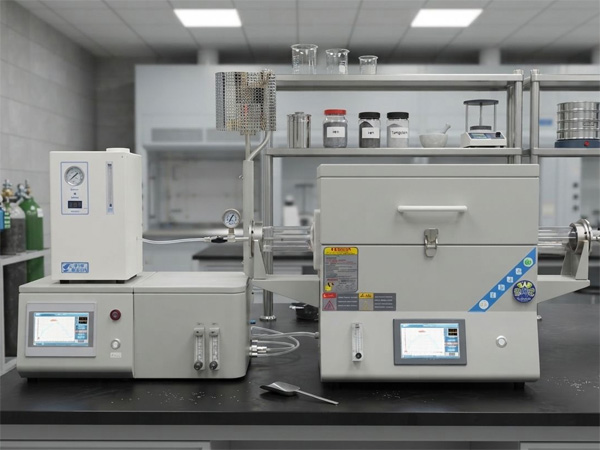
ZYLAB Rotary Rocking Tube Furnace for Powder Materials Research
The ZYLAB Laboratory Rotary Rocking Tube Furnace is designed for laboratory-scale thermal processing of powders and granular materials.
The rotary and rocking motion keeps the material moving during heating, making the system suitable for research where powder redistribution, gas-solid contact, and controlled-atmosphere thermal treatment are important.
Typical applications include:
- Battery material calcination
- Ceramic powder processing
- Catalyst preparation
- Magnetic material synthesis
- Rare-earth material processing
- Powder metallurgy
- Solid-state reactions
- Controlled-atmosphere thermal treatment
Depending on the research requirements, configurations can include controlled gas flow, vacuum processing, and other process-control options.
For researchers developing new powder materials, the system provides an additional degree of process control beyond conventional static tube furnaces.
Conclusion
Powder agglomeration during high-temperature calcination is influenced by many factors, and there is no single solution for every material.
Researchers should first optimize the fundamental process parameters, including calcination temperature, heating rate, holding time, powder loading, atmosphere, and particle characteristics.
When powder movement is beneficial, a rotary rocking tube furnace can provide an additional advantage by continuously redistributing the powder during thermal processing.
By combining controlled temperature, atmosphere, and powder movement, researchers can develop more consistent calcination processes while reducing the risk of excessive particle bonding and uncontrolled agglomeration.
For advanced powder materials research, the key is not simply to heat the powder, but to control how the powder behaves throughout the entire thermal cycle.
Get In Touch
Fill out the form below — free quote and professional suggestion will be sent for reference very soon!
Share this entry
You might also like