Table of Contents
Hydrogen reduction is an important process in materials science, powder metallurgy, catalyst research, and the development of advanced functional materials. By using hydrogen as a reducing agent under controlled conditions, researchers can reduce certain metal oxides, modify material compositions, and investigate the properties of reduced materials.
Choosing the right hydrogen reduction furnace for laboratory research requires more than selecting a furnace with a suitable maximum temperature. Researchers also need to consider the material being processed, the required reduction temperature, hydrogen atmosphere control, furnace tube compatibility, gas flow regulation, and safety protection.
Whether you are developing metal powders, studying reduction kinetics, or investigating new functional materials, this guide explains the key factors to consider when selecting a laboratory hydrogen reduction furnace.
Understand Your Hydrogen Reduction Process
Before selecting a hydrogen reduction furnace, define the purpose of your experiment and the characteristics of the material being processed.
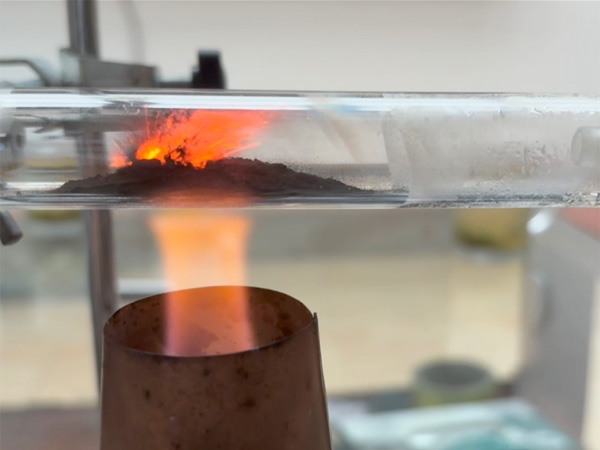
Hydrogen reduction typically involves a reaction between hydrogen and a reducible compound, such as a metal oxide. Under suitable conditions, hydrogen removes oxygen from the compound, producing a reduced material and water vapor.
Hydrogen reduction furnaces are commonly used in the following research areas:
-
Metal oxide reduction: Investigating the conversion of metal oxides into metals or lower oxidation-state compounds.
-
Powder metallurgy: Preparing and treating metal powders under controlled reducing atmospheres.
-
Catalyst research: Studying catalyst activation and the reduction of metal-containing catalyst precursors.
-
Advanced materials development: Investigating the composition, microstructure, and properties of functional materials.
-
Reduction kinetics research: Examining how temperature, gas composition, and reaction time influence reduction behavior.
Different materials may require significantly different processing conditions. Therefore, researchers should establish the target reaction, expected product, and required atmosphere before choosing a furnace configuration.
Select the Appropriate Operating Temperature
Temperature is one of the most important factors when choosing a laboratory hydrogen reduction furnace.
The required temperature depends on the thermodynamic feasibility and kinetics of the reduction reaction. Some metal oxides can be reduced at relatively low temperatures, while others require higher temperatures or longer holding times.
When evaluating furnace temperature performance, consider the following factors:
Required reduction temperature
Identify the temperature range needed to achieve the desired degree of reduction without causing unwanted phase changes, particle growth, or material degradation.
Maximum and continuous working temperatures
Distinguish between the furnace’s maximum rated temperature and its recommended continuous operating temperature. For experiments involving extended holding periods, the continuous working temperature is particularly important.
Heating rate and holding time
A programmable temperature controller allows researchers to define heating ramps, intermediate holding stages, and final reduction periods according to the experimental procedure.
Temperature stability and uniformity
Consistent temperature conditions help improve experimental repeatability. If the sample occupies a relatively long heating zone or requires a narrow temperature tolerance, ask the manufacturer to specify the achievable uniformity under representative operating conditions.
For example, a laboratory furnace with a maximum temperature of 1200°C may be suitable for certain metal oxide reduction experiments. However, suitability must be confirmed against the actual process temperature, atmosphere, holding time, and furnace configuration.
Choose Between a Tube Furnace and Other Furnace Configurations
For laboratory-scale hydrogen reduction, a tube furnace is often a practical option because it provides a defined space for the sample and can be configured for controlled-atmosphere processing.
However, the best furnace structure depends on the sample format, processing capacity, and experimental requirements.
Tube Furnace
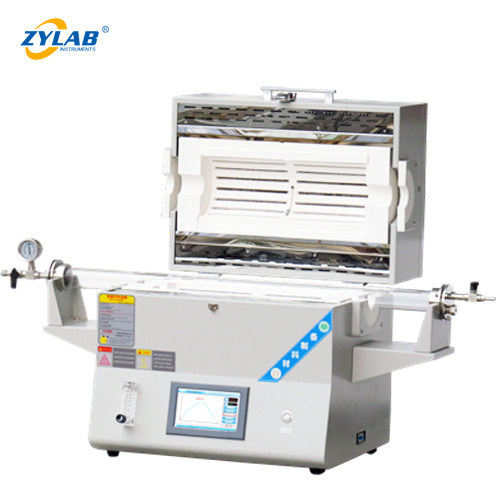
Suitable for small-scale reduction experiments, metal oxide powders, and material synthesis requiring a controlled gas environment. The furnace tube, end seals, gas connections, and safety equipment must be compatible with the intended hydrogen process.
Controlled-Atmosphere Chamber Furnace

May be suitable for larger samples, batch processing, or sample geometries that cannot fit inside a conventional tube furnace. The chamber or retort must be specifically designed for the required atmosphere and operating conditions.
Mini Hydrogen Reduction Furnace
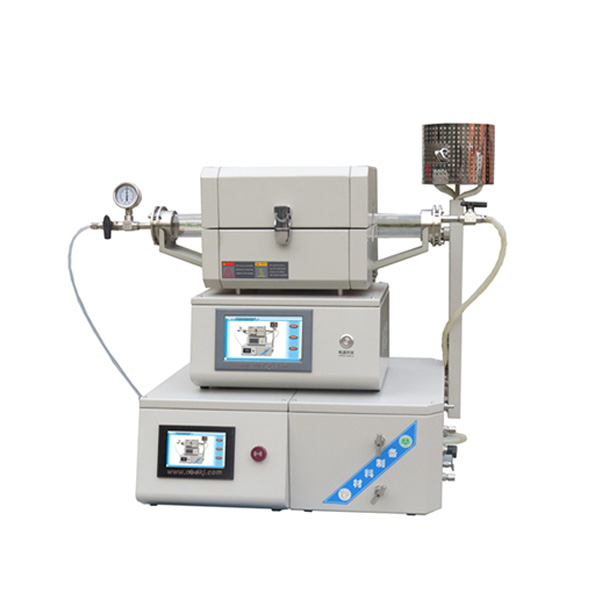
A compact configuration for laboratory R&D, preliminary material screening, and experiments involving relatively small sample quantities. It can help researchers establish reduction conditions before considering larger-scale processing.
A standard muffle furnace should not be assumed suitable for hydrogen reduction simply because it can reach the required temperature. Controlled hydrogen processing requires an appropriately designed furnace enclosure or work tube, compatible gas-handling components, and suitable safety provisions.
Check Furnace Tube Material Compatibility
The furnace tube is an important component of a hydrogen reduction system because it contains the sample and provides the process environment.
Selecting the correct tube material requires consideration of temperature, hydrogen concentration, gas pressure, sample chemistry, and potential reaction products.
Key considerations include:
-
Temperature resistance: The tube must withstand the intended operating temperature and thermal cycling.
-
Chemical compatibility: The tube material must be compatible with hydrogen, the sample, and any process vapors under the actual operating conditions.
-
Mechanical strength: The tube must be suitable for the specified pressure or vacuum conditions.
-
Sealing requirements: End seals and fittings must maintain the required atmosphere without introducing unacceptable leakage.
-
Contamination control: The tube material should not introduce contaminants that could affect the experimental results.
Quartz tubes are commonly used in laboratory tube furnaces, but they should not automatically be selected for every hydrogen reduction process. Their suitability depends on the operating temperature, gas environment, pressure conditions, and chemical compatibility.
Alumina and suitable metal tubes may be alternatives for specific applications, subject to verification of their compatibility with the complete process.
Practical tip: When requesting a quotation, provide the target temperature, hydrogen concentration, pressure conditions, sample composition, and required tube dimensions. This allows the supplier to evaluate the appropriate tube material and sealing configuration.
Evaluate Hydrogen Atmosphere and Gas Flow Control
Hydrogen atmosphere control is essential for obtaining reliable reduction results.
The gas composition and flow conditions influence the chemical environment surrounding the sample. Depending on the reaction, researchers may need to control hydrogen concentration, total gas flow, pressure, and the removal of water vapor produced during reduction.
When selecting a hydrogen reduction furnace, consider the following requirements.
Hydrogen concentration
Determine whether the experiment requires pure hydrogen or a specified hydrogen mixture. The required concentration depends on the reduction reaction and must be evaluated alongside the system’s engineered safety requirements.
Gas flow rate
The required flow rate depends on the tube volume, sample characteristics, reaction rate, and experimental procedure. A suitable gas delivery system should provide the required operating range and stable flow control.
Gas inlet and outlet
The system should provide appropriately designed gas connections and an exhaust arrangement suitable for the process. Consider how water vapor and other process gases will be removed without compromising atmosphere control or safety.
Gas switching and atmosphere replacement
Some experiments require an inert gas, such as nitrogen or argon, during initial atmosphere replacement and subsequent cooling. The appropriate sequence depends on the equipment design and validated operating procedure.
These requirements should be specified before ordering the furnace, particularly when experiments involve multiple gas types or changes in atmosphere during the heating cycle.
Prioritize Hydrogen Reduction Furnace Safety
Hydrogen is flammable and can form hazardous mixtures with air. Consequently, hydrogen safety is a fundamental requirement when selecting a laboratory hydrogen reduction furnace.
A furnace that meets the temperature requirements is not necessarily suitable for hydrogen operation unless the complete system has been designed for that purpose.
Important safety considerations include the following.
Hydrogen leak detection
Appropriate gas detection can identify hydrogen leakage and support protective actions when configured for the specific installation.
Automatic gas shutoff
A suitably designed system can isolate the hydrogen supply when defined abnormal conditions or safety interlocks are triggered.
Gas purging and atmosphere replacement
The equipment should provide a validated procedure for replacing air or hydrogen with the appropriate gas before relevant operating transitions. Purging requirements must be established for the actual system rather than based on a universal flow rate or fixed duration.
Pressure and gas-flow monitoring
Monitoring and protective functions can help identify abnormal gas supply, pressure, or flow conditions.
Exhaust and ventilation
The installation must provide suitable ventilation and exhaust handling to prevent hazardous hydrogen accumulation and safely manage the exhaust stream.
Temperature and process interlocks
Interlocks should prevent or stop hydrogen supply under defined unsafe conditions, according to the system’s design and risk assessment.
The appropriate protection measures depend on hydrogen concentration, system volume, operating temperature, gas supply arrangement, installation environment, and applicable local regulations. Installation, commissioning, and operation should follow the manufacturer’s instructions and a site-specific safety assessment.
Consider Temperature Programming and Process Repeatability
Material reduction experiments frequently require multiple heating stages rather than a single temperature setpoint.
A programmable temperature controller can help researchers reproduce defined thermal cycles and reduce manual intervention.
For example, a reduction experiment may involve:
-
Initial atmosphere replacement according to the validated operating procedure.
-
Controlled heating to the target temperature.
-
Holding at the specified temperature for a defined period.
-
Maintaining the required atmosphere during the appropriate stages of cooling.
-
Completing the process according to the established gas isolation and shutdown procedure.
The actual sequence varies with the material and the furnace’s safety design.
When selecting a controller, consider the number of programmable steps, temperature ramp settings, holding periods, monitoring functions, and data-recording requirements.
For research involving repeated experiments, the ability to reproduce the same temperature-time profile is particularly valuable when comparing reduction conditions or investigating material properties.
Is a Mini Hydrogen Reduction Furnace Suitable for Your Laboratory?
A mini hydrogen reduction furnace may be a suitable choice when the primary objective is laboratory-scale materials research rather than high-volume production.
Potential advantages include:
-
Compact installation: Suitable for laboratories with limited bench or equipment space, subject to installation and safety clearances.
-
Small-scale sample processing: Useful for preliminary experiments and material screening.
-
Controlled heating: Supports defined temperature programs for reduction studies.
-
Integration with gas safety equipment: Allows the furnace to be configured as part of a dedicated hydrogen reduction system.
-
Research flexibility: Can support the evaluation of different materials and process conditions within the system’s operating limits.
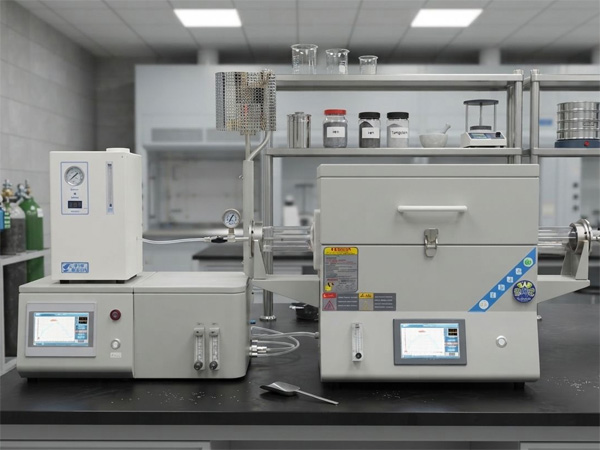
ZYLAB offers a Mini Hydrogen Reduction Furnace designed around two main components:
-
1200°C Mini Tube Furnace: Provides the heating environment for laboratory-scale experiments.
-
Tube Furnace Gas Safety Protection Device: Provides the associated safety protection and monitoring functions for hydrogen operation, according to the system configuration.
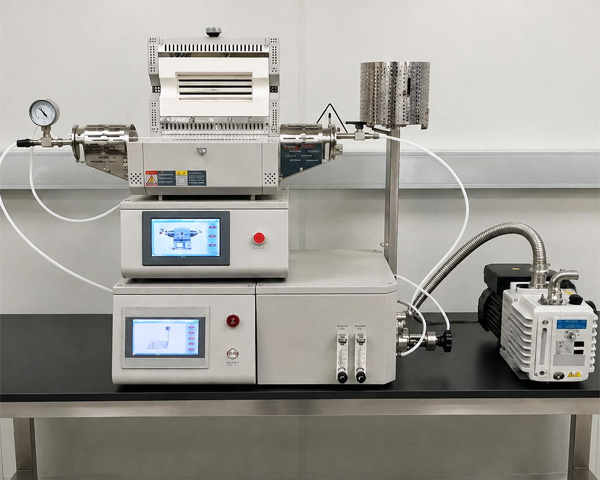
The suitability of this configuration depends on the target reduction temperature, sample quantity, required atmosphere, and experimental procedure. Researchers should confirm all operating limits and safety provisions before use.
For laboratories investigating metal oxide reduction, powder metallurgy, catalysts, or advanced functional materials, a compact hydrogen reduction furnace can provide a practical platform for controlled experimental work.
Frequently Asked Questions About Hydrogen Reduction Furnaces
What is a hydrogen reduction furnace used for?
A hydrogen reduction furnace is used to heat materials under a controlled hydrogen-containing atmosphere to facilitate reduction reactions. Common research applications include metal oxide reduction, powder metallurgy, catalyst studies, and advanced materials development.
What temperature is required for hydrogen reduction?
The required temperature depends on the material, reduction reaction, hydrogen concentration, gas flow conditions, and desired product. Some reactions proceed at relatively low temperatures, while others require higher temperatures or longer holding periods. The furnace should be selected according to the actual process conditions rather than a general temperature recommendation.
Can a standard tube furnace be used for hydrogen reduction?
Only if the furnace and its complete gas-handling and safety configuration are specifically suitable for hydrogen operation. A standard tube furnace should not be assumed safe for hydrogen simply because its temperature range is sufficient.
Is an inert gas required for hydrogen reduction?
An inert gas may be required for atmosphere replacement, system purging, or particular stages of the heating and cooling cycle. The exact gas sequence and operating conditions must follow the validated procedure for the specific furnace system.
How do I choose the right furnace tube material?
Consider the operating temperature, hydrogen concentration, pressure or vacuum conditions, chemical compatibility, and contamination requirements. Confirm the proposed tube material and seals with the equipment manufacturer before use.
What is the difference between a hydrogen reduction furnace and a conventional laboratory furnace?
A conventional laboratory furnace is primarily designed around its heating requirements. A hydrogen reduction furnace must additionally provide a suitable process enclosure or work tube, controlled gas delivery, compatible seals and connections, and an appropriate hydrogen safety system.
Conclusion
Choosing the right hydrogen reduction furnace for laboratory research requires a systematic evaluation of the material, reduction temperature, atmosphere control, furnace tube compatibility, temperature programming, and hydrogen safety provisions.
For small-scale materials science research, a mini hydrogen reduction furnace may offer a practical solution when its temperature range, sample capacity, gas-handling configuration, and safety functions meet the experimental requirements.
By defining the process before selecting the equipment, researchers can identify a suitable furnace configuration and establish more consistent conditions for laboratory reduction experiments.
Looking for a hydrogen reduction furnace for your research? Explore the ZYLAB Hydrogen Reduction Furnace or contact our team with your material, target temperature, sample quantity, and atmosphere requirements to discuss a suitable configuration.
Get In Touch
Fill out the form below — free quote and professional suggestion will be sent for reference very soon!
Share this entry
You might also like