Table of Contents
Sintering temperature is one of the most important parameters in the fabrication of nanostructured gradient materials. It influences densification, grain growth, diffusion, phase evolution, porosity, and ultimately the microstructure and properties of the final material.
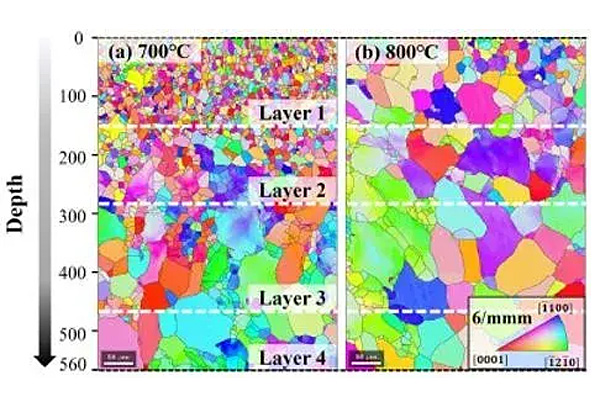
For researchers developing nanostructured ceramics, functionally graded materials (FGMs), metal-ceramic composites, and advanced nanocomposites, selecting an appropriate sintering temperature is therefore not simply a matter of achieving sufficient density.
The central challenge is often:
How can sufficient densification be achieved without destroying the designed nanoscale or gradient microstructure?
Increasing temperature generally accelerates diffusion and promotes densification. However, excessive temperature or prolonged thermal exposure can also accelerate particle coarsening and grain growth. For nanostructured materials, these effects can occur at relatively low temperatures compared with conventional coarse powders because of their high surface area and high thermodynamic driving force.
For gradient materials, the situation becomes even more complex because thermal treatment can also affect composition gradients, phase distribution, interfacial regions, residual stress, and local microstructure.
This article examines how sintering temperature affects nanostructured gradient materials and what researchers should consider when designing a laboratory sintering process.
What Are Nanostructured Gradient Materials?
Nanostructured gradient materials combine two important concepts: nanoscale microstructure and spatially controlled gradients.
A gradient can be introduced in:
- Chemical composition
- Phase composition
- Grain size
- Porosity
- Density
- Reinforcement concentration
- Microstructure
- Mechanical properties
- Thermal properties
- Electrical or functional properties
Functionally graded materials are specifically designed so that properties change gradually with position rather than through an abrupt interface. This approach can be used to tailor material behavior and reduce problems associated with sharp transitions between dissimilar materials.
For example, a researcher may fabricate a ceramic-metal gradient in which the ceramic fraction gradually increases from one side to the other:
Low ceramic concentration → Intermediate concentration → High ceramic concentration
Another example is a gradient in grain size:
Nanocrystalline region → Fine-grained region → Coarser-grained region
The final performance depends not only on the original gradient design, but also on how that gradient changes during processing.
This is where sintering becomes particularly important.
Why Is Sintering Important for Gradient Materials?
Many nanostructured gradient materials are fabricated from powders, nanopowders, layered green bodies, or other compacted precursors.
A simplified processing route may be:
Powder preparation → Gradient design → Forming → Debinding → Sintering → Cooling → Characterization
During sintering, particles undergo several simultaneous processes:
- Particle rearrangement
- Neck formation
- Surface diffusion
- Grain-boundary diffusion
- Pore evolution
- Densification
- Grain growth
- Phase transformation
- Elemental diffusion
These processes are strongly dependent on temperature and time.
Research on nanosized powders shows that early-stage coarsening can begin during heating and can have a significant influence on the final grain size. At later stages, densification and grain growth become increasingly coupled.
Therefore, the temperature profile should be considered as part of the material design process, rather than simply as a furnace setting.
How Does Increasing Sintering Temperature Change Nanostructured Materials?
In general, increasing the sintering temperature increases the rate of thermally activated diffusion.
This can promote:
Higher temperature → Faster diffusion → Faster neck growth → Greater densification
But the same increase in thermal activity can also produce:
Higher temperature → Faster grain growth → Larger grains → Possible loss of nanoscale features
This creates a fundamental processing trade-off.
Lower Sintering Temperature
At a relatively low temperature:
- Diffusion may be limited
- Particle bonding may be incomplete
- Porosity may remain high
- Final density may be insufficient
- Grain growth may be relatively limited
The material may retain a finer microstructure, but the mechanical or functional performance can suffer because of incomplete densification.
Intermediate Sintering Temperature
At an optimized temperature:
- Particle bonding becomes more effective
- Porosity decreases
- Density increases
- Grain growth can potentially remain manageable
- The desired microstructure may be retained
This temperature range is often the target for experimental optimization.
Excessively High Sintering Temperature
At excessively high temperatures:
- Diffusion becomes faster
- Densification may accelerate
- Grain growth can become significant
- Nanoparticles may coarsen
- Phase composition may change
- The original gradient may become less distinct
For nanostructured materials, the loss of nanoscale characteristics can occur before researchers obtain the desired combination of density and microstructure.
The Relationship Between Densification and Grain Growth
One of the most important concepts in nanomaterial sintering is the relationship between densification and grain growth.
Ideally, researchers want:
High densification + Minimum grain growth
However, these processes are not completely independent.
During sintering, material transport reduces pore volume and increases density. At the same time, grain boundaries can migrate, causing grains to become larger.
This is particularly challenging for nanopowders because their large surface area provides a strong driving force for sintering and coarsening.
A review of nanosized-particle sintering emphasizes that controlling grain growth while achieving full densification remains a primary challenge in producing bulk nanomaterials.
The experimental objective is therefore not necessarily to use the highest possible temperature, but to identify a thermal cycle that provides the required density while maintaining the desired microstructure.
Why Nanomaterials Are Especially Sensitive to Sintering Temperature
Nanoparticles behave differently from conventional micrometer-scale powders during sintering.
Their extremely small particle size results in:
- High specific surface area
- High surface energy
- Short diffusion distances
- Strong driving forces for coarsening
- Rapid microstructural evolution
As a result, nanoparticles can begin to coarsen during relatively early stages of heating.
Research has shown that grain growth during nanosintering can include an initial dynamic growth stage during heating, followed by more conventional grain growth during isothermal holding.
This means that researchers should not focus only on the final holding temperature.
The entire heating schedule matters.
For example:
Heating rate → Time spent at intermediate temperatures → Peak temperature → Holding time → Cooling rate
can all influence the final grain structure.
How Can Researchers Optimize Sintering Temperature?
A practical research strategy is to use a series of controlled experiments rather than selecting one temperature immediately.
Step 1: Define the Target Microstructure
Determine the desired:
- Grain size
- Density
- Porosity
- Phase composition
- Gradient profile
Step 2: Select a Temperature Range
Choose a scientifically reasonable temperature range based on the material’s known sintering behavior.
Step 3: Run Controlled Experiments
Change one major variable at a time where possible.
For example:
Temperature: 1300°C → 1400°C → 1500°C → 1600°C
while maintaining other parameters.
Step 4: Characterize the Samples
Measure:
- Relative density
- Grain size
- Phase composition
- Porosity
- Gradient profile
- Mechanical properties
Step 5: Identify the Processing Window
The optimum condition is often not the highest density alone.
Instead, researchers may seek a balance between:
Density + Grain Size + Gradient Stability + Desired Properties
Laboratory Furnace Selection for Nanostructured Materials Research
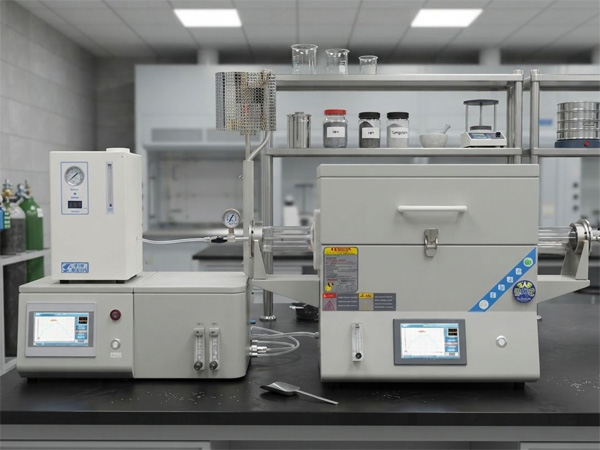
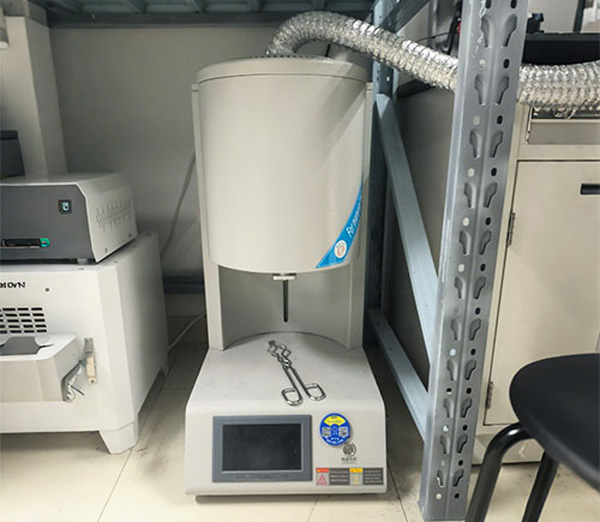
For laboratory-scale experiments, researchers often need a furnace that can reproduce carefully designed thermal profiles rather than simply provide a high maximum temperature.
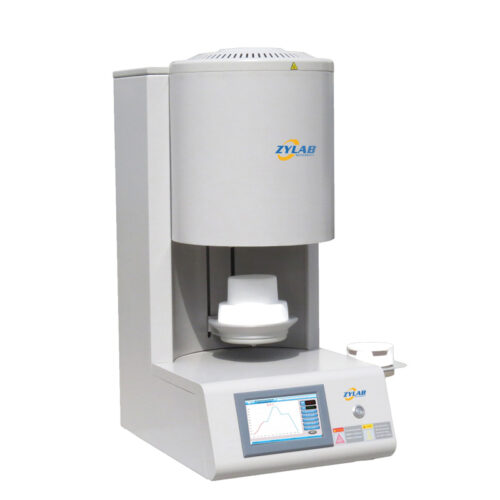
Important factors include:
1. Temperature Range
The furnace should provide sufficient temperature headroom for the intended material system and experimental program.
2. Programmable Temperature Profiles
Multi-step programs are useful for:
- Debinding
- Preheating
- Intermediate holds
- Sintering
- Two-step sintering
- Controlled cooling
3. Temperature Uniformity
A stable and uniform heating environment helps improve experimental repeatability.
4. Sample Capacity
Laboratory-scale furnaces are useful when researchers need to process relatively small quantities while testing multiple experimental conditions.
5. Atmosphere Control
For oxygen-sensitive or reactive materials, the furnace should be compatible with the required atmosphere and gas-control system.
6. Repeatability
For scientific research, the ability to reproduce the same thermal cycle is often more important than simply reaching the maximum temperature.
Key Challenges in Sintering Nanostructured Gradient Materials
Despite significant progress in FGM and nanomaterial processing, several challenges remain.
1. Grain Growth
Maintaining nanoscale grains while achieving high density remains a major challenge in nanomaterial sintering.
2. Gradient Stability
High-temperature diffusion may alter the originally designed composition or microstructure gradient.
3. Residual Stress
Differences in thermal expansion and shrinkage between gradient regions can contribute to residual stress.
4. Non-Uniform Shrinkage
Different compositions may densify at different rates, potentially causing distortion or internal defects.
5. Phase Compatibility
Different phases may react or transform during high-temperature treatment.
6. Process Reproducibility
Small changes in heating rate, green density, atmosphere, or holding time can influence the final microstructure.
Frequently Asked Questions
What is the ideal sintering temperature for nanostructured materials?
There is no universal sintering temperature. It depends on the material chemistry, particle size, green density, atmosphere, desired density, grain-size target, and sintering mechanism. Nanostructured powders can often sinter at lower temperatures than conventional coarse powders, but the appropriate temperature must be determined experimentally.
Does higher sintering temperature always increase density?
Higher temperature generally accelerates diffusion and can promote densification, but the relationship is not simply linear. Excessive temperature can also accelerate grain growth, coarsening, phase changes, and other undesirable processes.
Can sintering change a functionally graded structure?
Yes. High-temperature diffusion, differential densification, phase transformation, and grain growth can modify the original gradient. This is why thermal treatment is an important consideration when designing FGMs.
What parameters should be controlled during sintering experiments?
Peak temperature, heating rate, holding time, cooling rate, atmosphere, sample geometry, green density, and sample position.
Controlling these parameters helps improve the reproducibility of experimental results.
Get In Touch
Fill out the form below — free quote and professional suggestion will be sent for reference very soon!
Share this entry
You might also like