Table of Contents
Introduction
The advancement of high-performance carbon-based composites, such as graphene-enhanced fibers, carbon nanotube (CNT) composites, and carbon aerogels, has opened new avenues in aerospace, energy storage, electronics, and catalysis. Achieving the superior mechanical, thermal, and electrical properties of these materials relies heavily on precise synthesis methods. Among these, high-temperature tube furnaces are a cornerstone, offering controlled thermal environments essential for reproducible, high-quality composite production.
This article delves into the technical role of high-temperature tube furnaces in carbon-based composite synthesis, focusing on temperature control, atmosphere management, and material uniformity—critical parameters for researchers and engineers in advanced material science.
High-Temperature Tube Furnaces: Technical Overview
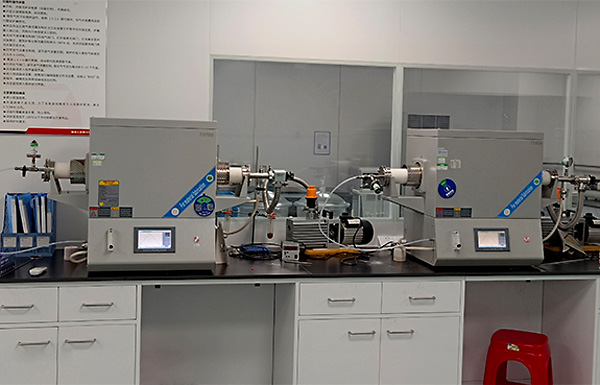
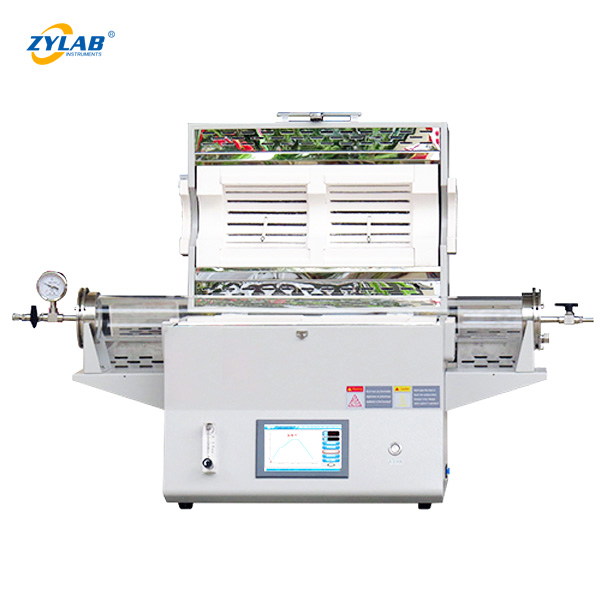
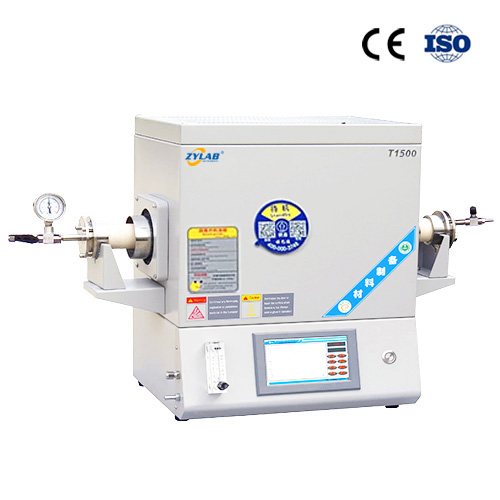
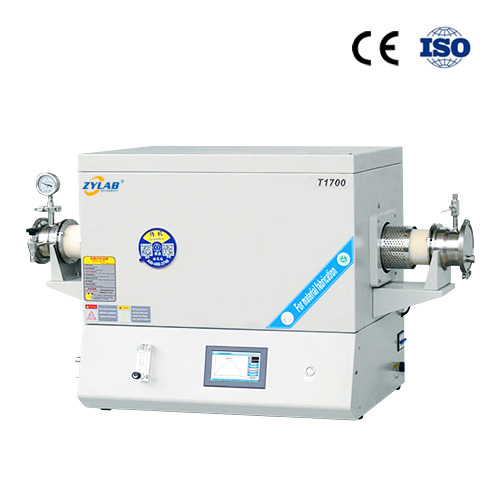
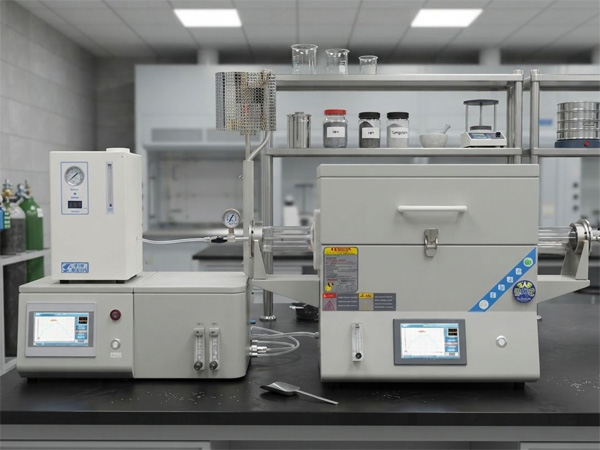
High-temperature tube furnaces are engineered for precise thermal processing, with operating temperatures typically ranging from 1000°C to over 1700°C. The core components include a high-purity quartz or alumina tube, multi-zone heating elements (commonly MoSi₂ or SiC), and advanced thermal insulation to minimize heat loss.
Key technical features that make them indispensable for carbon composite synthesis include:
-
Multi-zone PID or fuzzy logic control: Enables programmable temperature ramps, dwells, and gradients along the tube.
-
Highly uniform thermal profiles: Critical for homogeneous pyrolysis, carbonization, and graphitization.
-
Atmosphere flexibility: Supports vacuum, inert (Ar, N₂), or reactive (CH₄, H₂) environments for controlled reactions.
-
Customizable configurations: Options like tube rotation, sliding tube mechanisms, and rapid cooling improve material quality and reproducibility.
These attributes allow precise control over the kinetic and thermodynamic parameters of carbon-based reactions, directly affecting microstructure, crystallinity, and functional properties.
Technical Advantages in Carbon-Based Composite Synthesis
1. Controlled Thermal Decomposition and Carbonization
Many carbon composites are synthesized via pyrolysis of polymeric precursors or CVD of carbon sources. High-temperature tube furnaces allow fine-tuned heating rates and dwell times, ensuring complete decomposition without structural defects. For instance, in CNT growth, a stable high-temperature environment prevents catalyst sintering, yielding uniform nanotube alignment and diameter control.
2. Atmosphere Control for Material Purity
Carbon materials are highly sensitive to oxygen, moisture, and other contaminants at elevated temperatures. Tube furnaces equipped with vacuum or inert gas systems prevent oxidation and impurity incorporation, enabling the synthesis of ultra-pure graphene layers, CNT networks, and carbon aerogels—critical for electronic and energy storage applications.
3. Facilitating Advanced Carbon Architectures
Multi-step processes, including carbonization, graphitization, and in-situ deposition of nanostructures, demand precise thermal management:
-
Graphitization: Enhances electrical conductivity and mechanical strength.
-
Nanostructure integration: Enables uniform CNT or graphene growth on substrates.
-
Porous carbon formation: Controlled high-temperature treatment defines pore size distribution and surface area, essential for catalytic or electrochemical performance.
High-temperature tube furnaces provide the thermal precision and stability needed to control these structural evolutions at the nanoscale.
4. Reproducibility and Scalability
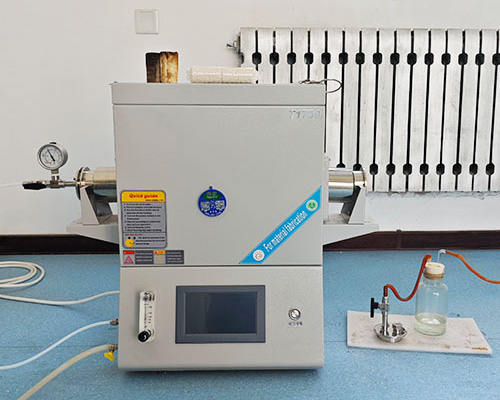
Reproducibility is paramount in research and industrial applications. Tube furnaces enable consistent thermal cycles across multiple batches, ensuring that structural and functional properties remain uniform. ZYLAB high-temperature tube furnaces, for example, feature multi-point temperature control and constant pressure systems, offering highly reproducible synthesis conditions for carbon composites at both lab and pilot scales.
Applications in Research and Industry
- Graphene-Enhanced Carbon Fibers: Tube furnaces allow high-temperature CVD growth of graphene layers, improving tensile strength and conductivity.
-
Carbon Nanotube Composites: Uniform CNT deposition on catalysts or matrices is achieved via precise thermal and atmospheric control.
-
Carbon Aerogels and Porous Carbons: High-temperature treatment defines porosity, surface area, and electrical properties for energy storage or catalysis.
-
Hybrid Carbon-Metal Composites: Tube furnaces enable controlled pyrolysis of metal-organic precursors, yielding uniform carbon-metal nanostructures for catalytic applications.
Selecting the Right High-Temperature Tube Furnace
When designing synthesis protocols for carbon-based composites, choosing the right tube furnace is crucial. Technical considerations include:
-
Maximum Temperature and Heating Rate: Must support the specific pyrolysis, graphitization, or CVD requirements.
-
Tube Geometry: Diameter and length influence sample size, uniformity, and throughput.
-
Multi-Zone Control: Allows temperature gradients for sequential reactions or tailored nanostructure growth.
-
Atmosphere Flexibility: Essential for high-purity, oxidation-free synthesis.
-
Automation and Monitoring: Features like programmable ramps, sliding tubes, and real-time data logging improve reproducibility.
For researchers seeking reliable and customizable solutions, ZYLAB high-temperature tube furnaces provide flexible multi-zone heating, intelligent PID control, and advanced atmosphere management, making them ideal for sophisticated carbon composite synthesis.
Conclusion
High-temperature tube furnaces are indispensable for the synthesis of novel carbon-based composites, offering precise control over temperature, atmosphere, and reaction kinetics. They enable the production of high-purity, structurally uniform materials, from graphene-enhanced fibers and CNT composites to carbon aerogels and hybrid carbon-metal systems.
If you are exploring the synthesis of advanced carbon-based composites, discover how ZYLAB high-temperature tube furnaces can elevate your research. Contact our technical team today to discuss your project requirements and explore customizable solutions tailored to your experimental needs.
Get In Touch
Fill out the form below — free quote and professional suggestion will be sent for reference very soon!