How to Prepare MnCO₃ Nanoparticles Using a Planetary Ball Mill

Table of Contents

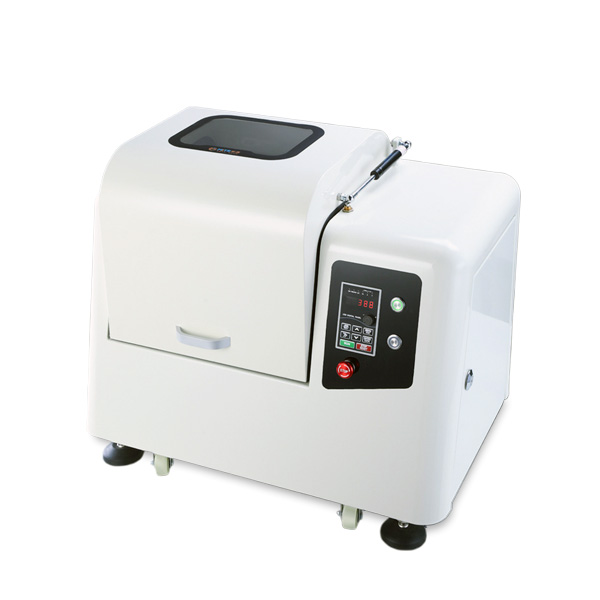
Planetary Ball Mill technology is widely used for preparing ultra-fine and nano-scale powders in laboratories and industrial research. Among many functional materials, manganese carbonate (MnCO₃) has attracted significant attention in lithium battery materials, catalysts, ceramics, pigments, and advanced manganese-based compounds.

To obtain high-quality MnCO₃ nanoparticles, selecting the correct milling conditions is critical. Parameters such as milling jar material, grinding media, and wet or dry milling methods directly influence particle size distribution, contamination level, and powder uniformity.
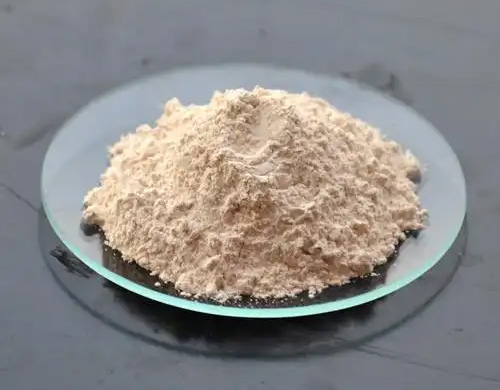
Prepare MnCO₃ Nanoparticles Using a Planetary Ball Mill

This article explains the key considerations for preparing MnCO₃ nanoparticles using a planetary ball mill and helps researchers optimize their milling process.

Why Use a Planetary Ball Mill for MnCO₃ Nanoparticle Preparation?

A Planetary Ball Mill provides high-energy impact and friction forces that efficiently reduce particle size. Compared with conventional milling equipment, planetary ball mills offer:

  • Faster particle size reduction
  • Better powder uniformity
  • Nano-scale grinding capability
  • Adjustable speed and milling programs
  • Suitable operation for dry or wet milling
  • Compatibility with vacuum or inert gas environments

These advantages make planetary ball mills ideal for preparing MnCO₃ nanopowders for battery precursor materials and advanced functional ceramics.

Which Milling Jar Material Should Be Selected for MnCO₃ Grinding?

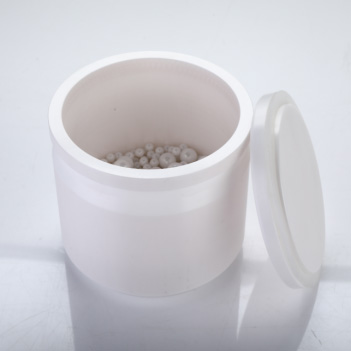
The selection of the milling jar material is extremely important because contamination from the jar can affect the purity and electrochemical performance of manganese-based materials.

Common Milling Jar Materials

Jar Material Advantages Limitations Recommended for MnCO₃
Zirconia (ZrO₂) Extremely low contamination, high hardness Higher cost Highly Recommended
Stainless Steel Strong impact energy, durable Possible Fe contamination Suitable for non-high-purity applications
Alumina Good chemical resistance Lower toughness Acceptable
Tungsten Carbide Very high hardness Possible tungsten contamination Limited use

Recommended Choice

For high-purity MnCO₃ nanoparticle preparation, zirconia jars are generally the best option because they minimize metallic contamination and provide excellent wear resistance.

Which Is Better for MnCO₃ Grinding: Zirconia Balls or Stainless Steel Balls?

The grinding media strongly influence milling efficiency and powder purity.

Zirconia Grinding Balls

Advantages

  • Very low contamination
  • Excellent wear resistance
  • Chemically stable
  • Suitable for nano-scale grinding
  • Preferred for battery material research

Stainless Steel Grinding Balls

Advantages

  • Lower cost
  • Higher density and impact force
  • Faster coarse grinding

Limitations

  • Iron contamination risk
  • Possible oxidation during milling
  • Less suitable for ultra-high purity powders

Final Recommendation

For nano-sized MnCO₃ preparation, zirconia grinding balls are generally more suitable than stainless steel balls because they provide cleaner grinding conditions and better control over powder purity.

When contamination is not critical and higher milling energy is required, stainless steel media can still be a practical choice.

Wet Ball Milling vs Dry Ball Milling for MnCO₃

One of the most common questions researchers ask is whether wet milling or dry milling is better for manganese carbonate.

Dry Ball Milling

Advantages

  • Simpler process
  • No drying step required
  • Suitable for preliminary particle reduction

Limitations

  • Powder agglomeration
  • Higher heat generation
  • Increased dust formation
  • Lower nano-scale uniformity

Dry milling is commonly used for coarse or intermediate grinding stages.

Wet Ball Milling

Advantages

  • Better particle dispersion
  • Reduced agglomeration
  • Improved nano-particle uniformity
  • Lower milling temperature
  • Higher grinding efficiency

Common Solvents

  • Ethanol
  • Isopropanol
  • Deionized water

Wet milling is typically preferred for preparing nano-sized MnCO₃ powders because it improves particle size distribution and reduces excessive heat buildup.

Recommended Milling Parameters for MnCO₃ Nanoparticles

The optimal parameters depend on the desired particle size and application requirements.

Parameter Recommended Range
Rotation Speed 300–600 rpm
Milling Time 4–24 hours
Ball-to-Powder Ratio 10:1 to 20:1
Grinding Method Wet Milling Preferred
Jar Material Zirconia
Grinding Media Zirconia Balls

Researchers should optimize these parameters according to laboratory scale, powder quantity, and target particle size.

Applications of MnCO₃ Nanoparticles

Nano-scale manganese carbonate powders are widely used in:

  • Lithium-ion battery cathode materials
  • Mn-based precursor synthesis
  • Electronic ceramics
  • Catalysts
  • Magnetic materials
  • Advanced chemical research

High-energy milling can significantly improve the reactivity and uniformity of MnCO₃ powders for advanced material synthesis.

Conclusion

Preparing MnCO₃ nanoparticles using a Planetary Ball Mill requires careful optimization of milling conditions.

For most high-purity laboratory applications:

  • Zirconia jars are the preferred milling container
  • Zirconia balls provide cleaner grinding performance
  • Wet milling delivers better nano-particle uniformity

By selecting appropriate milling parameters and materials, researchers can efficiently produce high-quality manganese carbonate nanopowders suitable for battery materials, ceramics, and advanced functional applications.

Get In Touch

Fill out the form below — free quote and professional suggestion will be sent for reference very soon!