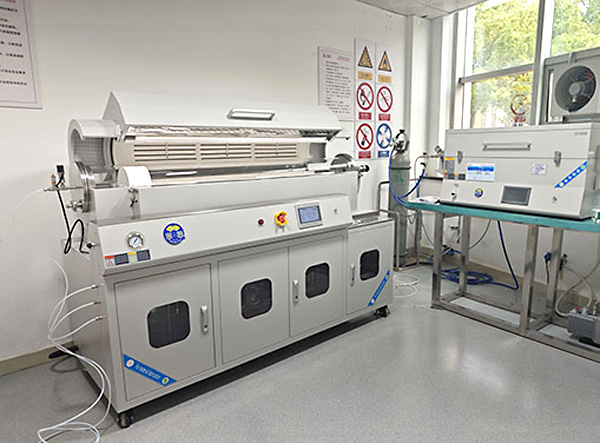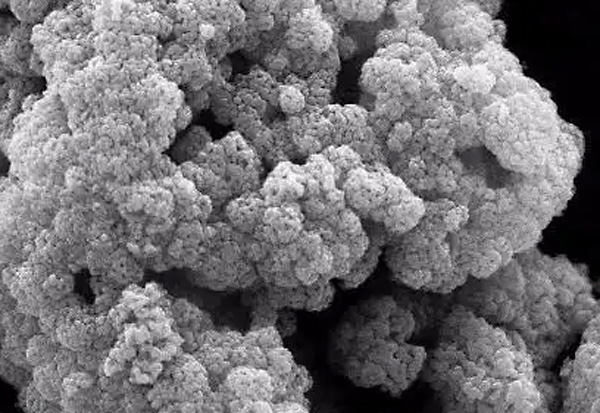
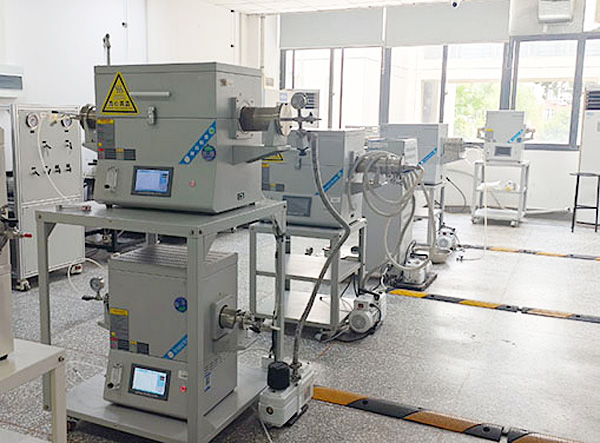
Among available thermal processing equipment, the three-zone tube furnace has become a preferred solution for researchers working on advanced catalyst systems. Its ability to independently control multiple heating zones makes it particularly well-suited for three-stage catalyst preparation processes, typically involving drying, calcination, and activation.
Category Archives: Thermal Processing
A muffle furnace with gas inlet system is a widely used solution for controlled atmosphere heat treatment at temperatures up to 1200°C. This article explains how it works, what gases can be used, and how it differs from vacuum furnace technology.
High-temperature modification is a critical step in improving the performance of lithium-ion battery cathode materials such as LFP, NMC, and LCO. However, many researchers and engineers face challenges related to phase stability, lithium loss, atmosphere control, and material uniformity.
So, why do powders sinter during reduction, and how can this be effectively avoided? In this article, we explore the mechanisms behind powder sintering and provide practical solutions for researchers and engineers.
Biomass pyrolysis is widely studied in universities and research institutes as a method for converting organic materials into biochar, bio-oil, and syngas. A laboratory tube furnace is one of the most commonly used systems for small-scale pyrolysis experiments because it allows precise temperature control and stable inert atmosphere conditions.
A laboratory molten salt furnace is not simply a heating device. It is a core research tool that enables controlled melting, long-term thermal stability evaluation, and systematic compatibility testing between molten salts and structural materials.
This article discusses the technical role of laboratory molten salt furnaces in molten salt system development and high-temperature material compatibility research.
High-temperature treatment plays a critical role in catalytic materials research, particularly for catalyst calcination, phase transformation, and atmosphere-dependent pretreatment. As research advances toward more complex catalyst systems, a 1500°C tube furnace has become an increasingly common requirement in modern laboratories.
Hydrogen-based precious metal refining, enabled by advanced hydrogen reduction furnaces, has emerged as a highly efficient, clean, and controllable solution for producing ultra-high-purity precious metals such as gold, silver, and platinum-group metals.
Among various laboratory-scale technologies, box furnace pyrolysis solutions offer a reliable, flexible, and repeatable method for biochar production.
This article explains how box furnaces are used for biochar pyrolysis, why atmosphere control is essential, and how to optimize process parameters to achieve consistent, high-quality biochar.
1200°C dual-zone PECVD (Plasma-Enhanced Chemical Vapor Deposition) system provides a powerful and flexible solution, enabling excellent film quality at low substrate temperatures through precise thermal and plasma control.
This article explores the process principles, film characteristics, and practical advantages of using a high-temperature dual-zone PECVD system for low-temperature dielectric and passivation film deposition.