Table of Contents
Hydrogen reduction is widely investigated in materials science, powder metallurgy, catalyst development, and advanced functional materials research. By reacting with suitable metal oxides under controlled conditions, hydrogen can facilitate oxygen removal and produce materials with different chemical compositions, phases, and microstructures.
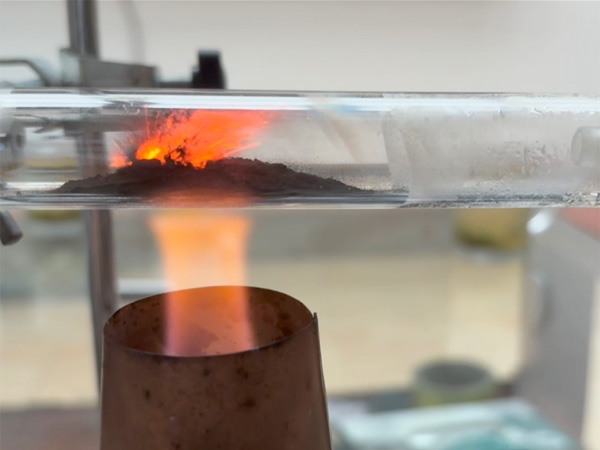
However, achieving the desired reduction result depends on more than selecting an appropriate furnace temperature. Hydrogen reduction efficiency is influenced by several interacting factors, including temperature, hydrogen concentration, gas flow rate, holding time, powder characteristics, and the removal of reaction-generated water vapor.
Understanding these factors helps researchers design experiments, investigate reduction kinetics, and improve the reproducibility of laboratory results.
In this article, we examine the major variables affecting hydrogen reduction efficiency and explain how researchers can systematically optimize experimental conditions using a suitable hydrogen reduction furnace.
What Is Hydrogen Reduction Efficiency?
Hydrogen reduction efficiency describes how effectively a reduction process converts a starting material into its intended reduced product under specified experimental conditions.
For metal oxide reduction, researchers may evaluate the process using several indicators:
-
Degree of reduction: The proportion of reducible oxygen removed from the starting material.
-
Reduction rate: How quickly the reduction reaction proceeds over time.
-
Final phase composition: Whether the desired metallic or lower-oxidation-state phase has formed.
-
Residual oxygen content: The amount of oxygen remaining in the final product.
-
Product properties: Particle size, morphology, porosity, and other characteristics relevant to the intended application.
These indicators are related but not interchangeable. A sample may exhibit a high degree of reduction while still having an unsuitable particle size or microstructure.
Reduction Temperature: A Key Factor in Reaction Kinetics
Temperature is one of the most influential variables in hydrogen reduction experiments.
In many metal oxide reduction reactions, increasing temperature accelerates reaction kinetics by promoting chemical reactions and mass transfer. However, the effect depends on the material’s thermodynamic properties, intermediate phases, and reaction mechanism.
How does temperature affect hydrogen reduction?
Reaction rate
Higher temperatures often increase the rate of the chemical reaction between hydrogen and the oxide. This can shorten the time required to reach a specified degree of reduction.
Reaction pathway
Some metal oxides undergo multiple reduction stages, passing through intermediate oxides before reaching the desired final phase. Temperature can affect which stages occur and how quickly they proceed.
Particle growth and agglomeration
Excessive temperatures or prolonged heating may cause sintering, grain growth, or particle agglomeration in susceptible materials. These changes may be undesirable when producing fine powders or maintaining a specific microstructure.
Thermal uniformity
Temperature differences within the sample zone can lead to inconsistent reduction results, particularly when samples occupy a large area or have significant thickness.
How should researchers select the reduction temperature?
Start with published studies relevant to the specific material and reaction. Then establish an experimental temperature range that is compatible with the furnace, sample holder, and process atmosphere.
Where appropriate, conduct experiments at different temperatures while keeping other variables constant.
Record both the reduction outcome and the final material properties rather than relying solely on visual observations or mass changes.
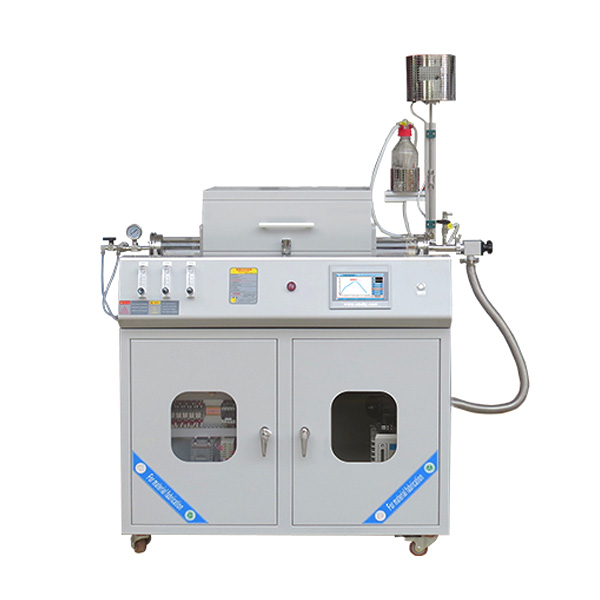
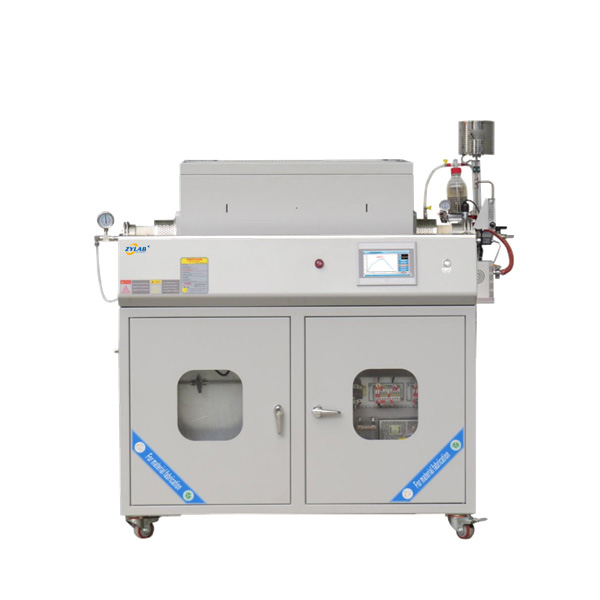
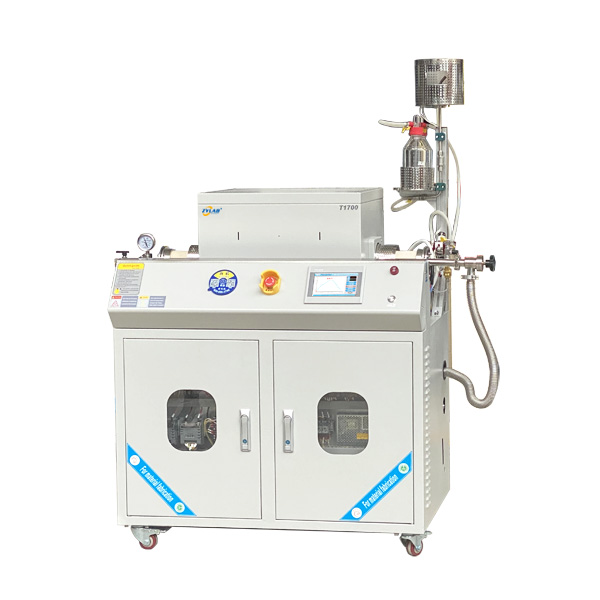
Practical tip: When selecting a hydrogen reduction furnace, distinguish between its maximum rated temperature and its recommended continuous working temperature. Temperature programming and stability should also match the requirements of the experiment.
Hydrogen Concentration and Partial Pressure
Hydrogen concentration affects the chemical environment in which the reduction reaction takes place.
For many metal oxide systems, the hydrogen partial pressure relative to the water vapor partial pressure is particularly important because the reaction equilibrium depends on both species.
For a simplified metal oxide reduction reaction:
MO + H2 → M + H2O
the equilibrium and reaction direction depend on temperature and the relevant gas partial pressures, as well as the properties and phases of the solid material.
Why does hydrogen concentration matter?
Reducing potential
A suitable hydrogen partial pressure can favor reduction for a given oxide system at a specified temperature.
Reaction kinetics
Hydrogen availability at the sample surface can influence the reaction rate, particularly when gas transport or surface reaction kinetics limit the process.
Gas mixture composition
Some experiments use hydrogen diluted with an inert gas. The resulting hydrogen partial pressure differs from that of pure hydrogen under otherwise comparable pressure conditions.
How can hydrogen concentration be optimized?
Researchers should identify the concentration range appropriate for the specific oxide and target reaction using thermodynamic calculations and relevant literature.
If the process permits, compare different hydrogen concentrations while maintaining consistent temperature, sample preparation, and other relevant variables.
Higher hydrogen concentration does not guarantee a proportionally higher reduction rate. The process may instead be limited by diffusion within the sample, product-layer formation, or the intrinsic reaction kinetics.
Hydrogen concentration must also remain within the operating limits of the furnace and its engineered gas safety system.
Gas Flow Rate and the Removal of Water Vapor
Gas flow rate is another important factor in hydrogen reduction furnace experiments.
The supplied gas must reach the sample, provide the required reducing atmosphere, and help transport reaction-generated water vapor away from the reaction zone.
For some processes, insufficient gas flow can contribute to local depletion of hydrogen or accumulation of water vapor. These conditions may affect the reaction rate and the final product.
What happens when the gas flow rate is too low?
Potential consequences include:
-
Insufficient replenishment of hydrogen near the sample.
-
Reduced mass transfer between the gas and solid.
-
Greater variation in gas composition along the sample bed.
-
Increased local water vapor concentration during reduction.
The importance of each effect depends on the reaction, furnace geometry, sample quantity, and gas delivery arrangement.
Does a higher gas flow rate always improve reduction efficiency?
No. Increasing the flow rate may improve gas transport when external mass transfer is limiting. However, once gas supply is sufficient, further increases may have little effect because the process becomes limited by internal diffusion or chemical reaction kinetics.
Excessive gas flow can also increase hydrogen consumption and affect process economics.
How should researchers determine the appropriate flow rate?
Consider the following variables:
-
Furnace tube dimensions and effective reaction-zone volume.
-
Sample mass and the way the powder is distributed.
-
Hydrogen concentration and total gas composition.
-
Expected reaction rate and water vapor generation.
-
Gas outlet configuration and allowable operating conditions.
Where practical, compare flow rates systematically while maintaining the same sample mass, temperature program, and starting material.
The aim is to establish a flow rate that provides adequate gas transport without unnecessary consumption.
Holding Time: How Long Should Hydrogen Reduction Continue?
Holding time is the duration for which the sample remains at the specified reduction temperature and atmosphere.
An appropriate holding period depends on the reaction kinetics, sample dimensions, material composition, and required degree of reduction.
Why is holding time important?
Incomplete reduction
If the holding period is too short, the reaction may not reach the desired endpoint. Residual oxide phases or excessive oxygen content may remain.
Diminishing returns
The reduction rate may decrease as the reaction progresses. For example, hydrogen may need to diffuse through a developing product layer before reaching unreacted material.
Changes in product properties
Longer holding times may promote grain growth, sintering, or agglomeration in certain powder systems, even after the desired chemical conversion has largely occurred.
How can researchers optimize holding time?
Use preliminary experiments or published kinetic data to establish a reasonable starting point.
Then compare samples processed at different holding times while keeping the other experimental variables as consistent as possible.
Evaluate the final product using suitable analytical techniques. Depending on the material, these may include X-ray diffraction (XRD), thermogravimetric analysis (TGA), or chemical analysis of residual oxygen.
The optimum holding time is the period required to achieve the target conversion and product properties, rather than simply the longest available heating period.
Powder Particle Size, Porosity, and Sample Loading
The physical characteristics of the starting material can strongly influence hydrogen reduction kinetics.
Hydrogen must travel from the bulk gas to the particle surface and, in many systems, diffuse through pores or a growing product layer to reach the reaction interface.
Particle size
Smaller particles often provide a greater specific surface area and shorter diffusion distances. Under otherwise comparable conditions, these characteristics can accelerate reduction.
However, particle size is not the only determining factor. Surface chemistry, agglomeration, porosity, and changes in the product layer can also influence the reaction.
Porosity and sample density
Porous materials may allow hydrogen to penetrate more easily into the sample. In contrast, highly compacted powders may restrict gas diffusion, depending on their pore structure and reaction behavior.
This is particularly relevant when reducing pressed pellets or thick powder beds.
Sample loading and bed thickness
Increasing the sample mass does not necessarily improve processing efficiency. A thick powder bed may create differences in gas availability, temperature, or water vapor concentration between its exposed surface and interior.
For laboratory experiments, researchers should consider:
-
Sample mass and geometry.
-
Powder layer thickness.
-
Crucible dimensions and material compatibility.
-
Gas access to the sample surface.
-
The temperature distribution across the sample zone.
For comparative experiments, consistent sample preparation and loading are essential for interpreting the effects of other process variables.
Water Vapor and Gas Composition Along the Furnace Tube
Water vapor is a reaction product in many hydrogen reduction processes.
As hydrogen reacts with an oxide, the resulting water vapor enters the surrounding gas stream. Its partial pressure can influence reaction equilibrium and may affect the reduction pathway.
In a tube furnace, the gas composition can also change along the direction of flow because hydrogen is consumed and water vapor is generated as the reaction proceeds.
This means that samples positioned at different locations may experience different gas environments under certain conditions.
What can researchers do?
-
Use an appropriate gas flow and outlet configuration.
-
Avoid excessive sample loading that restricts gas access.
-
Consider sample position when designing comparative experiments.
-
Evaluate whether the process requires additional control of moisture or exhaust conditions.
-
Use gas analysis or other suitable measurements when gas composition is critical to the research.
For experiments sensitive to gas composition, the exhaust arrangement and reaction-zone design should be considered part of the overall process configuration.
How to Improve Experimental Repeatability
Even when the furnace temperature and gas flow are nominally unchanged, variations in sample preparation or operating procedures can lead to different results.
A systematic experimental approach helps researchers identify which variables are responsible.
Step 1: Define a measurable endpoint
Decide how reduction success will be assessed. Depending on the application, this may involve phase composition, oxygen content, mass change, or another material-specific measurement.
Step 2: Establish a baseline procedure
Document the starting material, sample mass, powder preparation, gas composition, flow rate, temperature program, and holding time.
Step 3: Change one variable at a time
For initial optimization, changing one parameter while holding others constant makes it easier to identify cause-and-effect relationships.
For complex systems, a designed experiment may be more efficient for investigating interactions between temperature, concentration, and flow rate.
Step 4: Verify the results analytically
Use suitable characterization methods to determine whether the desired conversion has occurred and whether the final material meets the research requirements.
Step 5: Record and reproduce the process
Maintain consistent sample placement, gas supply conditions, temperature programming, and operating procedures across repeated runs.
This approach helps distinguish genuine process improvements from variations caused by sample preparation or experimental setup.
Choosing a Hydrogen Reduction Furnace for Reliable Research
The furnace itself does not determine reduction efficiency independently of the process. Instead, it provides the thermal environment, gas-handling configuration, and monitoring capabilities needed to carry out the experiment.
When evaluating a laboratory hydrogen reduction furnace, consider the following features:
|
Furnace or system feature |
Why it matters |
|---|---|
|
Appropriate temperature range |
Supports the required reduction conditions |
|
Programmable temperature control |
Enables repeatable heating and holding schedules |
|
Compatible furnace tube and seals |
Helps maintain the intended process environment |
|
Controlled gas delivery |
Supports stable and reproducible gas supply |
|
Suitable gas inlet and outlet design |
Enables gas distribution and exhaust handling |
|
Hydrogen safety protection |
Supports safe operation through appropriate monitoring and protective functions |
|
Suitable sample-zone dimensions |
Accommodates the required sample quantity and geometry |
A compact system may be suitable for preliminary materials research, small-batch powder processing, and experimental optimization, provided its specifications meet the process requirements.
ZYLAB Mini Hydrogen Reduction Furnace
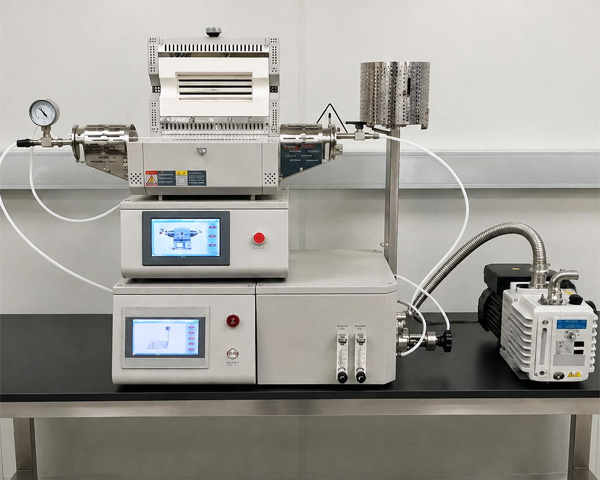
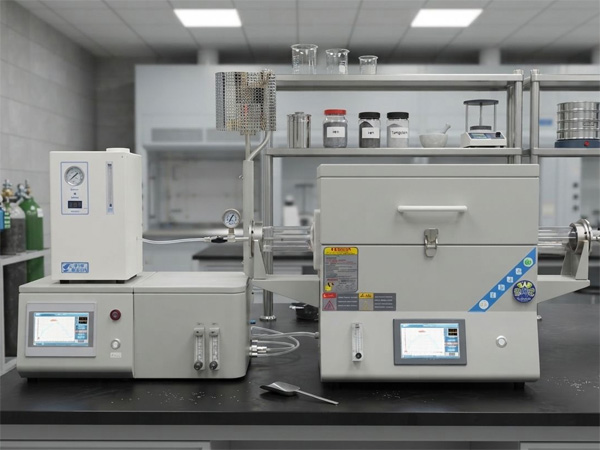
ZYLAB’s Mini Hydrogen Reduction Furnace consists of two main components:
-
1200°C Mini Tube Furnace: Provides the heating environment for laboratory-scale experiments.
-
Tube Furnace Gas Safety Protection Device: Provides associated safety protection and monitoring functions for hydrogen operation according to the system configuration.
The system may be considered for research involving suitable metal oxides, metal powders, catalysts, and other materials requiring controlled hydrogen reduction.
Actual suitability depends on the target temperature, sample quantity, material compatibility, gas composition, and operating procedure. Researchers should confirm the available configuration and applicable operating limits with the manufacturer before selecting the system.
Conclusion
Hydrogen reduction efficiency is governed by the interaction between reaction conditions, gas transport, and the physical and chemical properties of the starting material.
Temperature, hydrogen concentration, gas flow rate, holding time, powder characteristics, and water vapor management can all influence the degree of reduction, reaction rate, and final product properties.
For researchers, the most effective approach is to define measurable objectives, control experimental variables, and verify the results using appropriate material characterization techniques.
A suitable hydrogen reduction furnace can provide the controlled heating environment, gas delivery configuration, and safety provisions needed to support this work. By matching the equipment to the actual process requirements, laboratories can establish more consistent experimental conditions for metal oxide reduction and advanced materials research.
Looking for a laboratory hydrogen reduction furnace for your research? Visit the ZYLAB Hydrogen Reduction Furnace product or contact our team to discuss your material, target temperature, sample quantity, and gas atmosphere requirements.
Get In Touch
Fill out the form below — free quote and professional suggestion will be sent for reference very soon!
Share this entry
You might also like