How To Avoid Powder Agglomeration And Segregation During Additive Manufacturing Material Preparation

Table of Contents

Introduction

In additive manufacturing (AM), powder quality directly determines final part performance. However, during powder handling and mixing, two common issues often occur: powder agglomeration (clumping) and powder segregation (particle separation). These problems can significantly reduce flowability, printing stability, and final part density.

This article explains the causes of these issues and how to effectively prevent them in additive manufacturing material preparation.

What Is Powder Agglomeration And Powder Segregation?

Powder Agglomeration

Powder agglomeration refers to fine particles sticking together to form clusters. These clusters reduce uniformity and can lead to uneven powder spreading during printing.

Powder Segregation

Powder segregation occurs when particles separate based on size, shape, or density. In additive manufacturing, this leads to inconsistent composition in each printed layer.

Both issues are critical in processes such as Selective Laser Melting (SLM), Binder Jetting, and ceramic 3D printing.

Main Causes Of Powder Agglomeration And Segregation

Understanding the root causes is essential for prevention:

1. Electrostatic Forces

Fine metal or ceramic powders often generate static electricity, causing particles to stick together.

2. Moisture And Humidity

Absorbed moisture increases cohesion between particles, leading to clumping.

3. Poor Mixing Method

Conventional mixers may create uneven motion, resulting in particle stratification.

4. Wide Particle Size Distribution

Large differences in particle size increase the likelihood of segregation.

5. Excessive Mechanical Force

Over-milling or high-energy mixing can damage particles or promote clustering.
How To Avoid Powder Agglomeration And Segregation

1. Use Gentle 3D Motion Mixing Technology

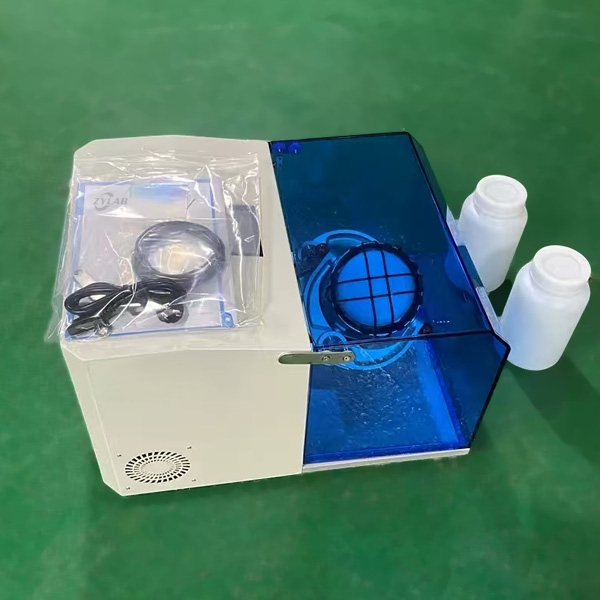
One of the most effective solutions is using 3D motion mixing systems, such as a 3D shaker mixer.

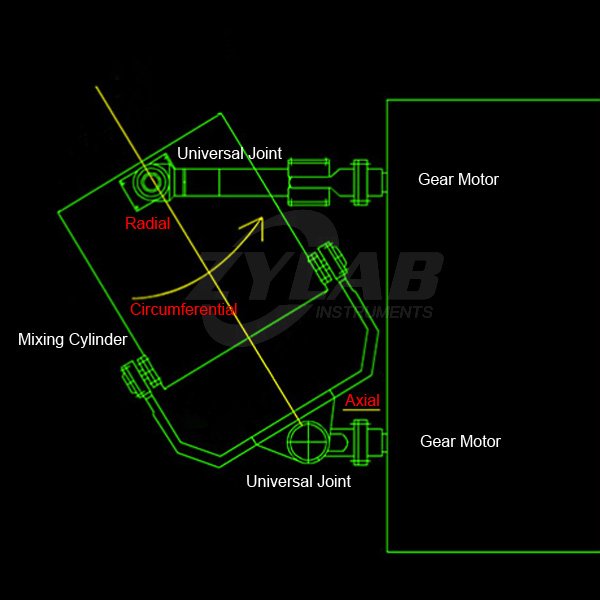
Laboratory 3D Shaker Mixer – Structural Diagram

Unlike traditional rotating mixers, 3D motion ensures:

  • Multi-directional movement
  • Uniform energy distribution
  • No dead zones inside the mixing chamber

This significantly reduces both agglomeration and segregation.

2. Control Particle Size Distribution

To improve mixing stability:

  • Use powders with narrow particle size distribution
  • Avoid excessive fine particle content
  • Maintain consistent powder morphology

3. Optimize Mixing Time And Speed

Over-mixing or under-mixing can both cause problems:

  • Use optimized mixing time based on material type
  • Avoid excessive rotational speed
  • Perform test batches to determine best parameters

4. Reduce Electrostatic Charge

Static electricity is a major cause of clumping. Solutions include:

  • Grounding equipment properly
  • Using anti-static materials
  • Maintaining controlled humidity levels

5. Control Environmental Conditions

Stable mixing environments help maintain powder consistency:

  • Relative humidity control (typically 40–60%)
  • Dust-free environment
  • Temperature stability

6. Use Sealed Mixing Systems

For reactive or fine powders:

  • Use sealed containers
  • Prevent external contamination
  • Reduce moisture absorption during mixing

Recommended Solution: 3D Shaker Mixer For AM Powder Preparation

In modern additive manufacturing laboratories, 3D shaker mixers have become a preferred solution for powder preparation due to their superior mixing uniformity.

Key advantages include:

  • High homogeneity without particle damage
  • Suitable for metal, ceramic, and composite powders
  • Scalable from laboratory to pilot production
  • Reduced risk of segregation compared to V-blenders or tumble mixers

These features make it ideal for research institutions and industrial AM material development.

Application Areas

This mixing approach is widely used in:

  • Metal additive manufacturing (SLM, DMLS)
  • Ceramic 3D printing
  • Binder jetting material preparation
  • Powder metallurgy research
  • Advanced material R&D laboratories

Conclusion

Powder agglomeration and segregation are two of the most critical challenges in additive manufacturing material preparation. By optimizing particle properties, controlling environmental conditions, and using advanced 3D motion mixing technology, these issues can be significantly reduced.

For laboratories and manufacturers seeking stable and high-quality powder preparation, 3D shaker mixers provide an efficient and reliable solution.

Get In Touch

Fill out the form below — free quote and professional suggestion will be sent for reference very soon!