Common Problems in Lithium Iron Phosphate Grinding and How Lab Scale Jet Mills Solve Them

Table of Contents

Introduction

Lithium Iron Phosphate (LFP) has become one of the most widely used cathode materials in lithium-ion batteries due to its excellent safety, long cycle life, and thermal stability. It is widely applied in electric vehicles, energy storage systems, and power batteries.

During the production and research of LFP cathode materials, powder processing and particle size reduction are critical steps. The particle size of LFP powders directly influences electrode fabrication, electrochemical performance, and overall battery efficiency.

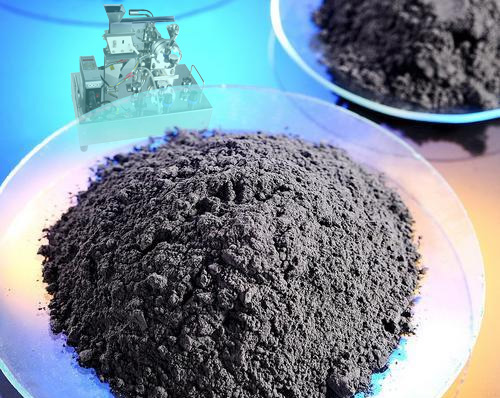
Lithium Iron Phosphate Powder Grinding

However, grinding lithium iron phosphate materials can present several technical challenges. Traditional mechanical grinding equipment may introduce contamination, excessive heat, and uneven particle sizes.

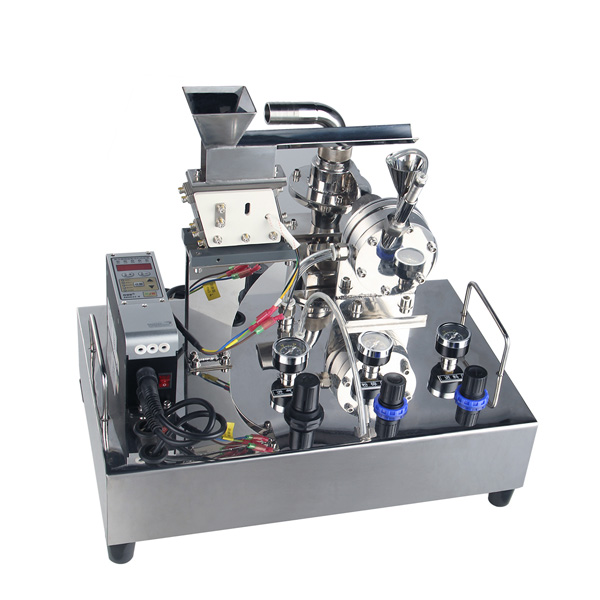
In laboratory research and pilot-scale material development, Lab Scale Jet Mills developed by ZYLAB provide an effective solution for processing LFP powders with high purity and reliable micron-scale particle size reduction.

Why Particle Size Matters for LFP Cathode Materials

The particle size of LFP powder plays a key role in determining the performance of lithium-ion batteries. Proper particle size can improve several important characteristics:

  • Lithium-ion diffusion efficiency

  • Electrode coating uniformity

  • Cathode packing density

  • Electrochemical reaction kinetics

For many lithium battery applications, LFP powders are typically processed to micron-scale particles, often within a range of 1–10 μm. Achieving this particle size while maintaining material purity and structural integrity requires an appropriate grinding technology.

Common Problems in Lithium Iron Phosphate Grinding

1. Metal Contamination from Mechanical Grinding

Traditional grinding equipment such as ball mills or mechanical mills relies on grinding media and metal components to crush materials. During prolonged operation, mechanical wear can introduce metal impurities into the powder.

For battery materials, even small amounts of contamination may affect:

  • material purity

  • electrochemical stability

  • long-term battery performance

2. Heat Generation During Grinding

Mechanical grinding generates friction between the material and grinding components. This friction can produce significant heat during the grinding process.

Excessive heat may lead to:

  • structural changes in LFP particles

  • degradation of surface coatings

  • potential oxidation of the material

Maintaining a low processing temperature is therefore important when handling battery materials.

3. Particle Agglomeration

LFP powders often form agglomerates during production or storage. Mechanical grinding may not always effectively break these agglomerates apart.

Agglomerated particles can lead to:

  • poor powder flowability

  • uneven electrode slurry dispersion

  • inconsistent electrode coating quality

4. Inconsistent Particle Size Reduction

Mechanical grinding methods sometimes produce broad particle size distributions, including both overly fine powders and oversized particles. This inconsistency can make it difficult to achieve stable material performance during battery testing and development.

How Lab Scale Jet Mills Solve These Problems

A Lab Scale Jet Mill uses high-velocity compressed gas to accelerate particles within a grinding chamber. Particles collide with each other at high speed, leading to size reduction without the need for mechanical grinding media.

This grinding principle offers several advantages for processing lithium iron phosphate materials.

1. Contamination-Free Grinding

Because jet milling relies on particle-to-particle collisions, the material experiences minimal mechanical contact with metal components. This significantly reduces the risk of introducing foreign impurities during grinding.

The laboratory jet mills designed by ZYLAB are widely used in research environments where high material purity is required.

2. Low-Temperature Processing

Jet milling produces far less friction compared with conventional mechanical grinding. The grinding energy is generated mainly by high-speed airflow rather than direct mechanical contact.

As a result, the process typically operates at relatively low temperatures, helping to preserve the structural stability of LFP powders.

3. Effective Deagglomeration of Powders

The high-velocity airflow inside a jet mill creates strong turbulence and particle collisions. These forces can effectively break apart powder agglomerates.

This improves:

  • powder dispersion

  • flowability

  • consistency during electrode slurry preparation

4. Micron-Scale Particle Size Reduction

Jet mills are capable of reducing powder particle sizes to the micron scale, making them suitable for laboratory-scale processing of lithium battery materials.

By adjusting operating parameters such as:

  • gas pressure

  • feed rate

  • airflow velocity

researchers can achieve consistent particle size reduction suitable for experimental studies.

Why Lab Scale Jet Mills Are Ideal for Battery Material Research

Laboratory jet mills from ZYLAB are designed specifically for research institutions, universities, and advanced material laboratories.

Key advantages include:

  • contamination-free grinding

  • low-temperature powder processing

  • efficient deagglomeration of battery materials

  • micron-scale particle size reduction

  • suitability for small batch experimental processing

These features make them particularly suitable for researchers working with cathode materials such as Lithium Iron Phosphate and other advanced battery powders.

Conclusion

Grinding and particle size control are essential steps in the preparation of lithium battery cathode materials. However, traditional mechanical grinding methods can introduce contamination, generate excessive heat, and produce inconsistent powder characteristics.

Lab Scale Jet Mills provide an effective alternative by enabling clean, low-temperature grinding and efficient particle size reduction.

For laboratories working with advanced battery materials, jet milling technology from ZYLAB offers a reliable solution for lithium iron phosphate powder processing and battery material research.
Get In Touch

Fill out the form below — free quote and professional suggestion will be sent for reference very soon!