Table of Contents
In pharmaceutical formulation development, achieving uniform mixing of Active Pharmaceutical Ingredients (API) with excipients is one of the most critical steps in the drug development process. Many APIs are used in extremely small dosages, often requiring microgram-level accuracy in distribution throughout the final formulation.
Traditional powder mixers such as V-blenders or drum mixers can struggle to maintain homogeneity when working with fine powders, low-dose APIs, or cohesive particles. For research laboratories and formulation scientists, a 3D Shaker Mixer has become an increasingly preferred solution due to its unique three-dimensional motion and high mixing efficiency.
This article explains how 3D shaker mixing technology improves powder homogenization, especially for API blending in pharmaceutical R&D laboratories.
Challenges in Mixing APIs and Fine Pharmaceutical Powders
Pharmaceutical powders present several mixing challenges:
1. Extremely Low API Concentration
In many drug formulations, the API may represent less than 1% of the total powder mixture. Achieving uniform distribution is essential to ensure dose consistency and regulatory compliance.
2. Particle Size Differences
APIs often have very fine particle sizes, sometimes below 5 μm, while excipients may be significantly larger. This difference increases the risk of segregation during mixing.
3. Cohesion and Agglomeration
Fine powders tend to form agglomerates due to electrostatic forces and van der Waals interactions, making uniform dispersion difficult.
4. Dead Zones in Conventional Mixers
Traditional mixing equipment often creates dead zones, where powder remains trapped along walls or corners, leading to inconsistent mixing results.
For pharmaceutical R&D labs, overcoming these challenges requires a mixing technology capable of gentle yet highly effective powder movement.
Working Principle of the 3D Shaker Mixer
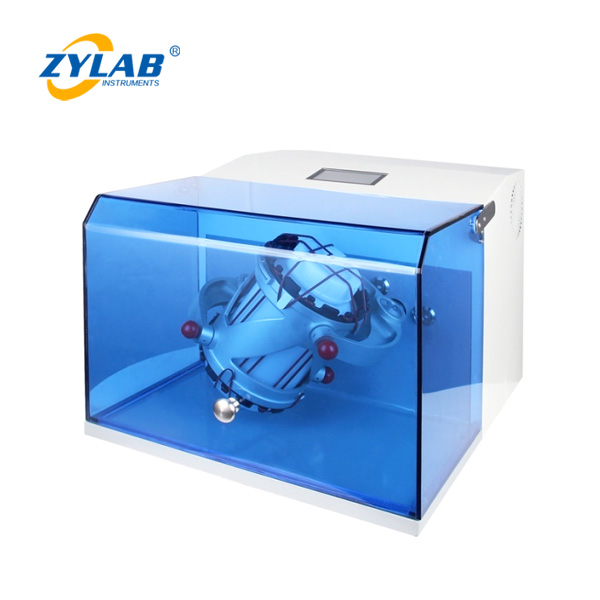
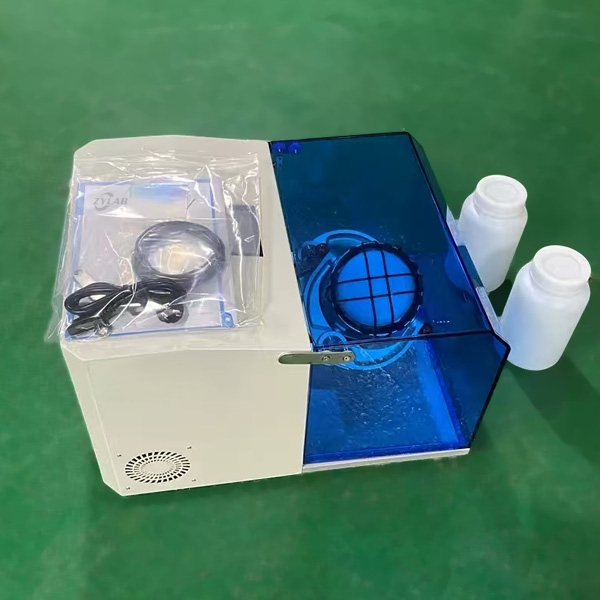
A 3D Shaker Mixer uses a patented planetary orbital motion to create highly efficient powder movement inside sealed containers.
Unlike simple rotational mixers, this system generates simultaneous movement along the X, Y, and Z axes, while each container independently rotates around its own center.
This complex motion produces:
-
continuous powder redistribution
-
multidirectional particle movement
-
dynamic flow patterns within the container
The result is rapid, highly uniform powder blending without requiring high shear forces.
Key Technical Advantages of 3D Shaker Mixers
1. Three-Dimensional Orbital Motion
The mixer operates with a patented planetary trajectory, where each container follows an elliptical path in the X, Y, and Z planes while simultaneously rotating around its own axis.
This motion creates continuous powder circulation, preventing particle stratification and ensuring that all materials participate in the mixing process.
Benefits include:
-
improved API distribution
-
reduced segregation risk
-
uniform powder flow patterns
2. Dead-Zone-Free Mixing
One of the major advantages of a 3D shaker mixer is the elimination of dead zones.
In conventional drum mixers, powder may remain trapped along the container walls or corners, resulting in incomplete mixing. In contrast, the multidirectional movement of the 3D mixer ensures that:
-
all powder particles experience equal mixing intensity
-
no material remains static within the container
-
homogeneous mixing is achieved over time
This feature is particularly important when processing low-dose APIs or highly potent compounds.
3. Turbulence-Induced Deagglomeration
The rapid and continuous changes in movement direction generate micro-turbulence within the container.
This turbulence helps break apart fine particle agglomerates, even those smaller than 5 μm in diameter.
As a result:
-
cohesive powders disperse more effectively
-
agglomerated APIs separate into primary particles
-
the final mixture achieves superior uniformity
This capability is especially valuable for pharmaceutical powders with high surface energy.
Advantages for Pharmaceutical R&D Laboratories
For formulation scientists and pharmaceutical researchers, a 3D shaker mixer provides several important benefits:
Gentle Mixing Without Particle Damage
The process relies on controlled orbital motion rather than high shear forces, preserving particle morphology and preventing degradation of sensitive APIs.
High Mixing Efficiency for Small Batches
Laboratory-scale experiments often involve small powder quantities, and 3D mixers perform exceptionally well in small sealed containers.
Reduced Cross-Contamination Risk
Since powders are mixed inside closed containers, cleaning requirements are minimized, which is especially important when working with high-potency APIs (HPAPI).
Excellent Repeatability
The controlled motion ensures consistent mixing performance across batches, supporting reliable experimental results.
Typical Applications of 3D Shaker Mixers in Pharmaceutical Research
3D shaker mixers are widely used in drug development laboratories, including:
-
API and excipient blending
-
low-dose drug formulation development
-
powder homogenization for capsule filling
-
pre-mixing before granulation
-
nanoparticle and fine powder dispersion
-
research on novel drug delivery systems
These applications require high precision mixing and excellent powder homogeneity, making 3D mixing technology particularly suitable.
Conclusion
Achieving uniform distribution of APIs in pharmaceutical powders is essential for drug safety, efficacy, and regulatory compliance. Conventional mixers often struggle with fine powders, low-dose ingredients, and particle agglomeration.
A 3D Shaker Mixer, with its patented three-dimensional orbital motion, dead-zone-free mixing, and turbulence-induced deagglomeration, provides an effective solution for high-uniformity powder blending in pharmaceutical formulation development.
For modern pharmaceutical R&D laboratories, this technology offers a powerful tool for improving mixing quality, process reliability, and experimental efficiency.
Get In Touch
Fill out the form below — free quote and professional suggestion will be sent for reference very soon!