Why Large Particles Remain After Ball Milling and How to Solve It

Table of Contents

Ball milling is widely used in laboratories and industrial applications for particle size reduction, mixing, and material homogenization. However, many users encounter a common problem: even after repeated ball milling, some large particles remain and cannot be effectively removed.

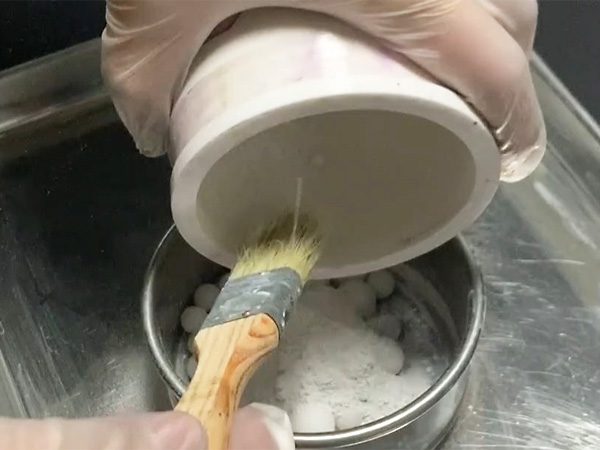
Planetary ball mill milling process

Why does this happen, and how can it be solved? This article explains the main reasons behind incomplete size reduction in ball milling and provides practical solutions to improve grinding efficiency.

Understanding the Limitations of Ball Milling

A ball mill works by using grinding media to generate impact, shear, and friction forces that break down materials. While ball mills are highly effective for fine grinding, they are not designed to efficiently handle very large feed materials.

Ball milling is a grinding process, not a primary crushing process. When large lumps are fed directly into a ball mill, the grinding mechanism becomes inefficient.

Why Large Particles Remain After Ball Milling

Feed Material Is Too Large

One of the most common reasons is that the initial particle size exceeds the effective grinding range of the ball mill. Large chunks reduce the frequency of effective ball–material collisions, resulting in incomplete breakage.

Insufficient Impact Energy

If the grinding balls are too small or the ball-to-powder ratio is too low, the impact energy may be insufficient to fracture large or hard particles. In such cases, repeated milling only leads to surface abrasion rather than size reduction.

Inappropriate Grinding Media Size Distribution

Using a single grinding ball size limits the milling efficiency. Large particles require high impact energy from larger balls, while fine particles require smaller balls for refinement. Improper grinding media selection often leads to residual coarse particles.

Material Properties

Hard, tough, or ductile materials are more resistant to fracture. Some materials deform instead of breaking under impact, making them difficult to grind using ball milling alone.

Agglomeration and Coating Effects

Fine particles may coat the surface of grinding balls or agglomerate around large particles, reducing effective contact and preventing further size reduction.
The Importance of Pre-Crushing Before Ball Milling

Crushing vs Grinding

Crushing and grinding serve different purposes:

  • Crushers are designed for breaking large lumps into smaller fragments.

  • Ball mills are optimized for fine grinding and particle refinement.

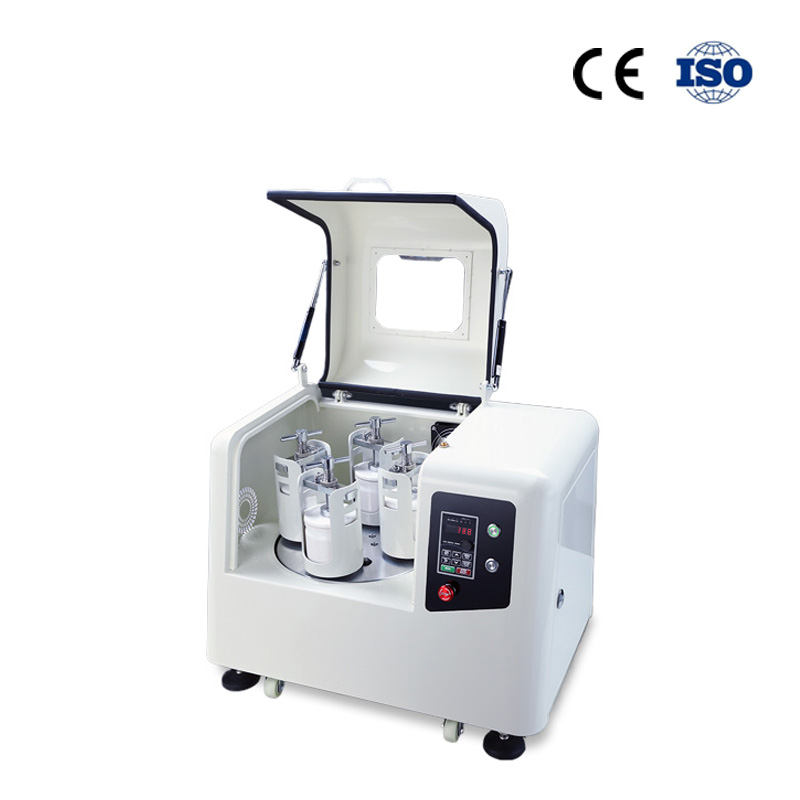
4L Planetary Ball Mill
Planetary Ball Mill
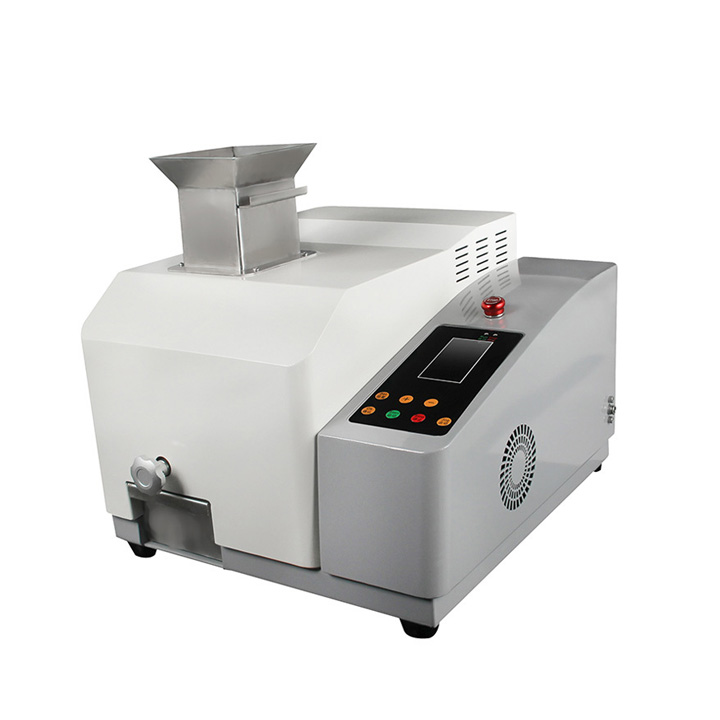
Lab Jaw Crusher
Laboratory Jaw Crusher

Using a crusher before ball milling significantly improves overall size reduction efficiency.

Benefits of Pre-Crushing

Pre-crushing large materials before ball milling offers several advantages:

  • Reduces feed particle size to a suitable range

  • Increases effective collision frequency

  • Shortens ball milling time

  • Improves final particle size uniformity

Practical Solutions to Eliminate Large Particles After Ball Milling

Use a Crusher for Large Feed Materials

For large or hard materials, first use a suitable crusher to reduce particle size before ball milling. This step is essential for efficient downstream grinding.

Optimize Grinding Media Size Distribution

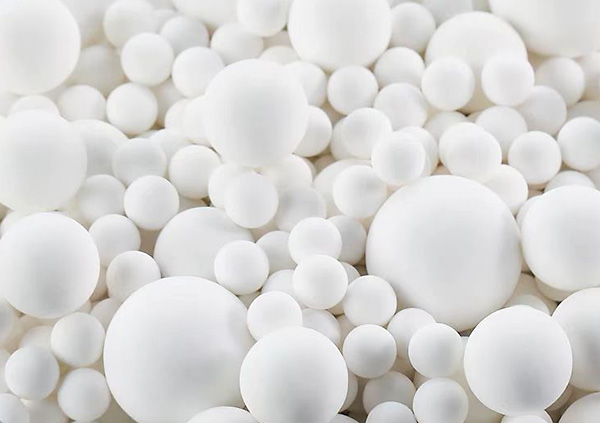
Use a combination of large, medium, and small grinding balls to cover different stages of size reduction. Mixed grinding media improves both impact energy and fine grinding efficiency.

Adjust Ball-to-Powder Ratio and Milling Parameters

Optimizing parameters such as:

  • Ball-to-powder ratio

  • Milling speed

  • Milling time

can significantly improve grinding performance.

Consider Wet Milling or Process Aids

In some cases, wet milling or adding suitable dispersants can reduce agglomeration and improve particle breakage efficiency.

Typical Applications Where Pre-Crushing Is Essential

Pre-crushing before ball milling is especially important in applications such as:

  • Ceramic raw material processing

  • Mineral and ore preparation

  • Battery material research

  • Metallurgical powder processing

  • Hard or brittle materials

Conclusion

Large particles remain after ball milling because ball mills are not designed to handle very large feed materials efficiently. Factors such as excessive feed size, insufficient impact energy, improper grinding media selection, and material properties all contribute to incomplete size reduction.

The most effective solution is to use a crusher for pre-crushing before ball milling, combined with optimized grinding media size distribution and milling parameters. By following the correct size reduction workflow, users can achieve finer, more uniform particles with higher efficiency.

Get In Touch

Fill out the form below — free quote and professional suggestion will be sent for reference very soon!