Table of Contents
Understanding the role of grinding ball size distribution is critical for improving milling efficiency, controlling particle size, and achieving reproducible results. This article explains both the scientific reasons behind using multiple grinding ball sizes and practical guidelines for selecting the right grinding media.
How a Planetary Ball Mill Works
In a planetary ball mill, grinding jars rotate around their own axes while simultaneously revolving around a central sun wheel. This complex motion generates:
-
High-energy impacts
-
Strong shear and friction forces
-
Continuous collisions between grinding balls and material
The efficiency of these forces depends heavily on grinding ball size, quantity, and distribution.
Why Different Size Grinding Balls Are Used in a Planetary Ball Mill
Different Ball Sizes Generate Different Grinding Effects
-
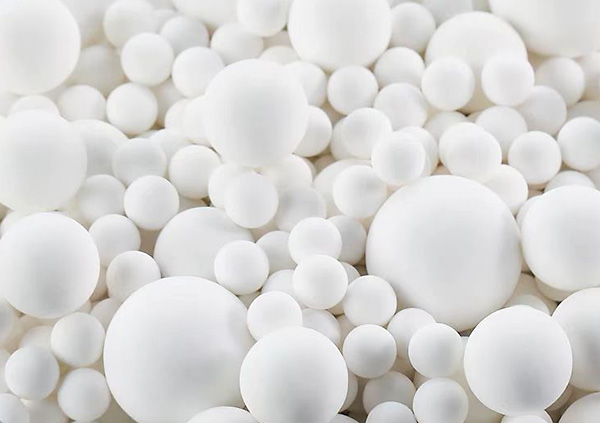
Large grinding balls produce high impact energy, making them effective for breaking coarse or hard particles.
-
Small grinding balls increase contact frequency and surface area, which is essential for fine grinding and particle refinement.
No single ball size can efficiently perform both coarse crushing and fine grinding.
Improved Grinding Efficiency with Multi-Size Grinding Media
By combining different ball sizes:
-
Large balls break down larger particles at the early stage
-
Smaller balls refine particles at later stages
-
Voids between large balls are filled, improving energy transfer
This synergistic effect significantly enhances overall milling efficiency.
How to Choose the Right Grinding Ball Sizes for a Planetary Ball Mill
Selecting the appropriate grinding ball size is not random. It should be based on material properties and process requirements.
Consider the Initial Particle Size
-
Large initial particles: Use a higher proportion of large grinding balls
-
Fine or pre-ground materials: Increase the proportion of small grinding balls
For very large feed materials, pre-crushing is recommended before ball milling.
Consider Material Hardness and Brittleness
-
Hard or brittle materials: Larger balls provide sufficient impact energy
-
Soft or ductile materials: Smaller balls reduce excessive deformation and cold welding
Define the Target Final Particle Size
-
For micron-level powders, use a balanced mix of medium and small balls
-
For nano-scale grinding, small balls (1–3 mm) are essential
The finer the target particle size, the smaller the required grinding balls.
Typical Grinding Ball Size Combinations
Common grinding ball size distributions in planetary ball mills include:
-
10–20 mm balls: Coarse crushing and initial size reduction
-
5–10 mm balls: Intermediate grinding
-
1–5 mm balls: Fine grinding and homogenization
In practical laboratory applications, a commonly used grinding media distribution is based on mass ratio rather than quantity.
A typical mass ratio for large, medium, and small grinding balls is approximately 5:3:2, which provides a good balance between impact force and grinding efficiency.
The exact ratio should be adjusted according to jar volume, material loading, and milling speed.
Other Factors to Consider
When choosing grinding ball sizes, also consider:
-
Milling speed and time
-
Grinding jar material and volume
-
Ball-to-powder ratio
-
Wet or dry milling conditions
Proper optimization ensures consistent and reproducible milling results.
Applications That Benefit from Mixed Grinding Ball Sizes
Using different size grinding balls is especially beneficial in:
-
Nanomaterial preparation
-
Mechanical alloying
-
Ceramic and oxide powder processing
-
Battery and electrode material research
-
Chemical and pharmaceutical laboratories
In these applications, precise control over particle size and distribution is critical.
Conclusion
Different size grinding balls are used in planetary ball mills because each ball size plays a specific role in the grinding process. Large balls provide strong impact forces for coarse particles, while small balls enable fine grinding and uniform particle refinement.
By selecting the right grinding ball size distribution based on material properties and processing goals, users can:
-
Improve milling efficiency
-
Achieve finer and more uniform particle sizes
-
Reduce milling time
-
Optimize planetary ball mill performance
Proper grinding media selection is a key factor in successful planetary ball milling.
Get In Touch
Fill out the form below — free quote and professional suggestion will be sent for reference very soon!