
Physical Properties

Specific gravityBend strengthHardnessTensile strengthPorosity rateRadiancy
2.6-2.8g/cm³>300kg>9MOH’S>150kg/cm³<30%0.85

Chemical Properties

SiC heating rods exhibit relatively stable chemical properties. Alkaline substances can chemically react with silicon carbide rods under high-temperature conditions, while acidic substances generally do not react.

During high-temperature use, silicon carbide rods can react with water vapor and oxygen to produce silicon dioxide, carbon dioxide, and hydrogen gas. As the amount of silicon dioxide in the silicon carbide rod increases, its resistance gradually rises, which is part of the aging process of the rod.

The hydrogen produced can react with oxygen to form water, creating a cyclical reaction, and it can also reduce the mechanical strength of the silicon carbide rod. Therefore, it is advisable to avoid excessive water vapor during use.

To learn more about silicon carbide heating rods, please click here!

Applications

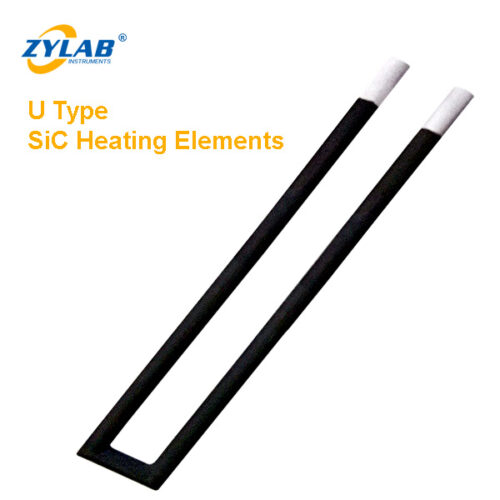
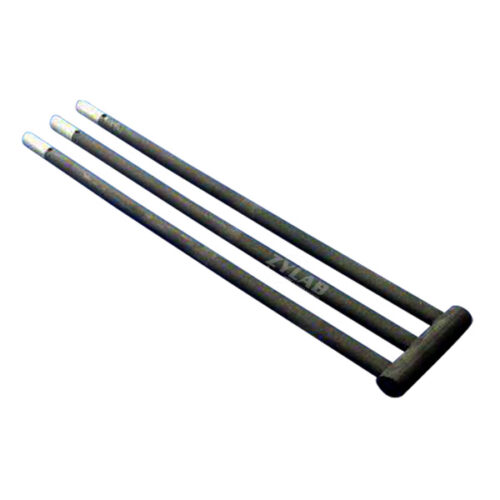
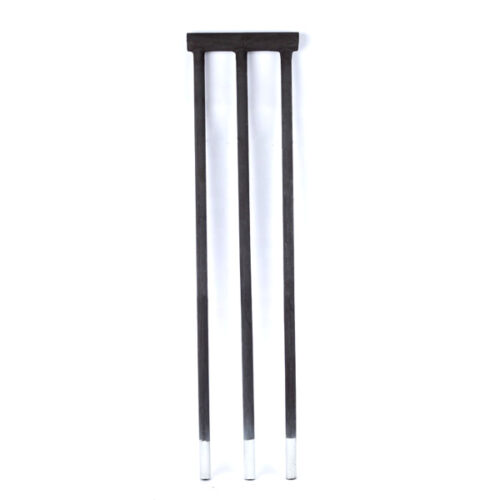
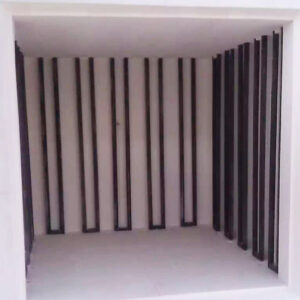
U Type SiC Heating Element for Muffle Furnaces
 

Ceramics Manufacturing: SiC heating elements are widely used in the production of ceramics, including in kilns for firing and sintering ceramic products.

Glass Industry: In glass melting and forming processes, SiC heating elements provide efficient and reliable heating in both batch and continuous furnaces.

Metallurgy and Metal Heat Treatment: SiC heating elements are used in metallurgical processes such as sintering, annealing, and heat treatment of metals.

Powder Materials: SiC heating elements are employed in the processing and sintering of powder materials, including ceramics, metal powders, and rare earth materials.

Electronic Components: SiC heating elements are used in the production of electronic components, including semiconductors and other high-performance materials.

Research and Laboratory Applications: SiC heating elements are commonly used in laboratories and research institutions for high-temperature experiments, such as material testing, sintering, and other thermal analysis processes.

Installation of Silicon Carbide Heating Elements

  1. Prepare spare parts.
  2. Open the top covers and remove the foams out of the furnace.
  3. Pick out the heating element and block which marked the same number, remove the stickers and put them into the mounting hole, until touch the bottom of the furnace chamber.
  4. Lift the heating element up one centimeter and fixed with a fixture.
  5. Connect the heating elements in series with the connecting pieces and fix them with the clamps.Keep a distance between the clamps to avoid short circuit.
  6. Connect the heating elements in series to the power supply.
  7. Fasten the fixtures when the temperature reaches 800 degree Celsius.
  8. Install the upper covers and chimney to complete the installation of the furnace.

Silicon Carbide Heating Elements Installation Guide

Use of SiC Heating Rods

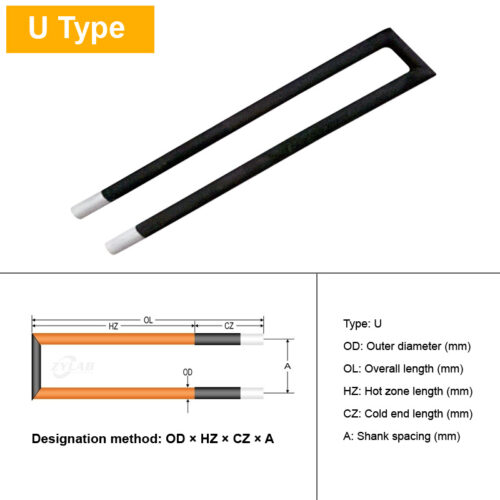
  1. The length of the heating section of the silicon carbide rod should equal the width of the furnace chamber. If the heating section extends into the furnace wall, it may cause damage to the wall.
  2. The length of the cold end of the silicon carbide rod should equal the thickness of the furnace wall plus the length that extends outside the wall. Typically, the cold end extends 50 to 150 mm to facilitate cooling and connection to fixtures.
  3. The internal diameter of the furnace accommodating the silicon carbide rod should be 1.4 to 1.6 times the outer diameter of the cold end. If the furnace opening is too small or the filling material inside is too tight, it can restrict the free expansion of the silicon carbide rod at high temperatures, leading to breakage. During installation, the silicon carbide rod should be able to rotate freely 360 degrees.
  4. The distance between the silicon carbide rod and the heated object or furnace wall should be greater than or equal to three times the diameter of the heating section. The center distance between silicon carbide rods should be no less than four times the diameter of the heating section.
  5. The cold end of the silicon carbide rod should be connected to the main circuit using aluminum braids or aluminum foil.
  6. Before use, silicon carbide rods should be matched for resistance. Connect rods with the same or similar resistance values together.
  7. When using silicon carbide rods, it is important to choose reasonable surface load density and operating temperature.
  8. When replacing silicon carbide rods, choose rods with resistance values close to those of the rods currently in operation. If necessary, replace all rods in the furnace to enhance their lifespan. If the removed rods have suitable resistance values, they can be reused later in the operation of the electric furnace.

Get In Touch

Fill out the form below — free quote and professional suggestion will be sent for reference very soon!