Powder Metallurgy Part 5 — Post-Processing and Performance Testing

Table of Contents

After sintering, powder metallurgy (PM) components often require post-processing treatments to achieve their final mechanical properties, dimensional accuracy, and surface quality. These additional steps are critical for ensuring that PM products meet the stringent demands of industrial and research applications in fields such as automotive, aerospace, electronics, and biomedical engineering.

Post-Processing and Performance Testing of Powder Metallurgy

This article explores the key post-sintering processes and performance evaluation methods that determine the final functionality and reliability of PM components.

Purpose of Post-Processing

Although sintering provides densification and metallurgical bonding, the resulting component may still contain residual porosity, internal stress, or slight dimensional deviations. Post-processing serves several essential functions:

  • Enhance mechanical strength and hardness.

  • Improve surface finish and corrosion resistance.

  • Correct dimensional tolerances.

  • Relieve residual stresses.

  • Achieve specific functional or aesthetic properties.

Common Post-Processing Techniques

Heat Treatment

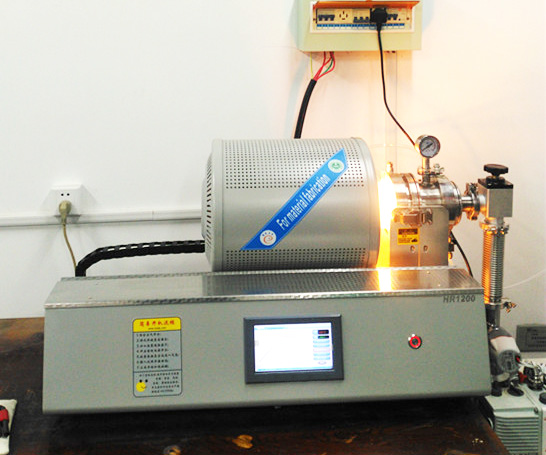
Heat treatment modifies the microstructure of sintered materials to improve mechanical performance. Common methods include:

Tempering — The Gentle Care After Quenching
  • Solution and Aging Treatments: Applied to aluminum and titanium alloys to improve strength and stability.

These processes must be carefully controlled, as the presence of residual porosity can affect heat transfer and transformation kinetics.

Hot Isostatic Pressing (HIP)

Hot Isostatic Pressing (HIP) is one of the most effective post-sintering densification techniques.

Principle:
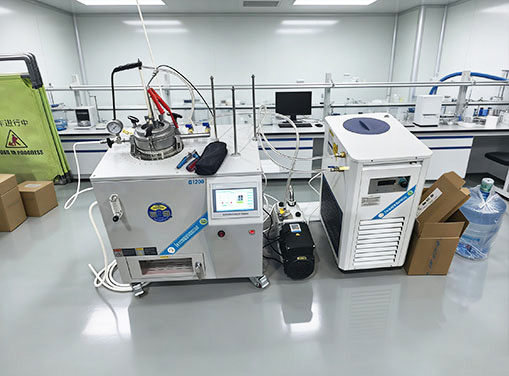
The sintered part is subjected to high temperature and isostatic gas pressure (usually argon), causing the elimination of residual pores and the diffusion bonding of grain boundaries.

Benefits:

  • Achieves near-theoretical density (>99.9%).

  • Improves fatigue strength and fracture toughness.

  • Ideal for critical applications such as aerospace and medical implants.

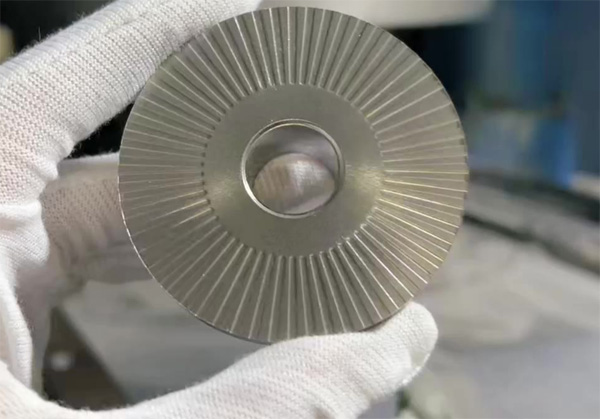
Machining and Finishing

Although PM parts are typically near-net-shape, secondary machining is often needed to meet precise dimensional tolerances or surface specifications.

Typical finishing processes include:

  • CNC machining or grinding for dimensional precision.

  • Polishing or lapping for improved surface smoothness.

  • Shot peening to increase surface hardness.

  • Surface coating (PVD, CVD, electroplating) for corrosion and wear resistance.

Impregnation and Infiltration

  • Impregnation: Filling open pores with resins or lubricants to enhance sealing and corrosion resistance.

  • Infiltration: Introducing molten metal (such as copper or bronze) into pores to improve thermal conductivity, strength, and surface integrity.

Both methods significantly improve the functional performance of porous PM parts.

Surface Treatments

Surface modification enhances both performance and appearance.
Common treatments include:

  • Nitriding or carburizing for surface hardening.

  • Anodizing for aluminum PM parts.

  • Phosphate or oxide coatings for wear and corrosion protection.

Performance Testing of PM Components

After post-processing, PM components undergo rigorous testing to ensure their quality and reliability.

Mechanical Testing

  • Hardness Testing (Vickers, Rockwell, Brinell): Evaluates resistance to deformation.

  • Tensile and Compressive Strength Tests: Determines load-bearing capacity.

  • Fatigue Testing: Assesses performance under cyclic loading.

  • Impact Testing (Charpy/Izod): Measures energy absorption capability.

Physical Property Testing

  • Density Measurement: Determines porosity levels and uniformity.

  • Thermal Conductivity and Expansion: Critical for high-temperature applications.

  • Electrical Conductivity: Important for electronic and magnetic components.

Microstructural and Chemical Analysis

  • Optical/SEM Microscopy: Observes grain structure, pores, and inclusions.

  • XRD and EDS Analysis: Identifies phases and chemical compositions.

  • Fractography: Examines fracture modes and defect origins.

Integration with Modern Manufacturing

Post-processing in powder metallurgy is now being integrated with advanced digital and hybrid manufacturing approaches:

  • Simulation and AI-based control for sintering and heat treatment optimization.

  • Additive + PM hybrid routes that combine 3D printing with traditional sintering and HIP.

  • In-situ monitoring systems in furnaces for real-time quality assurance.

These innovations ensure that PM continues to evolve as a key enabling technology for precision materials engineering.

Summary

Post-processing and performance testing are indispensable steps in the powder metallurgy workflow. They transform sintered parts into precision-engineered components with tailored mechanical, thermal, and chemical properties.

From heat treatment and HIP to machining and surface finishing, each process step contributes to achieving the desired performance and reliability required by modern industries.

With advancements in testing and digital control, powder metallurgy continues to expand its role in producing high-value components for next-generation technologies.
Get In Touch

Fill out the form below — free quote and professional suggestion will be sent for reference very soon!