Choosing the right milling technology in a laboratory setting affects particle-size distribution (PSD), reproducibility, material purity, downstream processing, and scale-up. This guide explains how the most commonly used lab mills work, which powder types each is best suited for, and practical tradeoffs lab researchers should consider.
Material properties: hardness, brittleness, ductility, abrasiveness, hygroscopicity, thermal sensitivity, chemical reactivity.
Target particle size & PSD: coarse (tens–hundreds µm), fine (1–10 µm), submicron (<1 µm), or nanoscale.
Throughput / sample size: single-gram screening vs tens of grams per hour.
Contamination tolerance / purity requirements: whether metallic/ceramic contamination is acceptable.
Wet or dry processing: some materials perform better/worse in wet media.
Heat sensitivity: will the material alter/decompose from local heating?
Cleaning / cross-contamination: how easy is the mill to clean between samples?
Scale-up path: does lab method represent industrial processing for later scale-up?
Budget & maintenance: capital cost, operating cost (gas, energy, media), and spare parts.
How they work: grind by tumbling a container with grinding media and powder.
ZYLAB options:
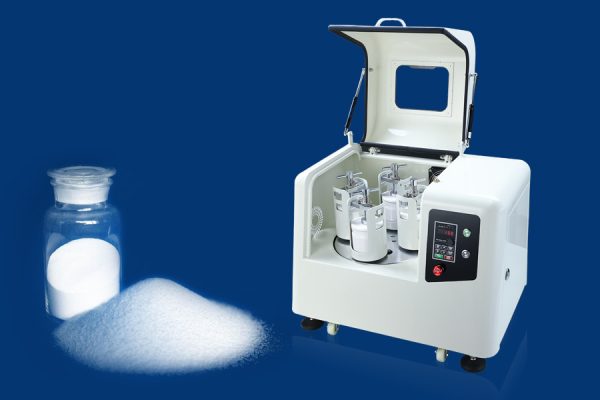
ZYLAB Planetary Ball Mill: high-energy, ideal for nanoscale particle size, mechanical alloying, and research requiring precise reproducibility.
Best for: hard/brittle materials, metals/alloys, pigments, catalysts, ceramics.
Limitations: contamination risk from media/jar wear, local heating, poor performance on ductile/sticky powders.
Particle size: tens of µm → submicron/nanometer scale (planetary).
Pros: versatile, cost-effective, good for mechanical alloying.
Cons: not ideal for ultra-pure or heat-sensitive materials.
How they work: high-velocity gas jets accelerate particles, which collide and fracture; no media contact.
ZYLAB options:
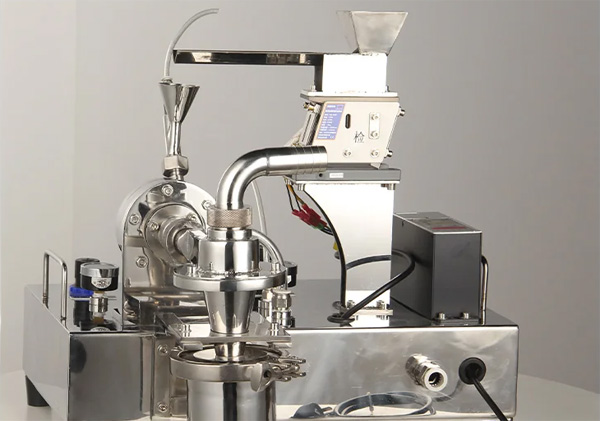
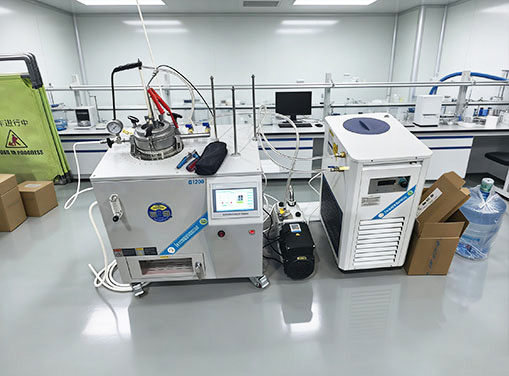
ZYLAB Laboratory Jet Mill: suitable for high-purity powders, advanced ceramics, and pharmaceutical APIs, capable of producing narrow submicron PSD without contamination.
Best for: hard/brittle, high-purity powders.
Limitations: difficult for ductile/fibrous materials, energy/gas intensive, heat generation possible.
Particle size: D50 ~0.2–5 µm.
Pros: minimal contamination, narrow PSD, excellent for pharma and high-purity research.
Cons: higher capital & operational cost, lower throughput for coarse feed.
Attritor / stirred media mill: wet, fine grinding, slurries, inks.
Mortar & pestle: small samples, low contamination (agate/alumina).
Cryogenic milling: embrittles polymers/elastomers; avoids smearing/thermal damage.
Ultrasonic mills: break agglomerates, dispersions.
Hammer/roller mills: coarse grinding.
| Method | Principle | Best for | Final size | Contam. risk | Throughput | Heat gen. | Cost |
|---|---|---|---|---|---|---|---|
| Ball (tumbling) | Media impact & shear | Hard/brittle, blending | µm→sub-µm | Med-High | Low–Med | Med-High | Low |
| Planetary ball | High-energy impact | Nanoscale, alloying | sub-µm→nm | Med-High | Low | High | Med |
| Lab jet mill | Particle–particle collisions in gas jet | High-purity brittle powders | 0.2–5 µm | Low | Low–Med | Med | Med-High |
| Attritor / bead | Stirred beads, wet grinding | Slurries, inks, ceramics | sub-µm | Med | Med | Med | Med |
| Cryogenic mill | Embrittlement + impact | Polymers, sticky materials | µm→sub-µm | Low | Low | Low | Med-High |
| Mortar & pestle | Manual grinding | Tiny samples, low contamination | 10s µm | Low | Very low | Low |
Define target PSD.
Check brittleness/hardness.
Evaluate contamination tolerance.
Decide wet vs dry.
Consider throughput & utilities.
Plan cleaning strategy.
Run small pilot trials.
Alumina → 1 µm: jet mill with N₂ classifier.
Battery cathode slurry: attritor or wet ball mill.
Polymer powders: cryogenic milling.
API for inhalation: jet mill with classifier.
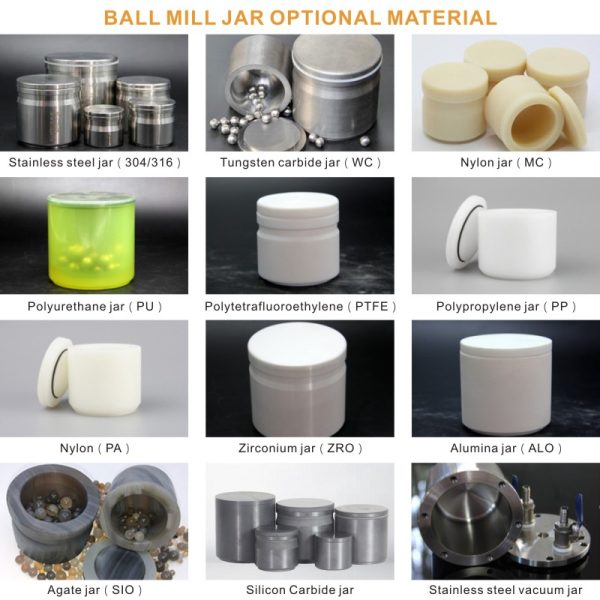
Match media/jar to purity needs (zirconia, agate).
Use inert atmospheres for sensitive powders.
Pre-dry hygroscopic materials.
Control temperature (jackets, cryo).
Document cleaning procedures.
Track process parameters (BPR, rpm, atmosphere).
Usually difficult; cryo pre-cooling helps.
Zirconia, agate, alumina.
Wet = better heat control, narrower PSD; dry = simpler, solvent-free.
Works with gram-scale; jar/BPR dependent.
Jet mills with classifier.
Use same comminution principles; pilot trials recommended.
Choosing the correct lab mill depends on material properties, purity requirements, target particle size, and budget.
ZYLAB provides a full range of laboratory powder milling equipment, from ball mills to jet mills. Use the checklist to plan trials and evaluate PSD, contamination, and process stability before scaling up.
Contact us for tailored laboratory milling solutions.
Get In Touch
Fill out the form below — free quote and professional suggestion will be sent for reference very soon!