Table of Contents
Hydrogen reduction is one of the most important processes in metal powder production and purification. For researchers working with copper powder, iron powder, and other high-purity metal or alloy particles, achieving a stable, uniform, and safe reducing atmosphere is essential. A rocking hydrogen atmosphere furnace provides a more efficient and homogeneous heat-treatment environment compared with fixed-bed reduction furnaces, making it widely used in laboratories, pilot lines, and materials R&D.
This article explains how the process works, how to operate a rocking H₂ atmosphere furnace, and what parameters researchers should consider to ensure consistent reduction results.
What Is a Rocking Hydrogen Atmosphere Furnace?
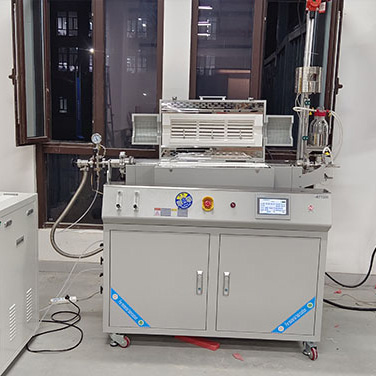
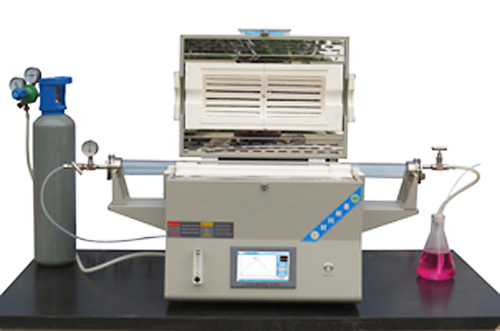
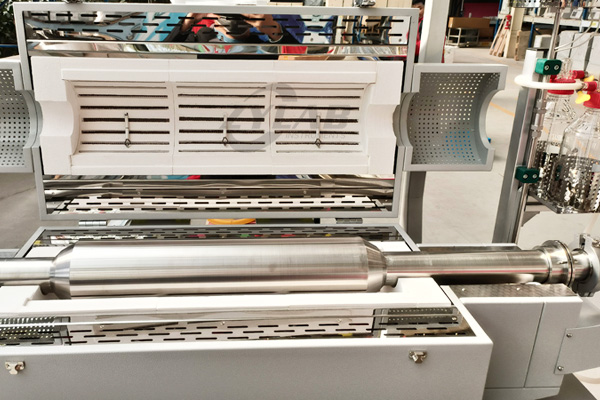
A rocking hydrogen atmosphere furnace is a heat-treatment system designed to process powders and granular materials under a reducing hydrogen environment.
Key characteristics include:
-
Oscillating chamber or tube that gently rockings during heating
-
Continuous powder turnover for improved gas–solid contact
-
High-purity hydrogen atmosphere for chemical reduction
-
Uniform temperature field minimizing thermal gradients
-
Enhanced reduction efficiency compared with static furnaces
This design helps eliminate powder agglomeration and significantly increases the reduction uniformity of metal powders such as Cu, Fe, Ni, Co, W, and alloy precursors.
Why Use Hydrogen for Metal Powder Reduction?
Hydrogen is a strong reducing agent that effectively removes oxygen and oxide films from metal powders. The general reaction is:
Metal Oxide + H₂ → Metal + H₂O (g)
Benefits of hydrogen reduction include:
-
Produces higher purity metal powders
-
Removes surface oxide layers on nano/micron powders
-
Improves electrical conductivity of copper powders
-
Enhances magnetic properties of iron-based materials
-
Prevents carbon contamination (compared with carbon-based reducing agents)
-
Suitable for controlled atmospheres required in research and advanced materials
Typical Applications
A rocking hydrogen atmosphere furnace is commonly used for:
-
Copper oxide (CuO, Cu₂O) reduction to high-purity Cu powder
-
Iron oxide (Fe₂O₃, Fe₃O₄) reduction to pure Fe powder
-
Nickel, cobalt, tungsten oxide reduction
-
Reduction of alloy precursors for powder metallurgy
-
Surface deoxidation of 3D-printed metal powders
-
Heat treatment of battery materials and conductive powders
How the Rocking Motion Improves Reduction Quality
- Prevents Powder Sintering and Agglomeration
The gentle oscillation ensures particles remain loose and evenly exposed to hydrogen.
- Improves Gas–Solid Reaction Efficiency
Continuous turnover provides full hydrogen penetration, reducing reaction time.
- Enhances Temperature Uniformity
Powders do not accumulate at local hot or cold points, ensuring consistent results.
- Produces More Stable and Repeatable Research Data
Ideal for university labs, material science research, and pilot-scale verification.
Step-by-Step Guide: How to Reduce Metal Powders Using a Rocking H₂ Atmosphere Furnace
Below is a general operating workflow suitable for most high-purity metal powders. Always refer to your own equipment’s manual for specific parameters.
1. Preparation of Powders
-
Dry the metal oxide powder if moisture is present
-
Sieve to remove large agglomerates
-
Load the powder into a ceramic, quartz, or stainless reactor compatible with H₂ environment
-
Keep powder thickness uniform
2. Purging and Atmosphere Preparation
To avoid safety risks, the furnace must be purged before introducing hydrogen:
-
Seal the furnace chamber
-
Vacuum the chamber
-
Purge with high-purity nitrogen or argon 2–3 times
-
Ensure oxygen concentration < 0.1% before switching to hydrogen
3. Introducing Hydrogen Gas
-
Use 99.999% high-purity hydrogen when possible
-
Start with a low flow rate, then increase to the required level
-
Maintain positive pressure to prevent air ingress
4. Heating and Rocking Operation
Typical reduction settings (these vary depending on material):
| Material | Reduction Temperature | Heating Rate | Holding Time | Notes |
|---|---|---|---|---|
| Copper oxide | 300–500°C | 3–10°C/min | 1–3 hours | Avoid too high temps to prevent sintering |
| Iron oxide | 550–900°C | 5–10°C/min | 1–4 hours | Higher temps required for Fe₂O₃ / Fe₃O₄ |
| Nickel oxide | 300–600°C | 3–10°C/min | 1–3 hours | Gas flow critical |
| Tungsten oxide | 600–900°C | 3–7°C/min | 2–6 hours | Multi-step reduction may be needed |
During the process:
-
The furnace oscillates continuously
-
Powder layers are evenly turned over
-
Reduction is more complete and uniform
5. Cooling Under a Protective Atmosphere
To prevent re-oxidation:
-
Cool under pure hydrogen down to ~150°C
-
Then switch to nitrogen or argon for final cooling
-
Remove powder only when temperature < 50°C
Quality Evaluation of Reduced Metal Powders
After reduction, researchers typically check:
-
Oxygen content (O%)
-
Particle size and morphology (SEM)
-
Surface purity (XPS, EDS)
-
Phase composition (XRD)
-
Flowability and apparent density
-
Electrical or magnetic properties
Rocking hydrogen furnaces generally provide lower residual oxygen and better particle uniformity compared with static furnaces.
Safety Considerations When Using Hydrogen
Hydrogen is highly flammable. Key safety guidelines:
-
Use leak detectors and hydrogen alarms
-
Maintain good ventilation
-
Always purge oxygen before introducing H₂
-
Use flashback arrestors on gas lines
-
Avoid operating above recommended pressures
-
Regularly inspect seals and valves
A well-designed furnace includes automatic hydrogen shutoff, emergency venting, and interlock systems for added protection.
Conclusion
A rocking hydrogen atmosphere furnace is an efficient and reliable tool for reducing copper powder, iron powder, and other high-purity metal powders. Its oscillating design ensures excellent powder uniformity, enhanced reduction efficiency, and improved material quality—making it ideal for research labs, pilot-scale materials development, and precision powder processing.
By following proper preparation, atmosphere control, heating profiles, and safety protocols, researchers can achieve highly reproducible results and superior metal powder purity.
Get In Touch
Fill out the form below — free quote and professional suggestion will be sent for reference very soon!