Table of Contents
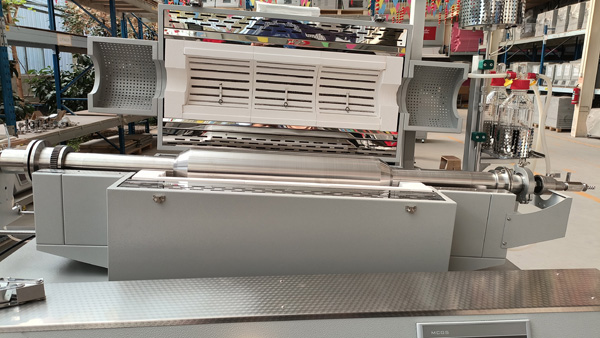
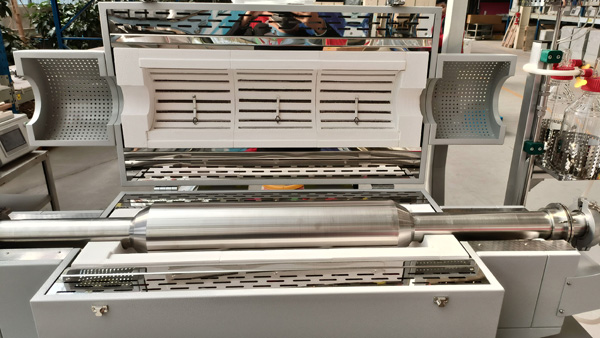
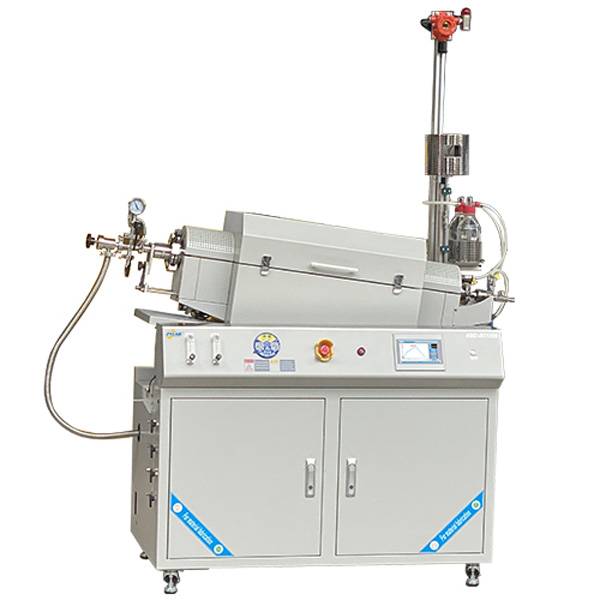
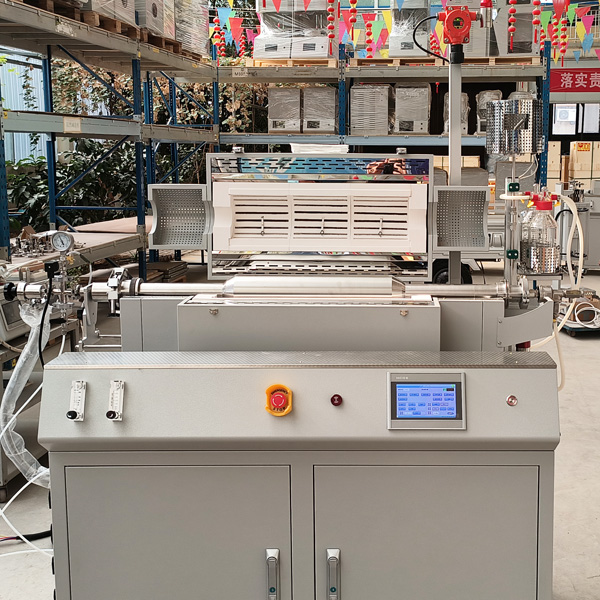
In the era of advanced materials and renewable energy technologies, research on metal oxide powders under high-temperature reducing conditions has become a core focus for universities, research institutes, and industrial R&D labs. To support such cutting-edge studies, ZYLAB has delivered a custom rotary hydrogen furnace to a leading Asian technical university, specifically designed for powder research.
This furnace provides a safe and efficient hydrogen reduction environment, featuring adjustable inclination, precise multi-zone temperature control, and replaceable durable tube options, perfectly meeting the client’s high standards for experimental flexibility, sample uniformity, and long-term durability.
This blog focuses on three key technical questions raised by the client:
- What is the range of inclination that can be achieved in the reactor? (-4° to +20°)
- How many thermocouples or temperature sensors are inside the reactor? (3 thermocouples across 3 heating zones)
- Can the glass tube be replaced with a steel tube? (Yes, 310S stainless steel tube recommended)
Additionally, we explore the application advantages of the rotary hydrogen furnace for metal oxide powder research and explain why a custom 310S stainless steel tube is increasingly preferred for durability and safety.
Research Background and Application Requirements
Metal oxide powders are widely used in:
- Lithium-ion battery cathode and anode materials
- Solid oxide fuel cell (SOFC) powders
- Nanostructured catalyst supports
- Magnetic materials and ferrites
- Functional ceramic powders
These materials often require treatment in high-temperature, reducing atmospheres (H₂) under dynamic mixing conditions. Traditional static tube furnaces can face limitations in:
- Powder uniformity
- Reaction rate control
- Surface property retention
As a result, research teams are increasingly adopting:
1.Dynamic Rotary Structures
Continuous rotation ensures uniform heating and mixing of powder, improving reaction consistency.
2.Hydrogen Reduction Atmosphere
Provides the necessary reducing environment to achieve desired oxidation states or suboxide structures.
3.Adjustable Inclination
The powder’s flow path and residence time can be optimized, enhancing control over the reduction process.
These features make the rotary hydrogen furnace highly suitable for high-precision research applications.
Reactor Inclination Range
Inclination adjustment is a core design element, directly influencing powder movement, residence time, and heat exposure uniformity.
ZYLAB Custom Inclination Range: -4° to +20°
- Negative Angle (-4°): Allows powder to flow slightly backward, increasing residence time in the high-temperature zone
- Positive Angle (+20°): Accelerates powder flow toward the outlet, reducing reaction time
|
Inclination |
Feature |
Suitable Applications |
|
-4° (slight backward tilt) |
Longer residence time |
Deep reduction or prolonged reactions |
|
0° (horizontal) |
Neutral flow |
Standard powder treatments |
|
+10° to +20° |
Faster powder flow |
Short residence time processes, prevents over-reduction |
Practical Example:
- Lithium battery cathode materials (NMC, LFP) require precise reduction control. Adjustable inclination helps control residence time in the high-temperature zone.
- Catalyst supports (Al₂O₃, CeO₂) benefit from continuous powder turnover, ensuring uniform surface modification.
In short, adjustable inclination enables one furnace to handle a variety of experimental protocols.
Thermocouples Inside the Reactor
Temperature sensor count is critical because:
- In a hydrogen reducing environment, small temperature deviations can result in incomplete or excessive reduction
- Rotating powder requires higher temperature uniformity for consistent results
ZYLAB Configuration: 3 Thermocouples Across 3 Heating Zones
The furnace chamber length is 615 mm, divided into 3 independent heating zones (205 mm each), with one thermocouple per zone.
Advantages of Multi-Zone Control
- Precise Temperature Gradient Control
- Enables study of phase changes or reduction behavior at different temperatures.
- Maximized Temperature Uniformity
- Maintains ±1–2°C stability even under rotation.
- Supports Complex Processes
- Sequential heating, isothermal reduction, controlled cooling, all automated.
Example Applications:
- NiO → Ni
- CuO → Cu
- Fe₂O₃ → Fe₃O₄ / FeO / Fe
Temperature precision directly affects the final phase structure. Three-zone heating ensures a stable reaction environment.
Glass Tube Replacement with 310S Stainless Steel Tube
Standard quartz glass tubes face several limitations in hydrogen atmospheres:
- Can react with hydrogen at high temperatures (>1000°C)
- Poor thermal shock resistance; prone to breakage
- Low mechanical durability under powder impact
Client Question: Can we replace the quartz tube with a metal tube?
Answer: Yes. We recommend a durable custom 310S stainless steel tube.
Advantages of 310S Stainless Steel
310S stainless steel is highly suitable for high-temperature, reducing conditions.
Benefits
- High-Temperature Stability (up to 1100–1200°C)
- High chromium and nickel content ensures structural stability and oxidation resistance.
- Safe in Hydrogen Atmosphere
- No hydrogen embrittlement, unlike quartz or some metals.
- Strong Thermal Shock Resistance
- Can withstand rapid heating and cooling cycles.
- High Mechanical Strength
- Handles powder impact, rotation, and shear forces.
- Long Service Life
- Hundreds of experimental cycles, far exceeding quartz tube lifespan.
Using a 310S stainless steel tube significantly enhances safety, durability, and flexibility for research applications.
Key Advantages of Rotary Hydrogen Furnace in Powder Research
- Dynamic Uniformity
Rotating design prevents powder from settling, ensuring uniform temperature and gas exposure.
- Higher Reduction Efficiency
Powder continuously contacts hydrogen gas, improving reaction rate.
- Controlled Particle Size and Structure
Inclination, rotation speed, and temperature gradient allow precise control over:
- Particle size distribution
- Surface area
- Morphology
- Oxidation/reduction state
These parameters are critical for advanced material research.
Case Study: Why the University Chose ZYLAB
The university conducts research in:
- Battery materials
- Oxide catalysts
- Oxide ceramics
- Novel composite materials
Reasons for Choosing ZYLAB:
- Reliable hydrogen system with dual safety features and gas interlocks
- Precise 3-zone temperature control for complex thermal profiles
- Adjustable inclination for powder flow optimization
- Replaceable 310S steel tube for long-term durability and safety
- Fully customizable for vacuum level, rotation speed, cooling options, etc.
This solution allows the university to conduct diverse, high-precision experiments efficiently.
Conclusion
ZYLAB’s rotary hydrogen furnace combines:
- Dynamic powder handling
- Precise multi-zone temperature control
- Safe hydrogen reduction environment
- Adjustable inclination design
- Customizable stainless steel tube options
For research on metal oxide powders, catalysts, ceramics, and battery materials, it provides:
- High experimental accuracy
- Improved efficiency
- Reduced operational costs
By selecting a custom 310S stainless steel tube, users gain:
- Enhanced safety
- Greater durability
- Longer service life
- Higher temperature adaptability
This makes ZYLAB’s rotary hydrogen furnace the optimal choice for leading universities and research institutes.
Get In Touch
Fill out the form below — free quote and professional suggestion will be sent for reference very soon!