Table of Contents
Introduction
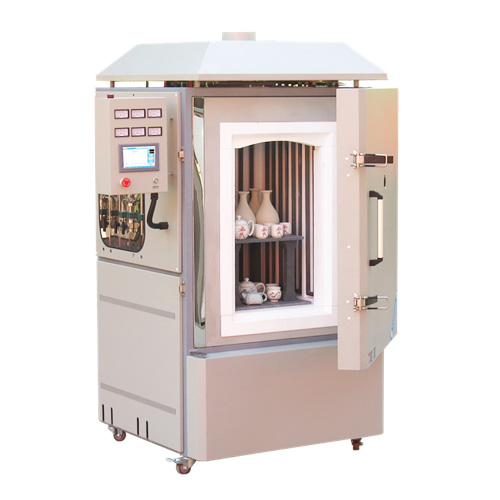
Ceramic sintering is a critical thermal process used to densify powder-based ceramic materials into solid structures. Whether you’re producing technical ceramics for electronics, biomedical implants, or industrial components, the choice of furnace plays a decisive role in determining the final product’s quality and performance.
This article serves as a comprehensive guide to selecting the right furnace for ceramic sintering applications. We will explore different furnace types, key parameters such as temperature range and atmosphere control, and how to match your application needs with the right equipment.
What is Ceramic Sintering?
Ceramic sintering involves heating compacted ceramic powders to a temperature below their melting point, allowing the particles to bond together through atomic diffusion. This results in a dense, rigid structure with enhanced mechanical strength and durability.
Common Applications:
- Advanced structural ceramics
- Electronic substrates and insulators
- 3D-printed ceramic parts
- Dental and biomedical ceramics
- Catalytic and filtration components
Why the Right Furnace Matters
Choosing the right sintering furnace ensures:
- Accurate temperature control for optimized material properties
- Consistent heat distribution to avoid cracks or uneven shrinkage
- Atmosphere compatibility to prevent oxidation or contamination
- Scalability from research to pilot or mass production
The wrong furnace can lead to poor densification, microcracking, discoloration, or contamination—all of which compromise the final performance of your ceramic product.
Key Factors to Consider When Selecting a Furnace
-
Maximum Temperature
Different ceramics require different sintering temperatures. Below are common sintering ranges:
|
Ceramic Type |
Sintering Temperature Range |
|
Alumina (Al₂O₃) |
1400°C – 1700°C |
|
Zirconia (ZrO₂) |
1350°C – 1600°C |
|
Silicon carbide (SiC) |
>2000°C (often pressure-assisted) |
|
Steatite, Mullite |
1200°C – 1500°C |
|
Lithium disilicate |
850°C – 1200°C |
Choose a furnace with at least a 100°C buffer above your target sintering temperature to ensure thermal stability and long-term durability.
-
Temperature Uniformity
Uniform heating is essential for consistent densification and shrinkage throughout the ceramic body. Poor temperature uniformity can lead to:
- Warping
- Cracking
- Uneven grain growth
A good laboratory or industrial furnace should offer:
- ±1–5°C uniformity within the hot zone
- Multi-zone temperature control (especially for long tube furnaces)
- High-quality insulation materials to reduce heat loss
-
Atmosphere Control
Ceramic materials can react with oxygen or moisture at high temperatures. For sensitive materials, a controlled atmosphere is necessary.
|
Atmosphere Type |
Purpose |
Furnace Feature Required |
|
Air |
Most basic sintering (oxidation allowed) |
Standard furnace |
|
Inert (e.g., N₂, Ar) |
Prevent oxidation or contamination |
Sealed tube or box furnace with gas inlet |
|
Vacuum |
Remove volatile impurities |
Vacuum furnace or tube furnace with vacuum pump |
|
Reducing (e.g., H₂) |
Modify material phases or prevent oxide formation |
Custom gas control system with safety interlocks |
ZYLAB offers gas-tight furnaces with optional gas mixing systems and automatic atmosphere switching.
-
Furnace Type
Here’s a comparison of the most common furnace types used for ceramic sintering:
a) Muffle Furnace (Box Furnace)
- Best for: Batch processing of small to medium-sized samples
- Advantages:
- Simple operation
- Excellent insulation
- Even heat distribution
- Limitations: Not ideal for atmosphere-sensitive processes unless sealed with inert gas
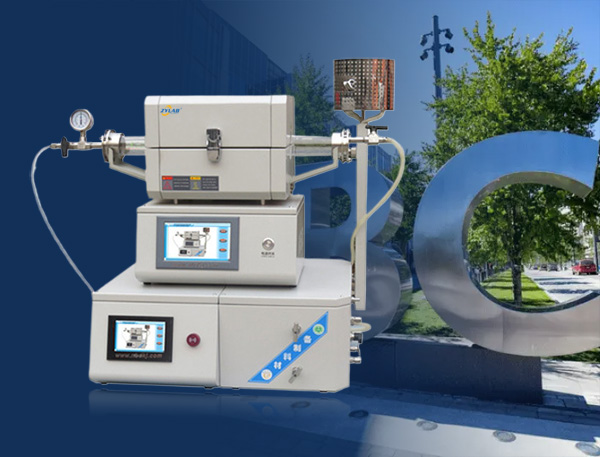
b) Tube Furnace
- Best for: Research and process development under controlled atmospheres
- Advantages:
- Ideal for sintering in vacuum or inert/reducing atmospheres
- Can achieve high uniformity in long, narrow zones
- Compatible with thermogravimetric or gas analysis systems
- Limitations: Smaller chamber volume
c) Debinding + Sintering Furnace
- Best for: Additive manufacturing or injection-molded ceramics
- Advantages:
- Capable of binder removal and sintering in one system
- Programmable multi-step temperature profiles
- Limitations: Requires precise gas flow and exhaust control
d) High-Temperature Graphite Furnace
- Best for: Ultra-high temperature ceramics like SiC or B₄C
- Advantages: >2000°C sintering under vacuum or argon
- Limitations: More complex and expensive system
-
Control System and Safety
Look for furnaces with advanced temperature controllers:
- PID or fuzzy logic control for smooth heating curves
- Multi-segment programmable ramp/soak settings
- Over-temperature protection
- Optional PC interface or USB data logging
Safety features should include:
- Door interlock switches
- Alarm outputs
- Emergency stop
- Exhaust systems for binder or gas byproducts
-
Chamber Volume and Loading Style
Depending on your production volume or sample size, choose the right chamber dimensions:
|
Application Scale |
Recommended Chamber Size |
Suitable Furnace Type |
|
Lab research |
<5L |
Benchtop muffle or tube furnace |
|
Pilot scale |
5–20L |
Floor-standing box furnace |
|
Small production |
20–640L |
Large chamber furnace |
|
Long samples |
Horizontal tube furnace |
Up to 1000 mm heating zone |
Also consider:
- Front-loading vs. top-loading design
- Number of samples per batch
Fixture compatibility (crucibles, setters, supports)
ZYLAB Furnace Solutions for Ceramic Sintering
ZYLAB offers a full range of customizable furnaces tailored for ceramic R&D and production:
- Max temp: 1200°C, 1400°C, 1600°C, 1700°C
- Chamber sizes: 1L to 640L
- Compact, large-capacity, or high-uniformity versions
- Optional atmosphere-sealing design
- One-zone, two-zone, or three-zone configurations
- Gas mixing, vacuum, rotation, or rapid cooling modules
- Ideal for sintering under inert or reducing atmospheres
- Temperature up to 1700°C with MoSi₂ or SiC heaters
🔹 Debinding & Sintering Furnaces
- For metal-ceramic and polymer-ceramic parts
- Integrated binder burnout and sintering curves
- Atmosphere control with by-product exhaust treatment
- Tailored for your material, temperature, and gas requirements
- Optional automation, data recording, and remote monitoring
Conclusion: Match Your Furnace to Your Process
Choosing the right furnace for ceramic sintering depends on understanding your material behavior, sintering temperature, required atmosphere, and scale of operation. A well-matched furnace ensures reliable, reproducible results—critical for both research and production.
At ZYLAB, we are committed to helping you find the perfect furnace solution. Whether you’re working on advanced ceramics, 3D printed parts, or high-performance composites, we offer expert guidance and flexible customization.
Need help selecting the right furnace? Contact our team for a free consultation.
Email: info@zylabsolution.com or tech@zylabsolution.com
Get In Touch
Fill out the form below — free quote and professional suggestion will be sent for reference very soon!