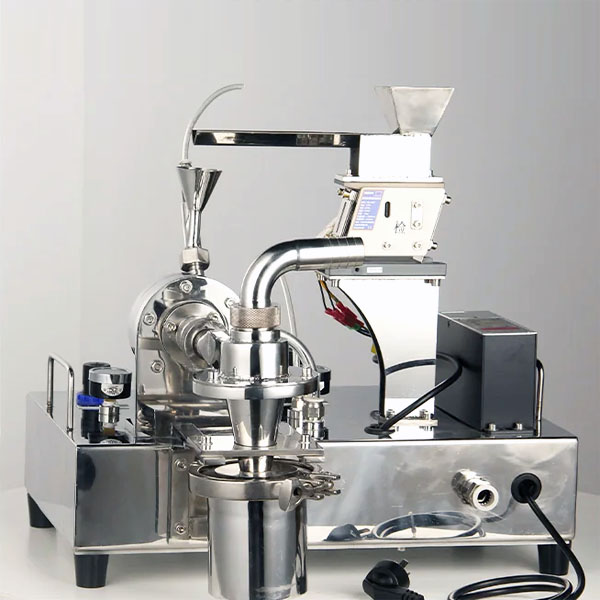
Laboratory 20-ton Automatic Powder Pellet Press

How to Fill Hydraulic Oil for a Powder Pellet Press Machine

Proper hydraulic oil filling is essential to ensure the stable operation, pressing accuracy, and long service life of a powder pellet press machine. Whether you are using a 20-ton, 30-ton, or 100-ton fully automatic powder pellet press or other models, correct oil filling and maintenance are key to reliable performance and smooth operation.

Read More »
Clean-Type Vacuum Box Furnace for Oxidation-Sensitive Materials Titanium Alloys & High-Purity Alumina Ceramics

The Role of Vacuum Box Furnaces in High-Temperature Preparation of Oxidation-Sensitive Materials like Titanium Alloys and High-Purity Alumina Ceramics

For the high-temperature preparation of oxidation-sensitive materials like titanium alloys and high-purity alumina ceramics, a clean-type vacuum box furnace is an indispensable tool. By providing a controlled vacuum environment, uniform heating, and clean protective atmospheres, it ensures material purity, reproducibility, and superior performance.

Read More »
Chemical Methods for Powder Production

Powder Metallurgy Part 2 – Chemical Methods for Powder Production

Following Part 1: Mechanical Milling Method, this second installment of the Powder Preparation Series focuses on chemical methods for producing powders. Unlike mechanical milling, which relies on physical forces, chemical methods leverage chemical reactions to synthesize powders with precise composition, controlled particle size, and uniform morphology.

Read More »
Mechanical Milling Method for Powder Production

Powder Metallurgy Part 1 – Mechanical Milling Method for Powder Production

Powder preparation is a fundamental step in materials science, metallurgy, ceramics, and additive manufacturing. The properties of the final product—whether it is a sintered ceramic, a metallic component, or a composite material—largely depend on the characteristics of the powders used. In this first part of our Powder Preparation Series, we will focus on one of the most widely applied approaches: the mechanical milling (mechanical pulverization) method.

Read More »
Quenching and Tempering

Heat Treatment Part 7: Quenching and Tempering (Quench-temper Treatment)

Quenching and tempering, commonly known as “tempering after quenching” or “quench-temper treatment”, is a fundamental heat treatment process used to optimize the mechanical properties of steel. This article explores what quenching and tempering is, its purpose, how it differs from simple quenching, and essential technical considerations for researchers and engineers.

Read More »