Table of Contents
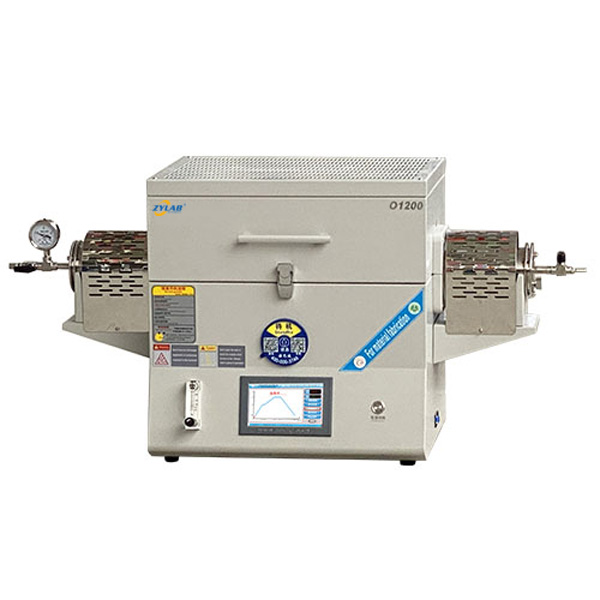
Biomass pyrolysis is widely studied in universities and research institutes as a method for converting organic materials into biochar, bio-oil, and syngas. A laboratory tube furnace is one of the most commonly used systems for small-scale pyrolysis experiments because it allows precise temperature control and stable inert atmosphere conditions.
Recently, researchers from University of Ottawa in Canada contacted ZYLAB regarding the configuration of a tube furnace for biomass pyrolysis under a continuous nitrogen atmosphere. Their questions are typical of many laboratories setting up pyrolysis experiments.
This article explains how a tube furnace can be configured for biomass pyrolysis and provides guidance on nitrogen gas flow, atmosphere control, and system setup.
What Is Biomass Pyrolysis?
Biomass pyrolysis is a thermal decomposition process that occurs when biomass materials are heated in the absence of oxygen.
Typical biomass feedstocks include:
-
Wood chips
-
Agricultural residues
-
Sawdust
-
Straw
-
Organic waste
During pyrolysis, biomass is converted into three main products:
-
Biochar
-
Bio-oil
-
Syngas
To ensure controlled decomposition and prevent combustion, the process is usually performed in an inert gas environment, most commonly nitrogen.
Why Use a Tube Furnace for Biomass Pyrolysis?
A laboratory tube furnace offers several advantages for pyrolysis experiments:
Precise temperature control
Tube furnaces typically use PID programmable controllers that allow precise heating profiles, ramp rates, and dwell times.
Uniform heating
High-quality heating elements and multi-zone temperature control provide stable and uniform temperature distribution.
Controlled atmosphere
With sealing flanges and gas ports, tube furnaces can operate under:
-
Nitrogen atmosphere
-
Argon atmosphere
-
Vacuum conditions
-
Controlled gas mixtures
This flexibility makes tube furnaces ideal for research-scale pyrolysis reactors.
Typical Tube Furnace Pyrolysis Setup
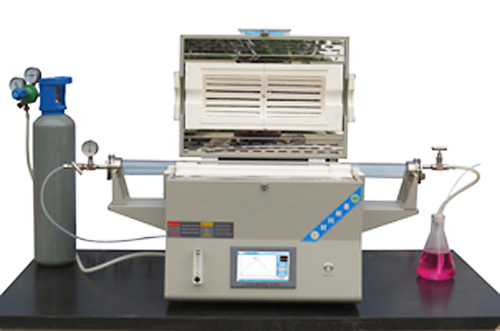
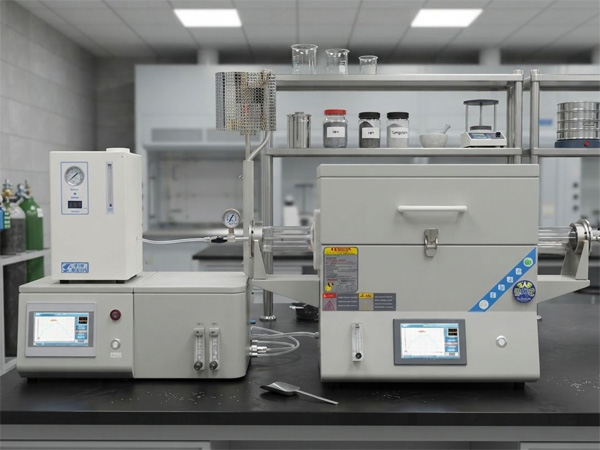
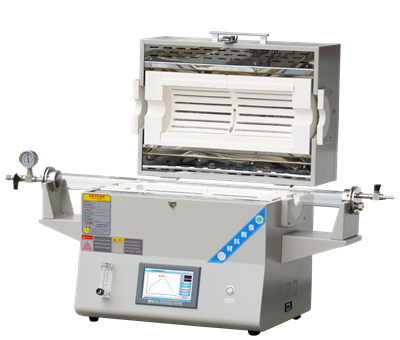
A standard laboratory pyrolysis system using a tube furnace usually includes:
-
Tube furnace body
-
Quartz or alumina reaction tube
-
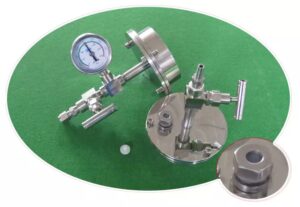
Sealing vacuum/atmosphere flanges
-
Gas inlet and outlet ports
-
Gas flow control device (flow meter or mass flow controller)
-
Nitrogen gas supply
The nitrogen gas flows continuously through the reaction tube, maintaining an oxygen-free environment during the heating process.
Can Vacuum Flanges Be Used for Nitrogen Gas Flow?
Yes.
Vacuum sealing flanges used in tube furnaces are typically designed to support both vacuum operation and continuous gas flow.
When configured with gas ports, the flange assembly allows nitrogen to enter and exit the reaction tube during heating.
This setup is commonly used in applications such as:
-
Biomass pyrolysis
-
Carbon material synthesis
-
Battery material processing
-
Nanomaterial preparation
Are Gas Inlet and Outlet Fittings Included?
In most ZYLAB tube furnace systems, the gas inlet and outlet fittings are included as part of the atmosphere flange assembly.
The standard configuration generally includes:
-
Gas inlet connector
-
Gas outlet port
-
Sealing flange
-
High-temperature sealing rings
This allows users to easily connect nitrogen gas cylinders and start experiments without additional components.
Gas Purging Procedure Before Pyrolysis
Before heating begins, it is important to remove air from the reaction tube.
The standard gas purging procedure is:
-
Place the sample inside the reaction tube.
-
Seal the tube with atmosphere flanges.
-
Introduce nitrogen gas at a higher flow rate.
-
Purge the system for several minutes to remove oxygen.
The gas flow path is typically:
Nitrogen cylinder → flow meter → furnace inlet → reaction tube → outlet port
This process ensures a stable inert environment before the pyrolysis reaction starts.
Recommended Nitrogen Flow Rate
The nitrogen flow rate depends on tube diameter, sample quantity, and reactor design. However, typical laboratory conditions are as follows.
Pre-purging stage
Before heating, a higher nitrogen flow rate is recommended to remove oxygen:
-
200 – 500 mL/min
-
or 0.5 – 1 L/min
Pyrolysis reaction stage
During the pyrolysis process, a lower or moderate flow rate is usually used:
-
50 – 300 mL/min
This maintains the inert atmosphere while reducing unnecessary gas consumption.
The optimal value should be determined based on the specific experimental conditions.
Applications of Tube Furnace Biomass Pyrolysis
Tube furnace pyrolysis systems are widely used in research fields such as:
-
Bioenergy research
-
Biochar production studies
-
Carbon material synthesis
-
Waste biomass recycling
-
Environmental engineering
Many universities and research laboratories use tube furnaces as lab-scale pyrolysis reactors for studying biomass conversion processes.
Conclusion
A laboratory tube furnace equipped with atmosphere sealing flanges and nitrogen gas ports provides an efficient and reliable system for biomass pyrolysis research. By controlling the nitrogen flow rate and properly purging the reaction tube before heating, researchers can maintain a stable inert environment and achieve reproducible experimental results.
For universities and research institutes studying biomass conversion, tube furnaces offer a flexible and cost-effective solution for lab-scale pyrolysis experiments.
Get In Touch
Fill out the form below — free quote and professional suggestion will be sent for reference very soon!