How to Choose a 1500°C Tube Furnace for Catalytic Materials Research

Table of Contents

High-temperature treatment plays a critical role in catalytic materials research, particularly for catalyst calcination, phase transformation, and atmosphere-dependent pretreatment. As research advances toward more complex catalyst systems, a 1500°C tube furnace has become an increasingly common requirement in modern laboratories.

This article explains how to choose a 1500°C tube furnace for catalytic materials research, focusing on practical laboratory needs, commonly searched questions, and key technical parameters that directly affect research outcomes.

Why Catalytic Materials Research Requires a 1500°C Tube Furnace

Many catalytic materials require temperatures well above 1200°C to achieve stable crystal structures or desired catalytic activity. Typical applications include:

  • High-temperature calcination of metal oxide catalysts

  • Heat treatment of catalyst supports such as Al₂O₃, ZrO₂, CeO₂

  • Phase transition control and grain growth studies

  • Catalyst pretreatment under oxidizing or reducing atmospheres

Compared with lower-temperature furnaces, a 1500°C tube furnace offers:

  • Greater flexibility for advanced catalyst systems

  • Improved reproducibility in high-temperature experiments

  • Long-term adaptability for future research directions

For research groups working on next-generation catalytic materials, investing in a higher temperature platform often avoids repeated equipment upgrades.

Temperature Performance: Understanding Real Working Conditions

When evaluating temperature performance, researchers should focus on:

  • Continuous operating temperature
    A well-designed system should support stable long-term operation at 1400–1450°C, not just reach 1500°C briefly.

  • Temperature uniformity
    Uniform heating in the effective zone (typically ±1–2°C) is essential for catalyst consistency and repeatability.

  • Heating element technology
    MoSi₂ heating elements are widely used in 1500°C-class tube furnaces due to their stability and oxidation resistance.

These factors directly influence catalyst phase composition, surface area, and catalytic performance.

Atmosphere Control: Essential for Catalyst Pretreatment

Most catalytic materials research requires controlled atmospheres, rather than simple air heating. A suitable 1500°C tube furnace should support:

  • Inert gases (N₂, Ar)

  • Oxidizing atmospheres (O₂, air)

  • Reducing gases (H₂ or forming gas)

When choosing a furnace, pay attention to:

  • High-temperature sealing performance

  • Gas inlet/outlet configuration and flow stability

  • Compatibility with mass flow controllers (MFCs)

  • Optional vacuum or low-pressure capability

For laboratories working on reduction–oxidation cycles or catalyst activation studies, atmosphere stability is as important as temperature accuracy.

Furnace Tube Material: A Key Decision Point

High-Purity Alumina (Corundum) Tubes

  • Suitable for 1500°C and above

  • Excellent chemical and thermal stability

  • Compatible with most catalytic materials

For high-temperature catalytic research, high-purity alumina tubes are strongly recommended and are widely adopted in advanced laboratory systems.

Temperature Control and Programmable Heating Profiles

Modern catalyst preparation requires precise and repeatable heating processes. Key control features include:

  • High-precision PID temperature control

  • Multi-segment programmable heating and cooling profiles

  • Controlled ramp rates to prevent catalyst sintering

  • Over-temperature protection for laboratory safety

These capabilities ensure reproducible catalyst preparation and reliable comparison between experimental batches.

Matching Furnace Design to Sample Type and Scale

Catalytic materials are prepared in various forms, including:

  • Powder catalysts in boats or crucibles

  • Pellets or extruded catalyst bodies

  • Small monolithic or honeycomb structures

When selecting a furnace, consider:

  • Tube diameter and effective heating length

  • Sample loading volume

  • Ease of sample loading and unloading

Many research laboratories benefit from customized tube diameter, heating length, or atmosphere configurations to match specific catalyst systems.

Safety and Reliability at 1500°C

Operating a tube furnace at 1500°C—especially with reactive gases—requires robust safety features:

  • Multi-layer thermal insulation

  • High-temperature-resistant furnace shells

  • Gas leakage prevention and exhaust compatibility

  • Over-temperature alarms and emergency shutdown

A professionally designed system ensures safe, long-term operation in daily laboratory use.

Tube Furnace vs. Muffle Furnace in Catalytic Research

Researchers often compare different furnace types before purchasing.

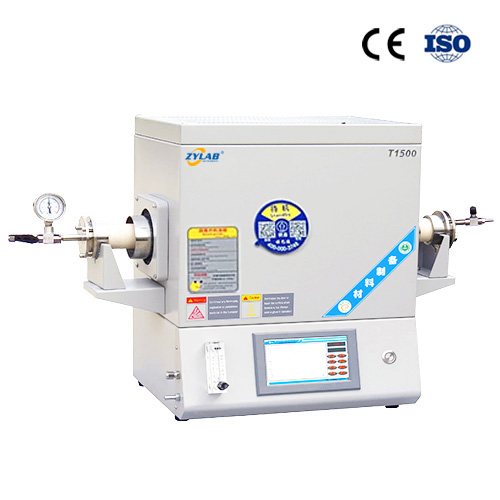
1500°C Tube Furnace

1500°C Small Tube Furnace
1500°C Double Zone Tube Furnace
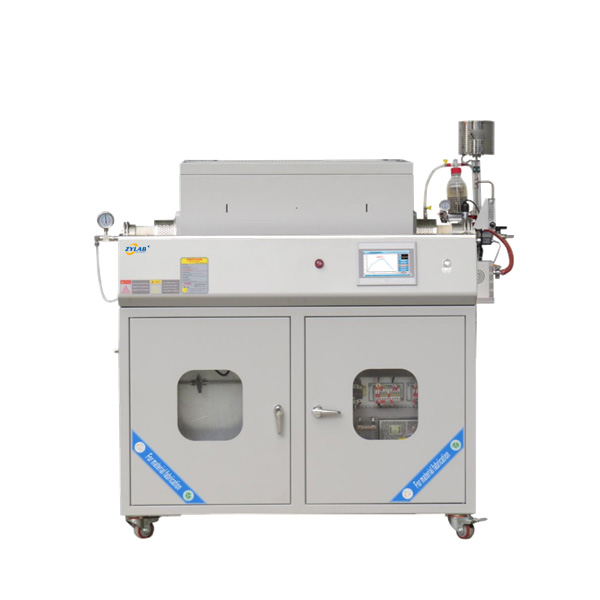
1500°C Hydrogen Reduction Sintering Furnace
  • Precise atmosphere control

  • Directional gas flow

  • Ideal for catalyst synthesis and pretreatment

Muffle Furnace

  • Mainly air atmosphere

  • Suitable for bulk calcination without gas control

For most catalytic materials research involving controlled environments, tube furnaces are the preferred solution.

Conclusion: Choosing the Right 1500°C Tube Furnace

Selecting a 1500°C tube furnace for catalytic materials research is a strategic decision that impacts experimental accuracy, safety, and long-term research capability. Key factors include:

  • Reliable high-temperature performance

  • Stable and flexible atmosphere control

  • Appropriate furnace tube material

  • Programmable temperature control

  • Safety-oriented design

For research groups with specific experimental requirements, many laboratories choose customized 1500°C tube furnace solutions that offer flexible tube sizes, atmosphere control configurations, and precise temperature management.

Get In Touch

Fill out the form below — free quote and professional suggestion will be sent for reference very soon!